AI Governance Tools Buyer's Guide (September 2026)


There's a real difference between knowing your AI systems need governance and buying a tool that actually governs them. A lot of what's on the market logs, alerts, and documents without blocking anything. If you're running high-risk AI deployments and the EU AI Act's August 2026 obligations are already in effect, that distinction isn't academic. This guide gives you a framework for assessing what you're actually buying.
TLDR:
- Only 8% of organizations maintain a working AI governance framework, yet 88% are actively deploying AI across business functions.
- Most tools stop at documentation or logging. Only blocking at the API boundary before output delivery constitutes actual enforcement.
- The EU AI Act's high-risk system obligations became binding August 2, 2026, and auditors require test results and monitoring logs, not policy documents.
- 65% of AI tools in enterprises operate without IT approval, meaning intake forms alone cannot close the shadow AI inventory gap.
- Openlayer blocks unsafe outputs at the API boundary and auto-maps test results to EU AI Act, NIST AI RMF, and ISO 42001 articles as a byproduct of enforcement.
What is an AI governance tool?
An AI governance tool is software that gives organizations structured oversight of their AI systems: tracking what models are deployed, how they behave, whether they comply with internal policies and external regulations, and who is accountable when something goes wrong.
The definition matters because adjacent categories get conflated constantly. Model monitoring tells you when a model's performance degrades. MLOps tooling manages the pipeline that builds and deploys models. AI governance asks a different set of questions: whether a model should be running at all, under what conditions, and with what controls in place. Those are policy and compliance questions, not engineering ones.
In practice, governance tools span a wide range. At one end, intake and documentation tools register AI systems, collect metadata, and track approvals. At the other end, tools connect policy directly to production: enforcing behavioral thresholds in real time, blocking unsafe outputs before they reach users, and generating audit evidence automatically. Most buyers encounter tools across that entire range and need a framework for distinguishing them before comparing AI governance software platforms.
Why AI governance can no longer be treated as a policy document
Only 8% of organizations maintain a fully functioning AI governance framework, yet 88% are actively deploying AI across business functions. A separate IBM finding puts that gap in sharper relief: 87% of organizations say they have clear AI governance frameworks, but fewer than 25% have fully implemented the controls needed to manage bias, transparency, and security risks.
Most organizations have a policy document, a slide deck, maybe a designated owner. What they lack is any mechanism connecting that policy to what models actually do in production. A governance document sitting in Confluence while a model generates loan denials or flags job candidates in real time is not governance. It's a record that intent existed.
The consequences are no longer abstract. The EU AI Act's high-risk AI systems obligations became binding in August 2026, covering financial services, healthcare, and public sector AI deployments. Auditors reviewing a non-compliant system won't accept a policy document as evidence of control; they'll ask for test results, monitoring logs, and enforcement records that most organizations have never generated.
The regulatory pressures driving adoption in 2026
Three regulatory frameworks are doing most of the forcing in 2026, and they're tightening in tandem.
The EU AI Act is the most immediate pressure point. GPAI provider obligations took effect in August 2025 and are enforceable now. High-risk system obligations (Articles 9 through 17 for providers, and Article 26 for deployers) became binding August 2, 2026. US companies are not exempt; if a system touches EU users, the regulation applies. Non-compliance with high-risk system obligations carries fines of up to €15 million or 3% of global annual turnover under Article 99(3).
NIST AI RMF and ISO 42001 are the parallel frameworks most US and international organizations are mapping against simultaneously. Neither carries statutory penalties, but both define the evidence standard auditors and enterprise procurement teams use when assessing governance maturity. Organizations already holding ISO 27001 certification can reach ISO 42001 compliance up to 40% faster.
According to Gartner, spending on AI governance platforms is expected to reach $492 million in 2026 and surpass $1 billion by 2030, driven by fragmented regulation extending to 75% of the world's economies. Tools that were once optional infrastructure are now the mechanism through which organizations generate the audit records, monitoring logs, and enforcement evidence regulators ask for.
Types of AI governance tools and what each one covers
Four distinct tool types operate in this market. Conflating them leads to purchasing a documentation tool when you need enforcement, or an observability tool when you need compliance evidence.
Policy documentation and intake tools
These tools register AI systems, collect structured metadata, and route approvals through defined workflows. They're useful for building an AI system inventory and creating accountability chains. But they stop at the policy layer: no connection to what models actually do in production, no behavioral thresholds, no audit evidence generated from live inference data.
Model monitoring and observability tools
These tools trace model inputs and outputs, detect drift, surface latency and cost metrics, and alert when performance degrades. They answer "what happened?" They do not answer "was it permitted?" Logging an unsafe output after it reached a user is observation, not enforcement.
Bias and fairness testing tools
Pre-deployment tools that flag disparity gaps across demographic subgroups and produce fairness metrics. Valuable at evaluation time, but point-in-time by design. A model that passes a bias test before deployment can still produce inequitable outcomes as input distributions shift in production. These tools rarely connect to runtime controls.
Unified governance tools
The narrowest category: tools that combine pre-deployment evaluation, production monitoring, and active runtime enforcement under a single governance layer. Policy definitions translate into both test criteria and live enforcement gates. Audit evidence is generated automatically from production behavior, not assembled manually after the fact. This is the category that satisfies what regulators actually ask for during a conformity assessment.
The enforcement scale: from documentation to active blocking
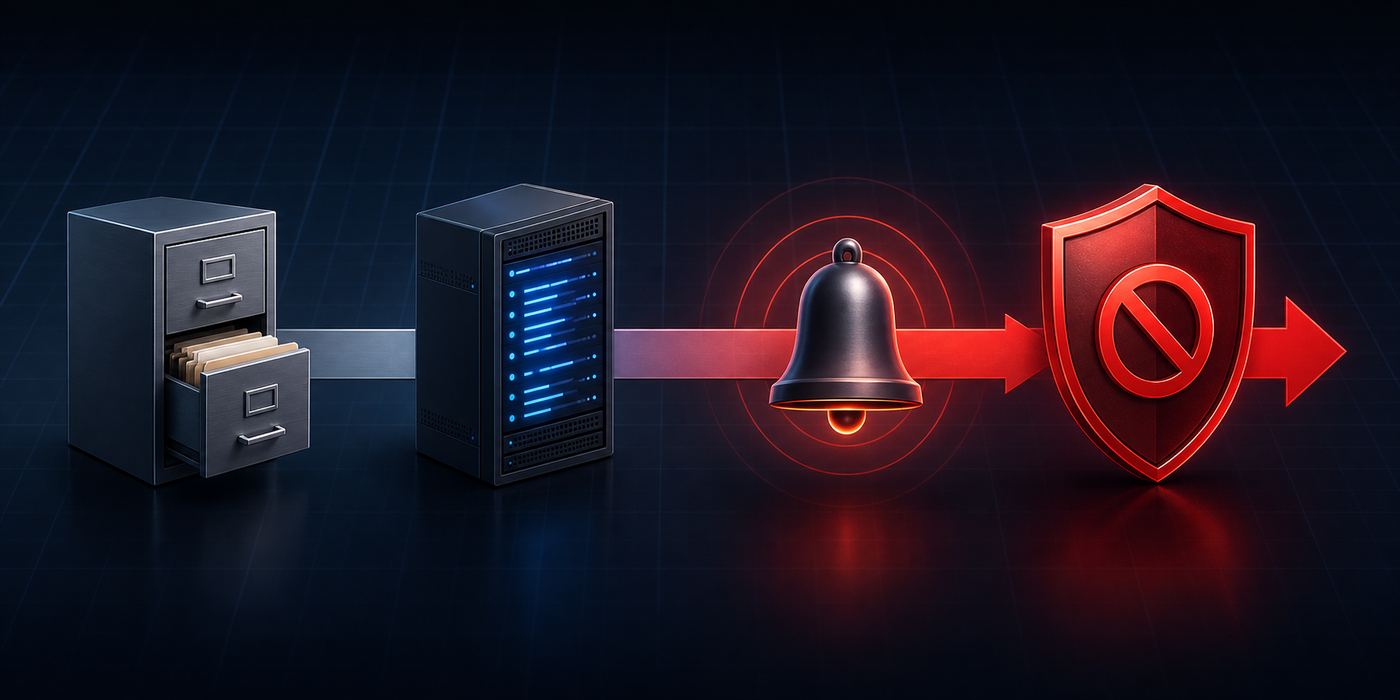
Every AI governance tool sits somewhere on a four-position scale. Where it sits determines whether an unsafe output is prevented, detected after the fact, or never surfaced at all.
- Documentation: The system is registered. A policy exists. Nothing connects that policy to live inference. When a model produces a biased loan denial or leaks PII through a tool call, the documentation records that intent was there, not that anything stopped it.
- Logging: Inputs and outputs are captured. You can reconstruct what happened. But the unsafe output already reached the user or the downstream system before anyone saw the log entry.
- Alerting: A threshold breach triggers a notification. Faster than logging alone, but the output has already executed. An alert that fires after an agent writes to an external database is not a control; it's evidence of a control gap.
- Blocking: The output is stopped at the API boundary before it reaches anyone. This is the only position on this scale that constitutes enforcement, not mere observation.
The practical difference matters most for agentic deployments. When an agent calls an unauthorized tool, a logging tool captures the call, an alerting tool notifies someone, and a blocking tool stops the execution before it fires. By the time a log is reviewed, the external state has already changed. Most governance tools on the market occupy the first three positions, which makes a tool's position on this scale the single most important question to ask before comparing any other capability.
Core capabilities to require in any AI governance tool
Six capabilities separate tools worth shortlisting from tools worth skipping.
AI system inventory and registry
A complete implementation goes beyond a simple model registry. It adds lifecycle stage tracking, version history, and automatic flagging of unregistered systems detected through gateway traffic. A blank field in an inventory entry is not a neutral omission. Auditors treat it as evidence the control was never in place.
Automated regulatory framework mapping
A checklist of EU AI Act, NIST AI RMF, or ISO 42001 requirements is the floor. A complete implementation maps test results and monitoring data to specific articles automatically, so compliance evidence is produced as a byproduct of normal operation and is never assembled manually before an audit.
Pre-deployment evaluation and CI/CD gating
A complete implementation blocks deployment when thresholds fail (groundedness below 85%, demographic parity gap above 5%) as a hard CI/CD gate, not a soft recommendation.
Runtime enforcement at the API boundary
Alerting when a threshold is breached is observation. A complete implementation blocks the output before it leaves the API boundary. The tradeoff is latency overhead at inference time; the alternative is unsafe outputs reaching users before anyone reviews the alert.
Audit evidence generation
A complete implementation generates structured, per-request audit records at inference time (metric score, threshold breached, policy rule triggered, timestamp) without manual assembly. Evidence produced at inference carries more evidentiary weight than records reconstructed after the fact.
Role-based access for both technical and compliance users
If the tool is only usable by engineers, governance reviews become bottlenecked on engineering availability. A complete implementation gives compliance officers and risk managers their own governance dashboards and intake workflows without requiring developer mediation.
Shadow AI and agentic AI: the two governance gaps most tools miss
Two risk profiles sit outside the scope of most governance tools: shadow AI and agentic AI. Both create real liability; neither is covered by a model registry, a bias test, or an observability dashboard alone.
Shadow AI: the inventory problem intake forms can't solve
According to Vectra AI's research, 65% of AI tools in enterprises operate without IT approval. A product team added a third-party LLM API under time pressure. A data science team fine-tuned a model and never submitted it for review. A business unit adopted an off-the-shelf generative tool now processing regulated customer data. Nobody registered any of them.
Intake workflows only catch systems people voluntarily disclose. The governance gap closes only when discovery is active. It needs gateway-level traffic capture that surfaces unregistered systems automatically, not a form waiting for someone to fill it out.
Agentic AI: The Enforcement Problem Logging Can't Fix
The governance challenge for agentic systems is irreversibility. When an agent calls an unauthorized API endpoint or writes PII to a production database, that action has already executed before any post-hoc log surfaces it. Tool calling fails an estimated 3-15% of the time in production.
Logging that failure is observation. Blocking the tool invocation before it executes is enforcement. The only mechanism that constitutes control for agentic systems intercepts at inference time, before the action leaves the agent's execution context, not after downstream state has already changed.
How to assess AI governance tools: a structured framework
Start vendor conversations only after you've done three things internally: defined your governance maturity, mapped your regulatory obligations to required capabilities, and inventoried your existing stack. Skipping those steps means you'll assess tools against the wrong criteria.
Step 1: Define your risk tier before opening any RFP. If you deploy AI in financial services, healthcare, or public sector use cases, you're almost certainly operating high-risk systems under the EU AI Act. That classification determines which capabilities are mandatory versus optional. High-risk deployments need runtime enforcement and automated audit evidence generation from day one.
Step 2: Map your regulatory obligations to the six capability dimensions from the prior section. For each obligation, whether EU AI Act risk management system requirements, Article 10 bias testing, or NIST AI RMF governance tiers, identify which capability dimension satisfies it and whether your shortlisted tools cover that dimension at the enforcement level or only at the documentation level.
Step 3: Run a structured RFP against those six dimensions. Ask for a live demonstration, not a slide. Does pre-deployment evaluation produce CI/CD blocking gates or soft recommendations? Does runtime enforcement block at the API boundary, or alert after the output has passed? Is audit evidence generated automatically per inference, or assembled manually before audits?
Step 4: Assess integration depth. A governance tool that doesn't connect to your model serving layer, CI/CD pipeline, and identity provider is a documentation tool with a dashboard. Check native integrations with your LLM providers, agent frameworks, and data platforms before scoring any other capability.
Step 5: Assess your deployment model requirements. Air-gapped or on-premises requirements narrow the field considerably. Regulated environments in defense or financial services may require private VPC or fully on-premises deployment with data never leaving the customer boundary.
| Evaluation Dimension | Questions to Ask | Pass Criteria |
|---|---|---|
| Inventory and registry | Does it automatically surface unregistered systems? | Active gateway capture, not intake forms only |
| Regulatory mapping | Does it map test results to specific articles automatically? | Auto-mapping, not manual checklist |
| Pre-deployment evaluation | Does it block CI/CD on threshold failure? | Hard gate, not advisory flag |
| Runtime enforcement | Does it block at the API boundary? | Blocking, not alerting |
| Audit evidence | Is evidence generated per inference? | Automatic, not manually assembled |
| Access and usability | Can compliance teams operate it without engineers? | Dedicated governance UI |
Key players in the AI governance tool market
Five vendors dominate most AI governance shortlists. Each has a real coverage boundary worth understanding before you schedule a demo.
Credo AI
Covers AI governance through Policy Packs that translate EU AI Act and NIST AI RMF requirements into structured evidence-collection workflows. Strong fit for compliance and legal teams building documentation programs. The constraint is architectural: Credo AI currently delegates technical enforcement entirely to external tools, with no native runtime blocking or continuous production monitoring. Some teams use it alongside enforcement-layer tooling instead of as a replacement.
IBM watsonx.governance
Covers both AI governance and data governance within the IBM ecosystem. Fairness monitoring, bias detection, and model lineage tracking are genuine strengths. The portability constraint matters: monitoring and enforcement couple to IBM's model-serving stack. Multi-cloud teams and third-party LLM deployments sit outside the coverage boundary. Real-time blocking of prompt injection or PII leakage is not available for non-IBM deployments.
OneTrust
Strong intake workflow design and deep-rooted GDPR and privacy expertise that extends meaningfully to AI governance intake. The coverage currently stops there. As of this writing, OneTrust does not offer connections to model pipelines, CI/CD hooks, or runtime telemetry. Compliance validation is manual and disconnected from what models do in production.
Collibra
Data catalog and lineage tooling that are mature for managing data assets broadly. When AI systems are registered as data assets, Collibra documents them. AI-specific risks such as hallucination, bias drift, and prompt injection currently require separate tooling.
Fiddler AI
Explainability depth via SHAP and LIME, with custom metrics and technically sophisticated positioning. Tracks fairness and drift metrics for diagnostic review. Sits at logging and alerting on the enforcement scale: outputs are not blocked based on behavioral thresholds. Currently, there is no built-in compliance framework mapping for EU AI Act, NIST AI RMF, or ISO 42001 without manual effort.
Build vs. buy: when each path makes sense
Building a governance stack in-house is a legitimate choice for some teams, and the build vs. buy AI governance decision requires naming the right conditions before making a recommendation.
A complete in-house stack means building and maintaining six components: an evaluation framework, a drift detection system, a runtime guardrail layer, a compliance mapping engine, an audit evidence generation system, and CI/CD integration. Each requires initial engineering investment and ongoing maintenance as regulatory frameworks evolve. When the EU AI Act publishes new implementation guidance or NIST updates the AI RMF, someone on your team absorbs that change and translates it into updated tooling.
Two types of organizations are good candidates for building first. Very early-stage teams with no regulatory exposure and no production AI in sensitive domains can reasonably defer governance tooling until deployment complexity warrants it. The second case: organizations with a mature, well-staffed in-house ML platform already capable of absorbing governance scope, where adding controls incrementally may cost less than a vendor contract.
For most enterprises, neither condition holds. Organizations operating high-risk AI systems under the EU AI Act face an August 2026 enforcement deadline with a multi-quarter build timeline and no room for regulatory maintenance lag. Buying closes the gap faster and moves framework-update overhead to the vendor.
Governance maturity and how to match tool complexity to where you are
Three maturity stages define most enterprise governance programs, and AI governance best practices for enterprise leaders start with matching tool complexity to where you actually are to prevent both under-governance and implementation failure from tooling that exceeds your team's current capacity to operate.
Stage 1: Ad hoc
No formal inventory, no monitoring in place, compliance handled through email and spreadsheets. The priority here is building a baseline. Start with inventory and intake: register the AI systems already running in production, assign owners, and capture basic metadata. Intake tooling with structured registration workflows and lightweight approval routing is sufficient. Runtime enforcement without an inventory to enforce against creates noise, not control.
Stage 2: Defined
A model registry exists, but evaluation runs are manual or inconsistently applied, and compliance mapping is periodic. The tool requirement moves to connecting evaluation to deployment gates and adding continuous monitoring. Pre-deployment CI/CD blocking gates (groundedness below 85%, demographic parity gap above 5%) formalize what was previously advisory. Automated framework mapping against the EU AI Act or NIST AI RMF replaces the manual checklist.
Stage 3: Managed and enforced
Evaluation gates are in place and production monitoring runs continuously. The requirement at this stage is active runtime enforcement and audit evidence generation: real-time blocking at the API boundary, per-inference audit records, and role-based governance dashboards that give compliance teams visibility without engineering mediation.
Phase implementation in the same sequence regardless of starting point: inventory first, evaluation gates second, runtime enforcement third. Deploying full enforcement infrastructure before a system inventory exists means enforcing policy against systems you haven't yet found.
Turning AI governance into a shared platform service across engineering teams
Governance tooling without adoption is just another artifact that goes stale. The structural problem most enterprises face isn't selecting the right tool. It's getting twelve different engineering teams, each with different AI frameworks and deployment cadences, to operate through the same governance layer without treating it as a compliance tax.
The solution is architectural: govern at the platform level, not the project level.
Design the governance layer as infrastructure
If every team configures their own evaluation thresholds and routes their own approvals, governance becomes per-team overhead that scales with team count. The alternative is a shared governance service, with centrally administered policy definitions, pre-built framework mappings, and approval routing that teams consume without configuring from scratch. That means the governance layer sits alongside your CI/CD infrastructure and identity provider: something teams integrate with, not something each team builds independently.
Assign accountability by role function, not org chart
Three roles carry specific obligations across the governance lifecycle:
- Model Owner: defines intended use and risk tier at registration; approves evaluation criteria before deployment; owns post-deployment drift thresholds and initiates decommission when performance conditions are breached.
- Governance Lead: maps regulatory obligations at scoping; reviews documentation completeness before deployment; maintains the audit trail; escalates compliance gaps to legal or risk functions.
- Ethics Committee or Risk Review Body: reviews high-risk system designations and bias evaluation results; approves deployment of systems with unresolved failure modes; triggers post-deployment reviews when incidents surface.
Named individuals in these roles, and not team labels, is the minimum. An audit finding that names "the data science team" as owner of a deployed model with no bias test record is an open gap, not an accountability structure.
Configure approval gates by risk tier
Low-risk systems warrant lightweight routing: a single Model Owner sign-off before deployment, monthly monitoring review. High-risk systems under the EU AI Act require multi-reviewer approval at each lifecycle stage (development, testing, production promotion, and material change) with gate depth determined automatically by internal AI risk classification, so teams aren't responsible for remembering which review process applies to which system.
Human-in-the-loop requirements for legally consequential decisions should be explicit and enforced. A fairness threshold breach that routes to an escalation queue instead of auto-blocking is the right configuration for high-stakes outputs (clinical recommendations, credit decisions) where automated confidence alone is insufficient. Human oversight doesn't mean every output reviewed manually; it means the architecture guarantees a qualified reviewer sees flagged outputs before they cause downstream harm.
How Openlayer approaches the enforcement gap
Openlayer was built to close the gap between a policy that exists and a control that enforces.
The architecture starts at the API boundary. Real-time guardrails block unsafe outputs before they leave inference (prompt injections, PII leakage, toxic content, unauthorized tool calls) instead of logging them after the fact. When a guardrail fires, it generates a per-request audit record automatically: metric score, policy rule triggered, threshold breached, timestamp. That record is continuous compliance evidence produced as a byproduct of enforcement, not assembled manually before an audit.
Pre-deployment, Openlayer runs over 175 pre-built automated tests across accuracy, safety, and security dimensions, with CI/CD gates that block deployment when thresholds fail. Groundedness below 85% and a demographic parity gap above 5% are hard blocks, not advisory flags. LLM-as-a-judge evaluation scales to thousands of daily evaluations at 81.3% human correlation, covering subjective quality signals that deterministic checks miss.
Five regulatory frameworks come pre-loaded: EU AI Act, NIST AI RMF, ISO 42001, AIUC-1, and the Openlayer Governance Framework. Test results and monitoring data map to specific articles automatically, so compliance officers get governance dashboards and audit evidence without waiting on engineering, with both personas working from the same underlying data and no translation layer required.
Openlayer was recognized in Gartner's 2026 Market Guide for AI Governance Platforms, third-party validation that it is operating in this market at enterprise scale and not merely positioning toward it.
Final thoughts on building AI governance with real enforcement behind it
Documentation without enforcement is just a record that intent existed. The regulatory pressure in 2026 is asking for something harder to fake: monitoring logs, test results, and per-inference audit records that prove controls were actually in place. Your governance maturity stage determines which capabilities to tackle first, but the direction is the same regardless of starting point: move toward blocking, not alerting alone. Reach out to the Openlayer team to see how enforcement-layer governance maps to your specific deployment context.
FAQ
What's the difference between Openlayer and Credo AI for enterprise AI governance?
Credo AI is a strong fit for compliance teams building documentation programs, but delegates technical enforcement entirely to external tools. See the Credo AI comparison above for architectural detail. Openlayer covers the same documentation layer while also running continuous production monitoring and blocking unsafe outputs at the API boundary before they reach users or downstream systems.
How do you turn AI governance into a shared platform service that engineering teams actually adopt, instead of a compliance checklist each team configures independently?
Govern at the platform level, not the project level: centrally administered policy definitions, pre-built regulatory framework mappings, and approval routing that teams consume without building from scratch. That means the governance layer sits alongside your CI/CD infrastructure (something teams integrate with) so every new agent or model inherits the same evaluation gates, monitoring thresholds, and audit evidence generation regardless of framework. Named role accountability (Model Owner, Governance Lead, risk reviewer) assigned to individuals instead of team labels, with risk-tiered approval gates configured automatically by system classification, removes the per-team overhead that turns governance into a tax.
How does an AI governance platform cover shadow AI that teams never voluntarily register?
Intake forms only catch systems people disclose. Closing the shadow AI gap requires active discovery: gateway-level traffic capture that surfaces unregistered systems automatically as they generate inference traffic, not waiting for someone to submit a registration. Openlayer's LLM Gateway captures all routed traffic and flags systems not present in the inventory, so unregistered models (fine-tuned internally, connected via third-party API without a risk review, or deployed by a business unit outside compliance sign-off) appear in the governance layer without requiring a form.
Should I use Openlayer or IBM watsonx.governance for AI governance at a regulated financial institution?
IBM watsonx.governance offers genuine strengths in fairness monitoring, bias detection, and model lineage tracking within the IBM ecosystem, but monitoring and enforcement currently couple to IBM's model-serving stack, which means multi-cloud deployments and third-party LLM integrations sit outside its coverage boundary, and real-time blocking of prompt injection or PII leakage is not available for non-IBM deployments. Openlayer is framework-agnostic across LLM providers and agent frameworks, with pre-loaded SR 11-7 and EU AI Act mapping that produces audit evidence automatically from production enforcement, removing the need for manual assembly before examinations.
How do I build an AI governance framework that satisfies EU AI Act high-risk system obligations now that the August 2026 enforcement deadline has passed?
For high-risk systems, four discrete obligations need evidentiary coverage: Article 9 (a risk management system with active controls, beyond documentation alone), Article 10 (data governance and bias testing across demographic subgroups), Article 15 (ongoing accuracy measurement and adversarial robustness testing including prompt injection resistance), and Articles 61 and 72 (continuous post-market monitoring with incident reporting within 15 days for serious incidents). A governance framework template or PDF checklist satisfies none of these on its own. Auditors ask for test results, monitoring logs, and per-request enforcement records. Build the evidentiary chain by connecting pre-deployment evaluation gates to CI/CD blocking, continuous production monitoring to automated framework mapping, and runtime guardrails to per-inference audit records generated at the moment of enforcement.