
AI should besomething people trust.
Openlayer exists to help organizations build and deploy AI that people can confidently rely on
Learn moreThe futuredeserves better AI.
Today, too much of the conversation around AI is shaped by what could go wrong.
Hallucinations. Loss of control. Regulation. Replacing people.
Those concerns are real, but they shouldn't define the future.
We believe AI has the potential to improve healthcare, accelerate scientific discovery, transform education, make transportation safer, and unlock entirely new ways of working.
At Openlayer, we're working toward a future where trust unlocks AI’s greatest potential. A future where organizations can build with confidence because their systems are transparent, accountable, and continuously improving.
Trust isn't something you claim.
It's something you earn, every day.
2021
Founded by ex-Apple Siri and Vision Pro ML engineers


 Backed by Y Combinator
YC + Race
Backed by Y Combinator and Race Capital


SOC 2Type II
Plus GDPR compliance

A future where every AI system is understood, governed, and continuously improving.
Openlayer started at Apple.
Our founders built models for Siri and Vision Pro across multiple teams, and kept rebuilding the same infrastructure to evaluate how those models performed. Because Apple is so privacy-oriented, there was no shared system for evaluation, observability, or governance, so every team solved the same problem from scratch.
Some of those models powered core Siri, like the natural language systems already shipping to hundreds of millions of people. Others were for projects not yet released, like Vision Pro. From both vantage points we saw the same question: how do you know a model will work well for all kinds of people and situations? At Apple we could test that Siri worked when someone called 911, but never anticipate every real-world edge case, such as a baby crying, road noise, or a HomePod answering from another room.
We founded the company to catch those edge cases before shipping, instead of waiting for users to find the gaps. We named it Openlayer to capture the idea of opening up the layers of an AI system: the layer of your workflow built to understand your AI, open and transparent by design. We started as Unbox, for unboxing the black box of a model, and changed the name to avoid conflicts.
Over time we grew from pre-deployment testing into production monitoring, so engineers could test thoroughly before shipping, find gaps quickly in production, fix them, and redeploy with far faster iteration velocity. In the last couple of years, as generative and agentic AI became easier to build and more powerful, we added a third focus: governance and AUTOMATED COMPLIANCE.


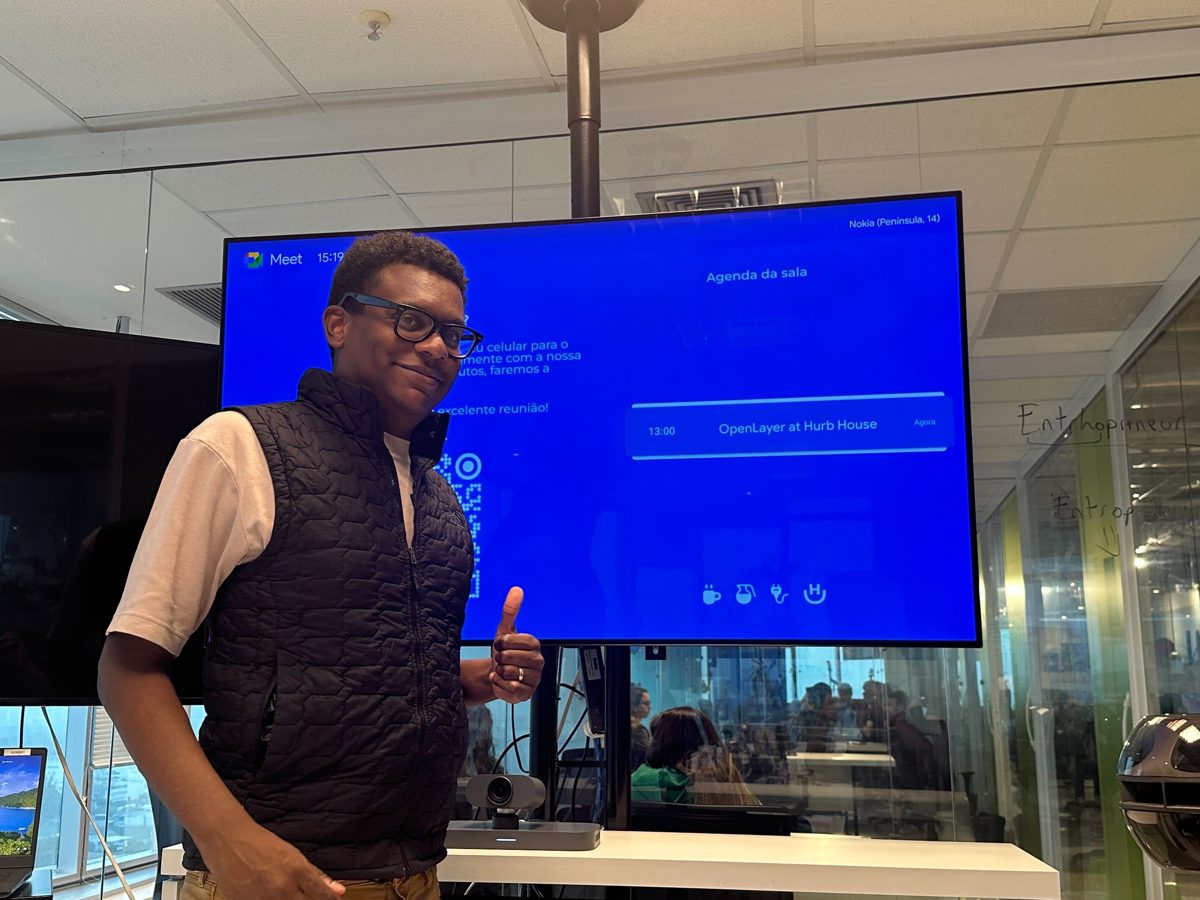

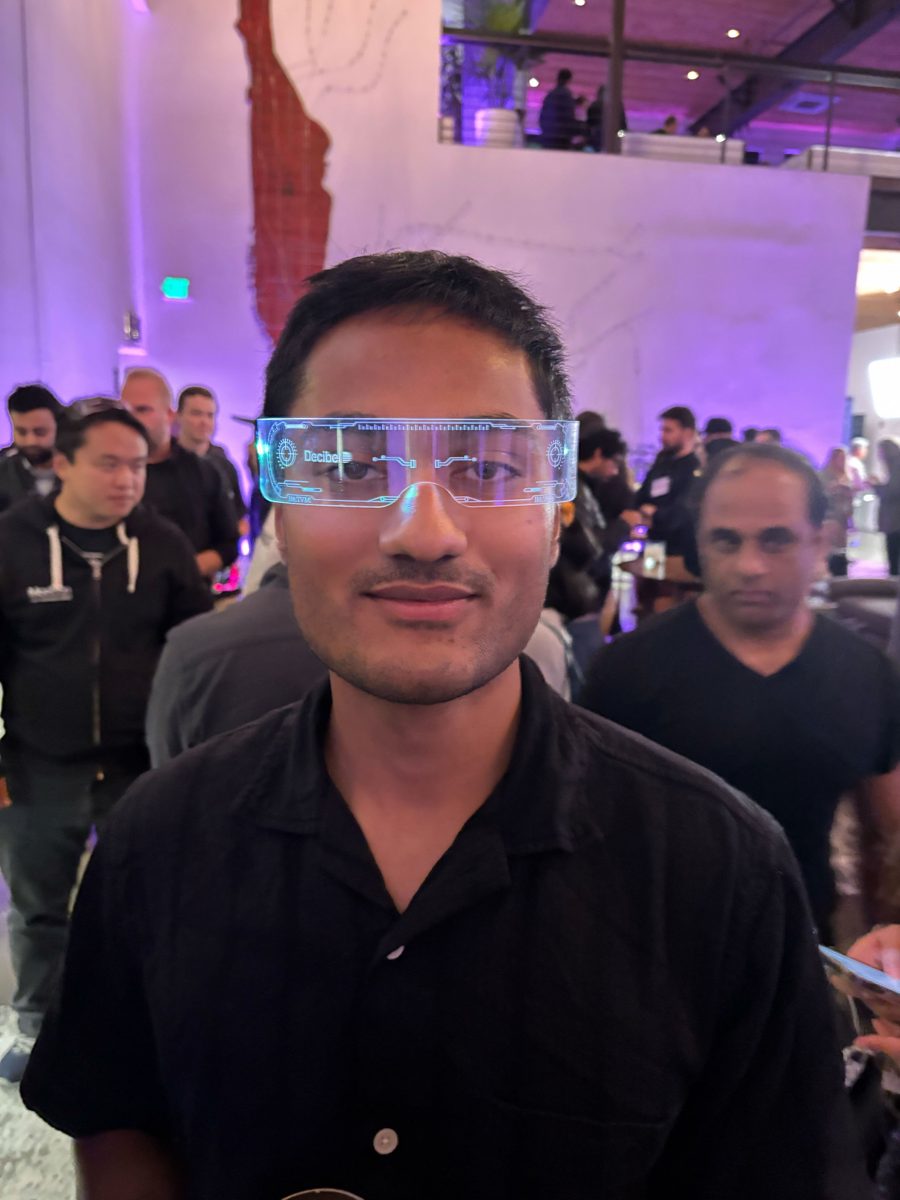
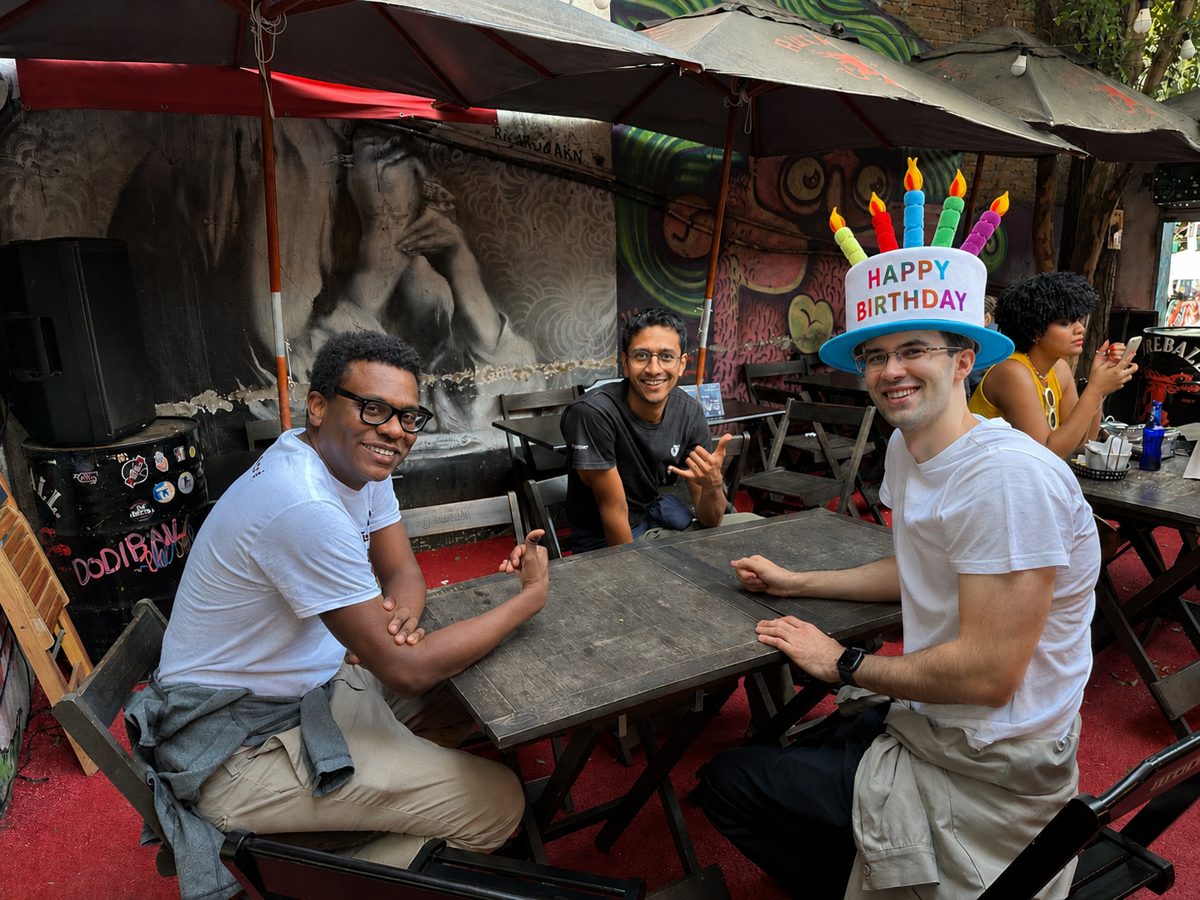
The good people

Nicholas Baker
Head of Customer Solutions

Jaime Bañuelos
Head of Strategic Alliances

Gabriel Bayomi
Co-founder & CEO

J.D. Bonnar
VP of Sales

Kim Capili
Executive Assistant

Matt Cubillos
Account Executive

Joao Dutra
Head of Operations

Juliana Van Daele
Head of Growth

Vinicius Mello
Head of Solutions, LATAM

Vikas Nair
Co-founder & CPO

Sandy Nguyen
Senior Product Designer

Gustavo Cid Ornelas
Founding Engineer

Matheus Portela
Senior Backend Engineer

Michaela Haen
SDR

Walter Lewis
AI Governance & Risk Management

Rishab Ramanathan
Co-founder & CTO

Bryan Roberts
Sr. Enterprise Account Executive

Guilherme Rodz
Design Engineer

Luciano Rolim
Head of Sales, LATAM

John Schmitt
Lead SDR

Siddhant Shah
Senior Backend Engineer

Taylor Whipp
Pre-Sales Engineer

Vitali Zahharov
Product Designer
You?
See open roles“Great people with a great product that’s disrupting the industry.”
“Openlayer fits directly into our pipeline. We block an unsafe deployment in CI the same way we block a failing unit test, except now we are testing AI quality and safety, not just code correctness.”
“What excites me is the timing. everyone's shipping AI right now and almost nobody has a good answer for "how do we know it's safe/working?" we're that answer! getting to shape how that product looks and reads, at exactly the moment the world needs it, is a pretty rare spot to be in”


Build the infrastructure thatmakes AI trustworthy.
Backed by builders.
We’re fortunate to be backed by venture firms and operators who have helped build companies like Vercel, Instacart, Mercury, Instagram, Thumbtack, and others. Their support lets us stay focused on the long-term challenge: helping the world build AI people can trust.

Guillermo Rauch
Vercel

Max Mullen
Instacart

Mike Krieger

Immad Akhund
Mercury

Jonathan Swanson
Thumbtack

Astasia Myers
Felicis

Anjney Midha
a16z

John Kim
Sendbird

Gokul Rajaram
Product Leader & Board Director
Openlayer is the AI governance platform that helps enterprises discover, test, monitor, govern, and optimize AI systems across their entire lifecycle, from prototype to production.
The founders saw the same problem repeat at every AI team they worked with: each one rebuilt its own infrastructure to evaluate model performance because there was no shared system for it. They built Openlayer to solve that once, for everyone.
Openlayer's mission is to help organizations confidently build, deploy, and operate trustworthy AI systems by making their behavior measurable, governable, and accountable.
Openlayer unifies evaluation, observability, guardrails, governance, compliance, and cost controls on one platform, where many other tools in the category specialize in only one or two of those layers.
Openlayer was founded in 2021 by Gabriel Bayomi, Vikas Nair, and Rishab Ramanathan, three machine learning engineers who previously worked together at Apple on projects including Siri and Vision Pro.
Engineering, AI, security, compliance, and finance teams all use Openlayer, typically working from the same underlying data through views built for each team's job.
Openlayer serves healthcare, financial services, telecommunications, automotive, cybersecurity, and other regulated industries where an AI mistake carries real financial, safety, or regulatory consequences.
Openlayer supports large language models, retrieval augmented generation, AI agents, traditional machine learning, and multimodal AI systems.
Openlayer integrates with existing infrastructure through SDKs, a gateway, a CLI, and a REST API, rather than requiring a rebuild of a company's AI stack.
Openlayer is backed by Y Combinator and Race Capital, announced a Series A financing round in 2025, and holds SOC 2 Type II certification.
AI adoption and AI regulation are both accelerating at the same time, and organizations that cannot show how a system was tested, monitored, and controlled face growing exposure to both operational failures and regulatory penalties.