
One placeto route, cap,and control every model call.
Route model traffic through one control layer that enforces budgets, applies real-time guardrails, manages provider failover, and records audit-ready evidence without requiring application rewrites.
See the Gateway in action

 163.3%
 5%
5%

 33%
33%


Every new model adds another point of exposure.
As teams adopt more models and providers, traffic fragments across API keys, applications, and business units. Security cannot consistently enforce policy, finance cannot control spend before it occurs, and engineering becomes responsible for updating every integration individually.
Without a shared control point, each new model connection introduces another place where data, cost, reliability, and governance can fall outside organizational standards.
EU AI Act
ISO/IEC 42001
NIST AI RMF
OSFI E-23
Observability tells you what happened.It doesn't stop it from happening again.
Monitoring can reveal that a model call exceeded its budget, exposed sensitive data, or failed after the fact. It cannot reroute the request, block the interaction, or stop the next violation from occurring.
Without a shared enforcement layer, teams must change application code to disable access, update policies, or switch providers. Governance can see that an incident occurred but cannot prove the required control was applied at the time of the request.
Budgets live in a spreadsheet, not in the system that spends the money.
Turning off a runaway integration means a ticket and a deploy, not a switch.
A policy that only alerts is not a control.
Instrument once, control everything
Openlayer combines intelligent routing, key management, budgets, guardrails, tracing, evaluation, and governance in one gateway. Every routed request is automatically attributed, evaluated against policy, and preserved as evidence.
Teams can change providers, enforce new controls, disable access, or update budgets centrally without rebuilding every application that uses AI.
<1min
to disable a compromised or over-budget key
100%
of routed LLM traffic visible and attributable
One
place for routing, budgets, guardrails, and evidence
Everything required to control model traffic
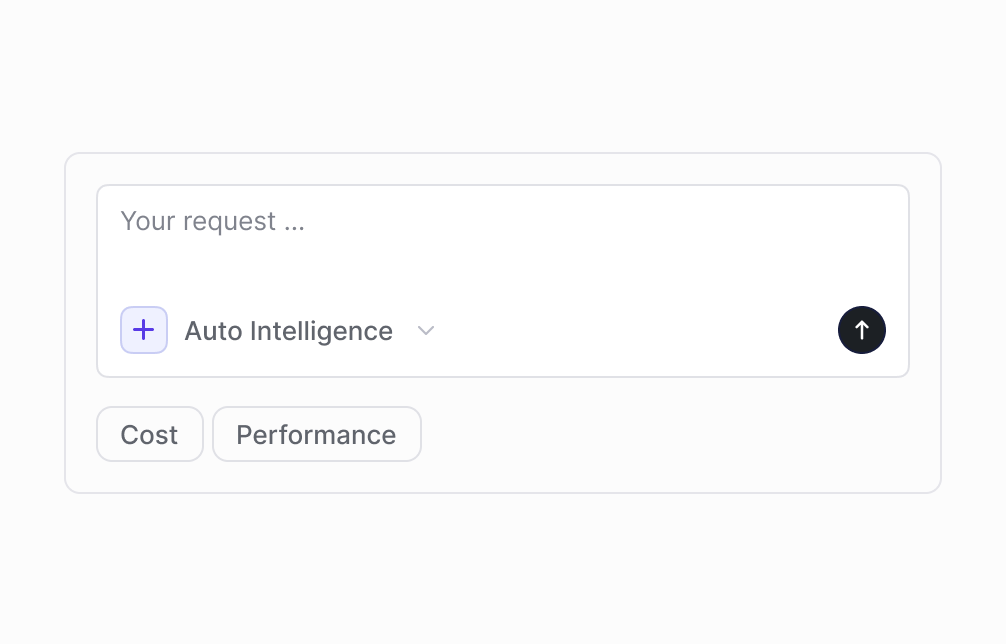
Smart routing and failover
Route requests across approved providers based on availability, performance, cost, or policy. Automatically fail over when a provider becomes unavailable or exceeds required thresholds.
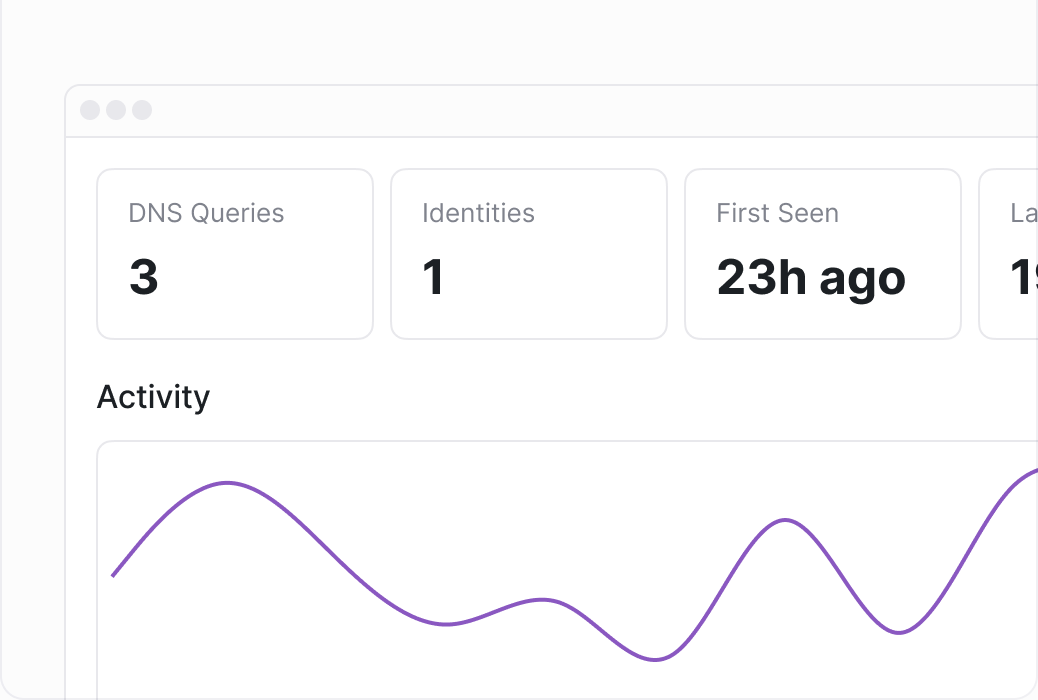
Automatic AI discovery
Automatically identify the applications, models, providers, teams, and keys generating traffic through the gateway. Flag unapproved models or usage patterns as they appear.
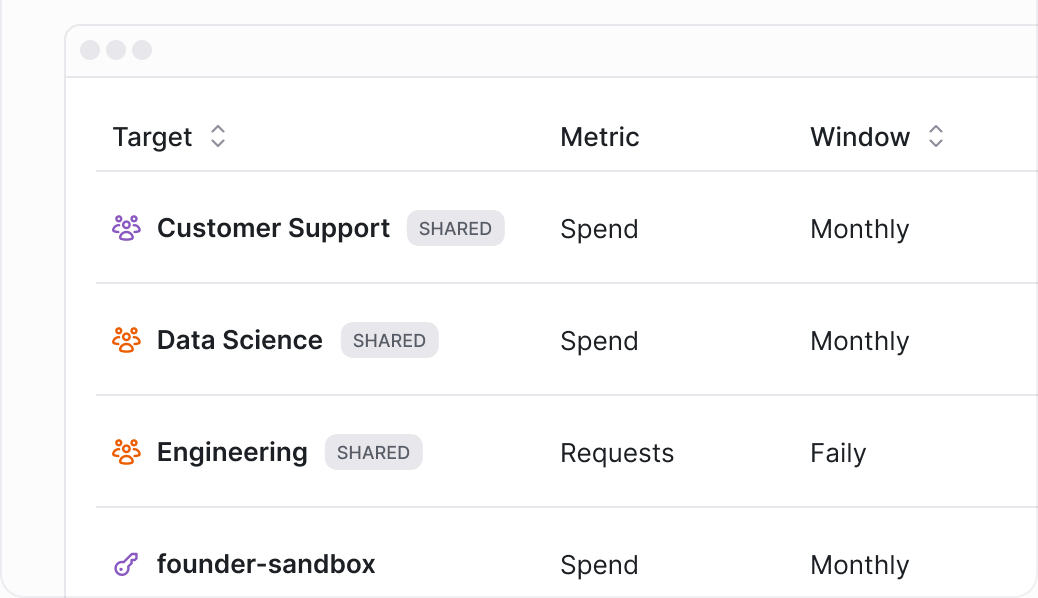
Budget enforcement
Set hard spending limits by key, project, team, model, or provider. Alert owners, reroute traffic, or stop requests automatically when limits are reached.
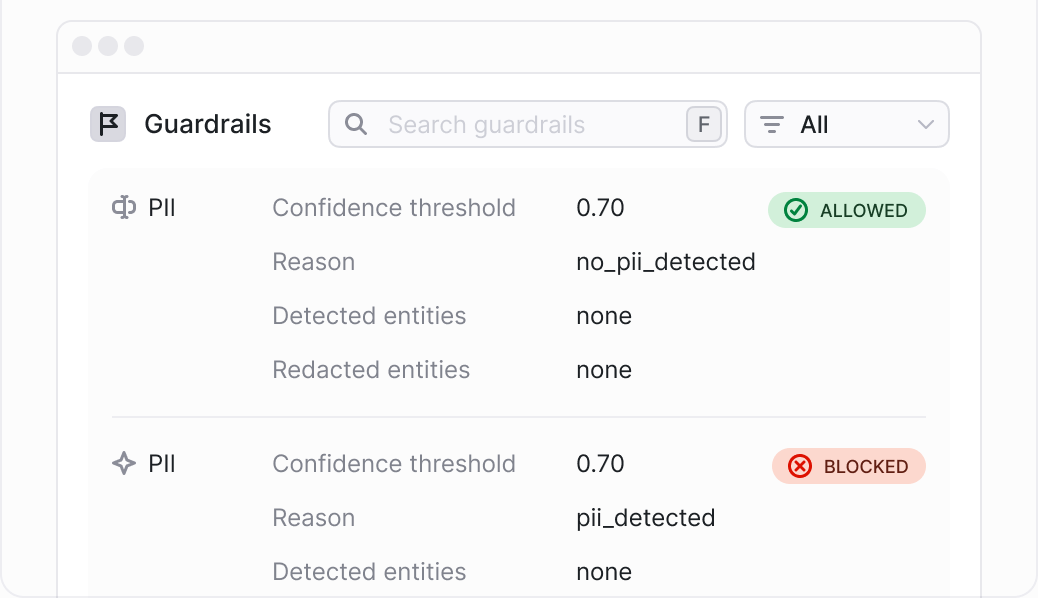
Real-time guardrails
Inspect inputs and outputs in real time. Block or redact sensitive data, prompt injection, jailbreaks, prohibited content, and unauthorized requests before they reach a model or user.
“Openlayer gives us a single control point for every model call without forcing each application team to build its own safeguards.”
Chief Digital Officer
Trusted by regulated leaders: Sun Life and Gallagher (insurance); Rogers, KPN, and Comcast (telecom and media).
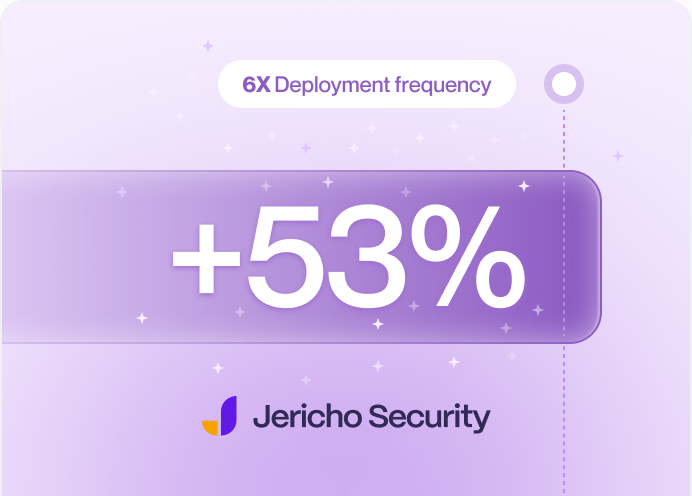
Jericho Security: 6x deployment frequency and +53% throughput after standardizing on Openlayer.

Backed by Y Combinator and Race Capital. SOC 2 Type II.
Founded by ex-Apple/Siri ML engineers.
Named in the 2026 Gartner Market Guide for AI Evaluation and Observability Platforms.

Endorsed by Guillermo Rauch (Vercel CEO) and Max Mullen (Instacart founder).
The Gateway captures AI traffic at the network level and routes it through a centralized control point, giving teams visibility and control over AI usage without rewriting their applications.
Because the Gateway sits at the network level, most teams point existing traffic through it and gain visibility and control with minimal changes to application code.
The Gateway supports routing and failover across approved providers based on availability, cost, or performance, which reduces the chance that a single provider issue becomes an application outage.
The Gateway can identify the applications, models, providers, teams, and API keys generating AI traffic that passes through it, and flag usage patterns that were never formally approved.
Teams can set spending limits by API key, project, team, model, or provider, with alerts as usage approaches a limit and the option to block requests once it is exceeded.
Keys can be disabled directly through the Gateway, which matters because the exposure from a leaked or misused key grows the longer it stays active.
The Gateway is designed to work across LLM providers, so teams can standardize governance and cost control even when different teams use different models.
Traffic routed through the Gateway is attributable to a specific application, team, and user, which gives security and compliance teams governance-ready evidence without reconstructing usage after the fact.
The Gateway is the enforcement point where Guardrails are commonly applied, since it already sees every request and response passing through it.
Evaluation, testing, and monitoring can be used through the SDK directly. The Gateway is an additional layer for teams that want centralized routing, discovery, and enforcement across all their AI traffic.