

Scale AI that performs
in production.
Openlayer gives every team a consistent way to evaluate quality, compare versions, monitor live behavior, and improve performance across models, agents, RAG, and traditional ML.
See how it works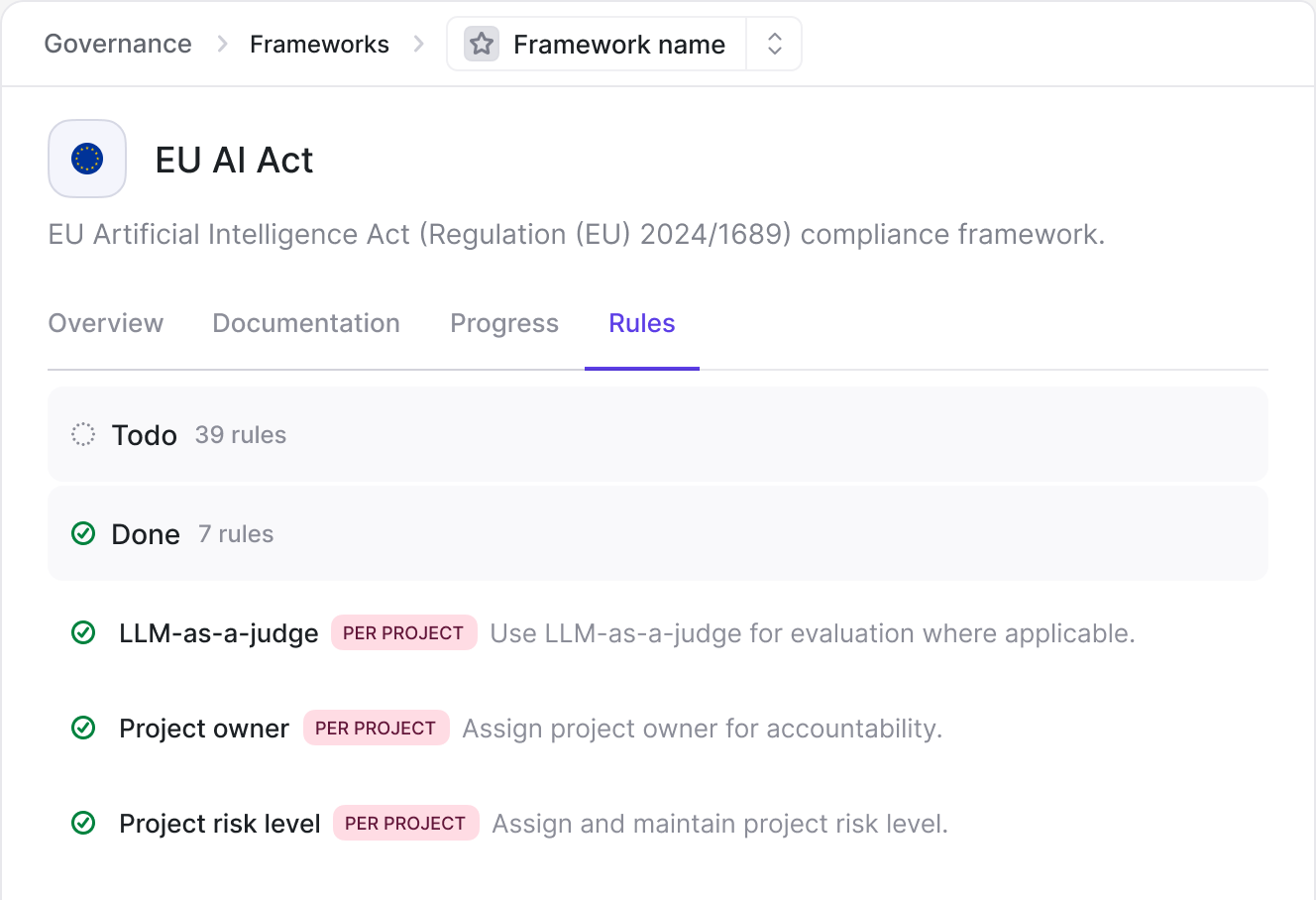


7%
of organizations have fully scaled AI across the enterprise
Source: McKinsey’s 2025 State of AI Global Survey
79%
of enterprises exceeded their AI budgets in the past year
Source: DoiT, AI Spending Survey 2026
79%
of production AI agents still rely primarily on human evaluation
Source: Measuring Agents in Production, 2025
One quality standard across
every AI team.


Standardize qualityacross teams
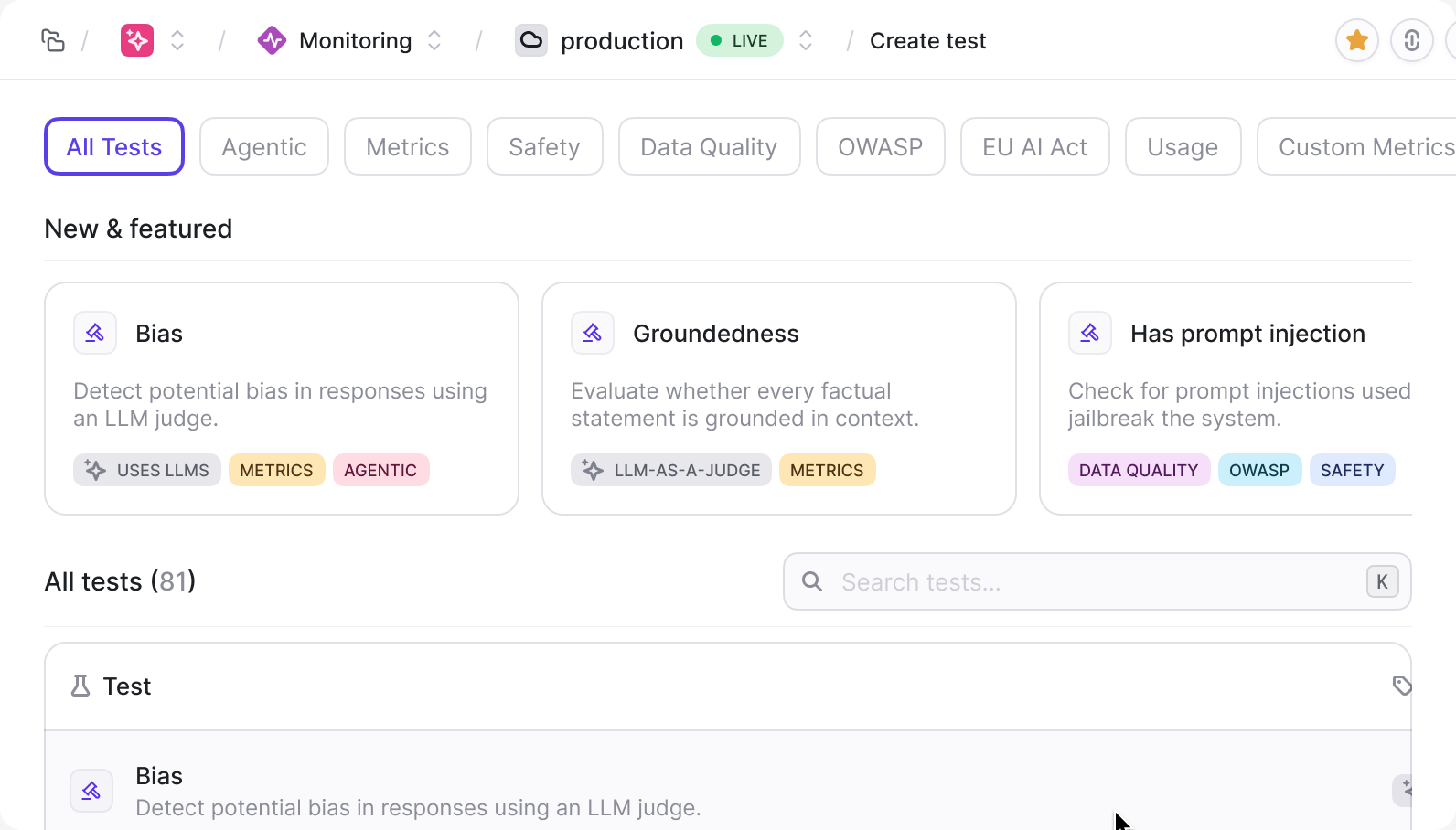
Give every team consistent tests, thresholds, and release criteria across LLM, RAG, agent, and traditional ML projects.
Start with 175+ ready-to-use evaluations or define standards for your own use cases.

Compareevery version
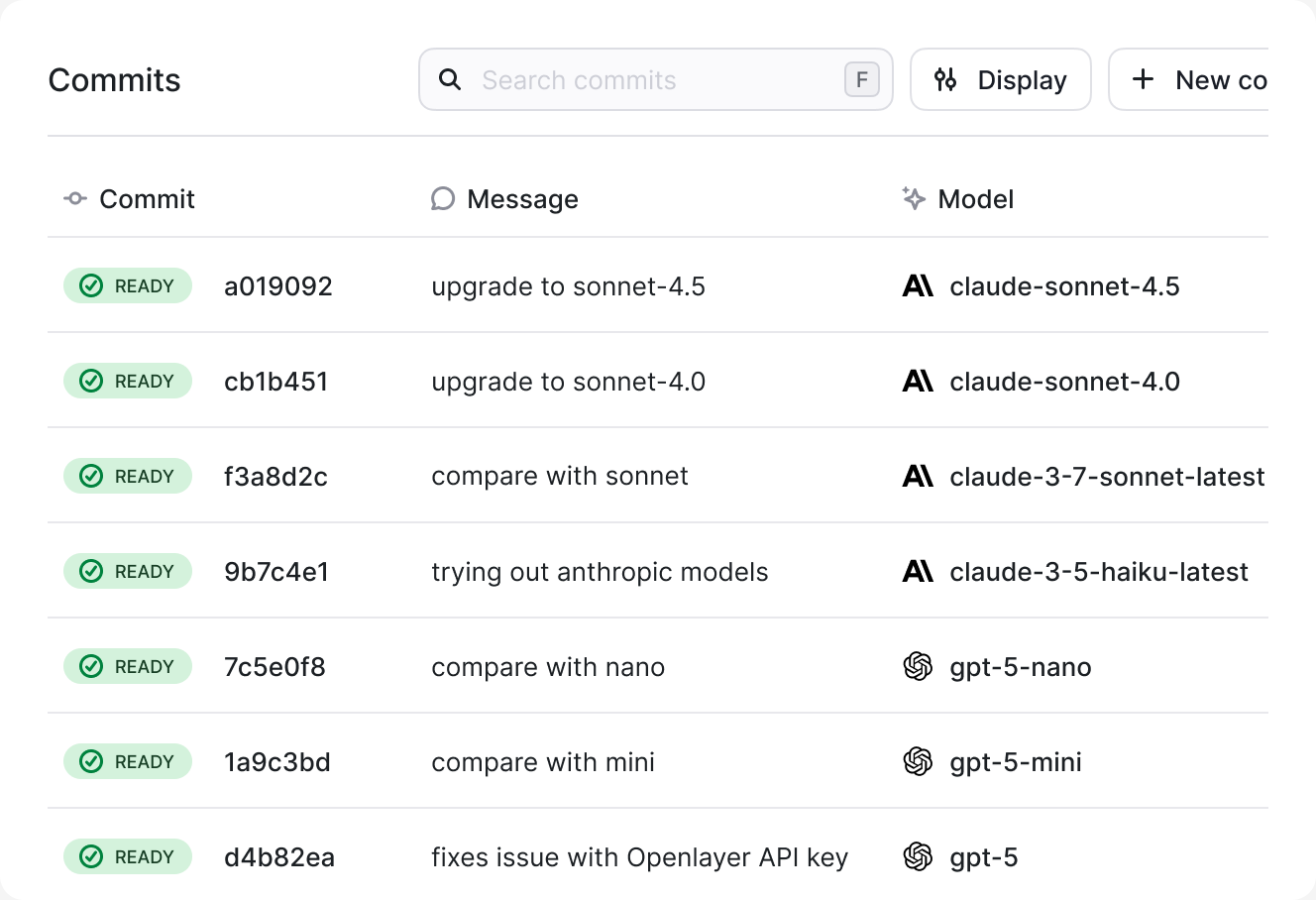
Measure changes to models, prompts, data, retrieval, and tools against the same baseline.
See the tradeoffs across quality, safety, latency, and cost before deciding what to release or scale.

Track
performanceand cost
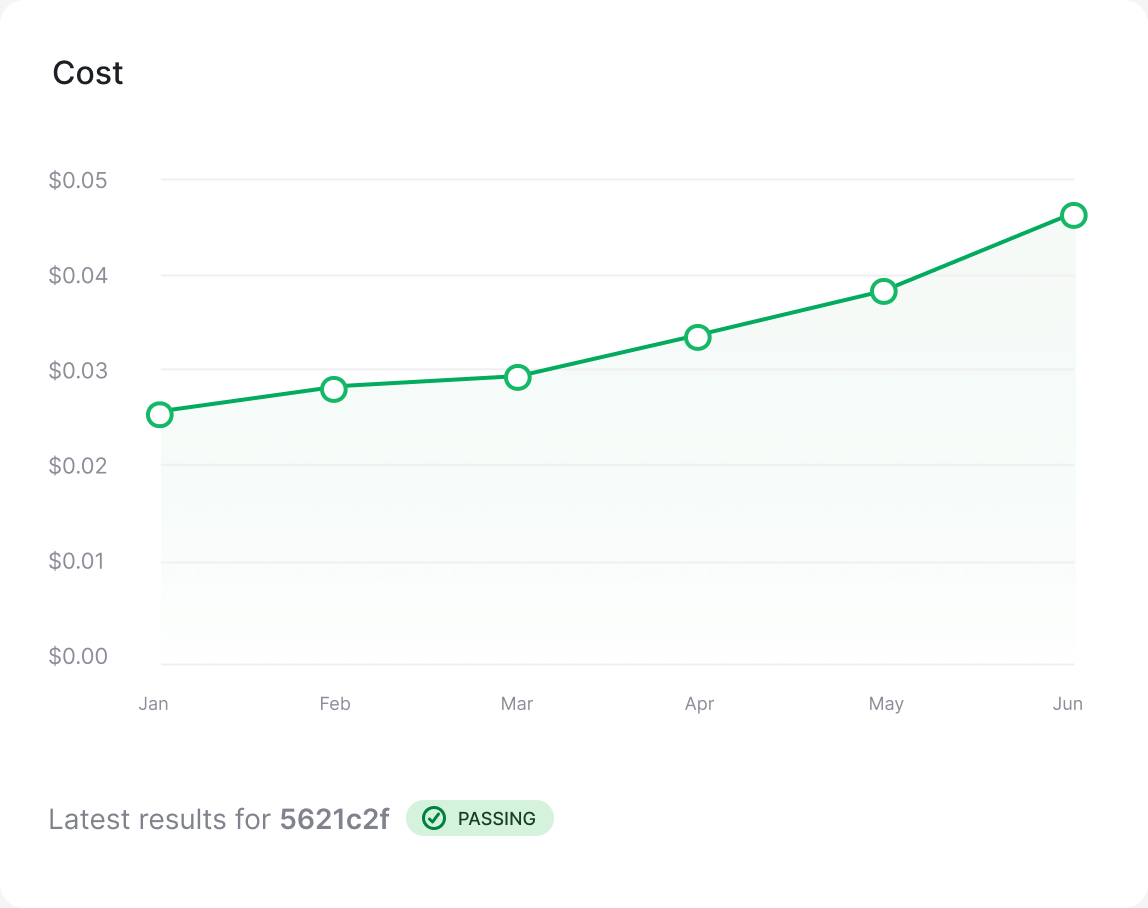
Monitor quality, drift, latency, token usage, and spend across every connected project.
See which systems are improving, which are slipping, and which are consuming more budget without producing better results.
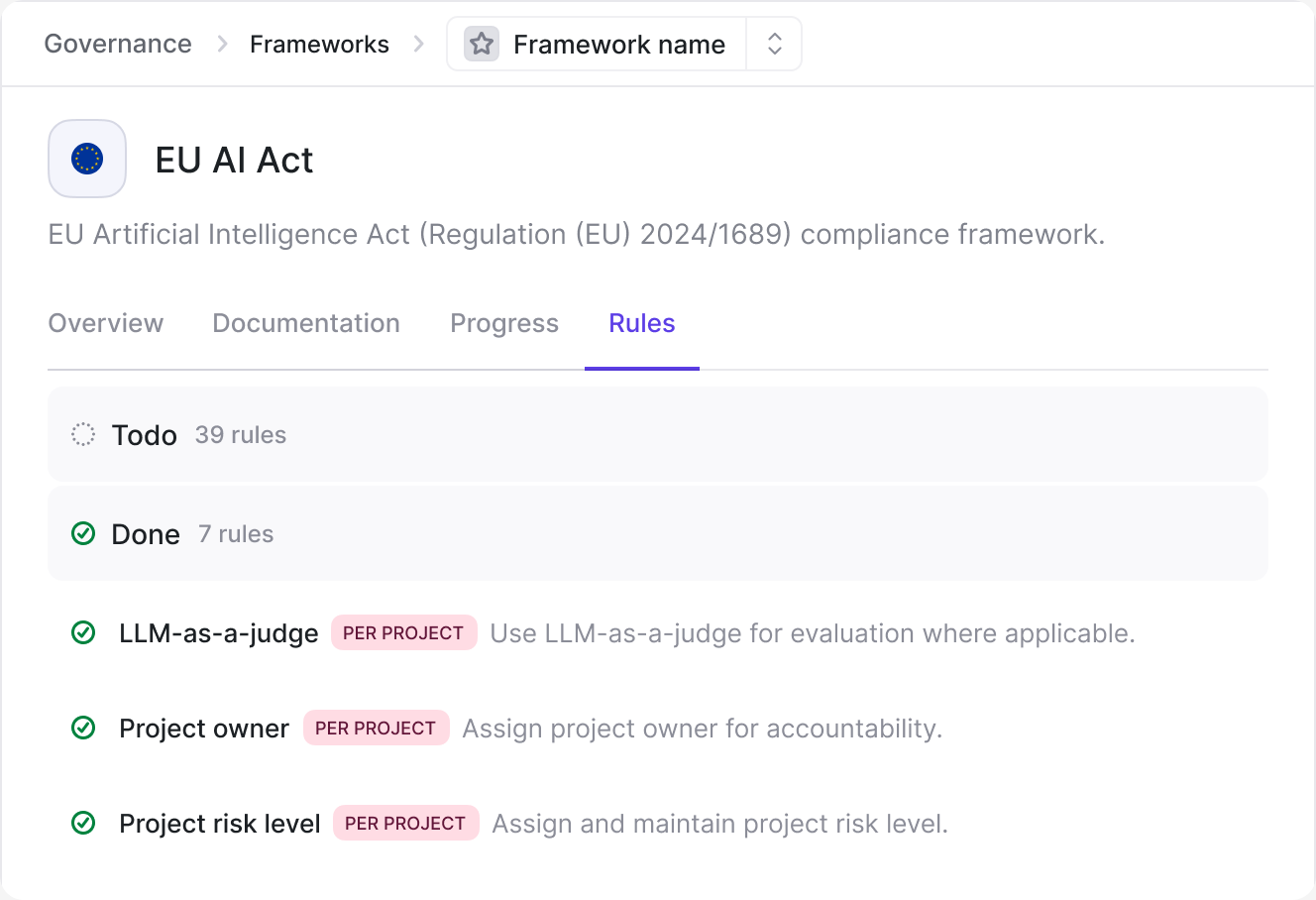
Create evidenceas you work
Keep evaluations, approvals, production monitoring, and system changes in one traceable record.
Give governance teams continuously updated evidence without adding another process for delivery teams.
Results you can build on.
100%
of releases evaluated against a defined quality standard
100%
of production requests evaluated continuously
100%
of AI spend attributed to a system, project, or team
175+
ready-to-use evaluations for AI quality, safety, and performance
Built for the standards your organization follows.
“Openlayer gives us one view of quality, performance, and cost across every version, so we can make better decisions about what to scale.”
Daniel Chyan, CTO, Jericho Security
Trusted by regulated leaders: Sun Life and Gallagher (insurance); Rogers, KPN, and Comcast (telecom and media).
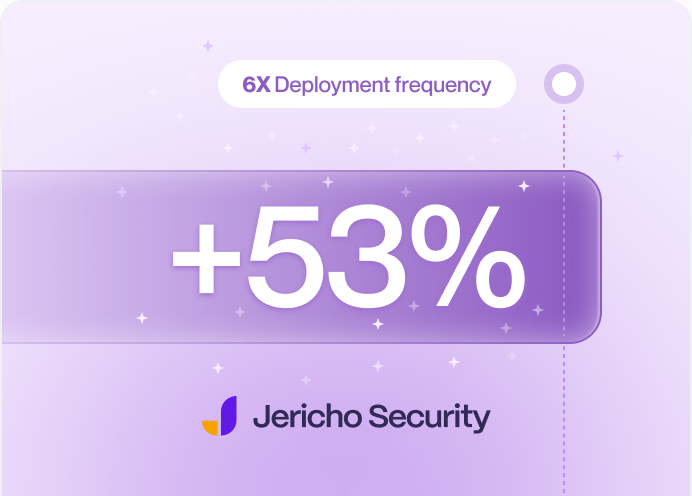
Jericho Security: 6x deployment frequency and +53% throughput after standardizing on Openlayer.

Backed by Y Combinator and Race Capital. SOC 2 Type II.
Founded by ex-Apple/Siri ML engineers.

Named in the 2026 Gartner Market Guide for AI Evaluation and Observability Platforms.

Endorsed by Guillermo Rauch (Vercel CEO) and Max Mullen (Instacart founder).
Openlayer gives AI teams a consistent way to evaluate, compare, and monitor models, agents, RAG systems, and traditional ML across the enterprise.
Systematic testing and monitoring give teams the evidence they need to move a system into production with confidence, which matters because many organizations still stall somewhere between pilot and full production.
It does both: the pre-built evaluation library surfaces exactly where quality is falling short, and version comparison shows whether a proposed fix actually improved things before it ships.
Openlayer evaluates agents on task completion, tool usage, workflow adherence, and error recovery, and monitors those same dimensions once an agent is live.
Production monitoring tracks quality, drift, latency, token usage, and cost continuously, so AI teams see degradation as it happens.
Openlayer works across major LLM providers and integrates with common AI infrastructure, so teams are not locked into a single model vendor.
Openlayer is built for organizations running AI across many teams and business units at once, with a single inventory and a consistent evaluation standard across all of them.
Unmanaged AI risk shows up as an AI team's problem first, since it is AI teams who get paged when a model misbehaves and whose roadmap absorbs the cost of fixing it after the fact.
Through the combination of testing before release, monitoring in production, and policy enforcement at runtime, so risk is addressed continuously rather than assessed once at a project kickoff.
They get one platform across the entire AI lifecycle, from the first prototype to full production scale, rather than a separate eval harness, observability tool, and governance spreadsheet.

Scale what works.
Know which AI systems are delivering value, then expand them with quality, cost, and risk continuously measured.