
Prove every AI system isgoverned,not just documented.
One system of record for every AI system, with policy continuously enforced and evidence automatically generated across its lifecycle.
See Openlayer in action



 Customize display






 +12.3%
 +8.1%
+8.1% 1.3%
1.3%
 View 7 members


AI oversight is no longer optional.
The EU AI Act, emerging US state laws, and sector-specific requirements are turning AI governance into an operational obligation. Organizations must be able to identify which systems are in use, assess their risk, enforce the appropriate controls, and produce evidence when asked.
Frameworks including NIST AI RMF and ISO/IEC 42001 raise the standard further: governance must remain connected to how AI systems are actually built, changed, and used.
EU AI Act
ISO/IEC 42001
NIST AI RMF
OSFI E-23
100%
of AI systems continuously monitored
55%
of compliance requirements unlocked in under one week
100%
of policy violations caught before deployment
60% of enterpriseAI risk is currentlyunknown.
AI has outgrown the systems meant to govern it. New models, vendors, and use cases reach production faster than review processes can adapt, while responsibility is split across engineering, security, legal, and compliance.
The result is a widening gap between what organizations believe they control and what they can actually prove.
Risk stays hidden until a system fails, a regulator asks, or a customer raises the alarm.
No complete view of enterprise AI.
New models, agents, applications, and vendor tools appear faster than governance teams can identify and assess them.
Evidence scattered across the organization.
Approvals, test results, risk assessments, and ownership records live across spreadsheets, tickets, documents, and disconnected systems.
Controls are documented, not continuously verified.
Traditional GRC tools document controls but cannot continuously verify whether an AI system meets them in development or production.
The governance layer your GRC stack is missing.
Openlayer is the only platform that runs your controls against live AI systems and generates audit-ready evidence as a byproduct.
With leading frameworks already mapped, teams can identify coverage gaps, apply the right controls, and begin governing AI in days—not months.
Everything between intake and audit.
Centralized AI system inventory
Every system, built or bought, in one registry with owner, use case, and risk level.
Multi-dimensional risk scoring
Score at intake against the frameworks you follow; risk drives the oversight required.
Approval workflows and audit trail
Every decision time-stamped, attributable, and tied to evidence.
Structured intake workflows
New AI enters through a consistent review, not a Slack thread.
Lifecycle stage management
Development, evaluation, and production, each with its own requirements and sign-offs.
Out-of-the-box compliance mappings
Pre-built mappings for 8 frameworks like the EU AI Act, ISO 42001, NIST AI RMF, OSFI E-23, and state-level regulations.
Trusted by regulated leaders: Sun Life and Gallagher (insurance); Rogers, KPN, and Comcast (telecom and media).
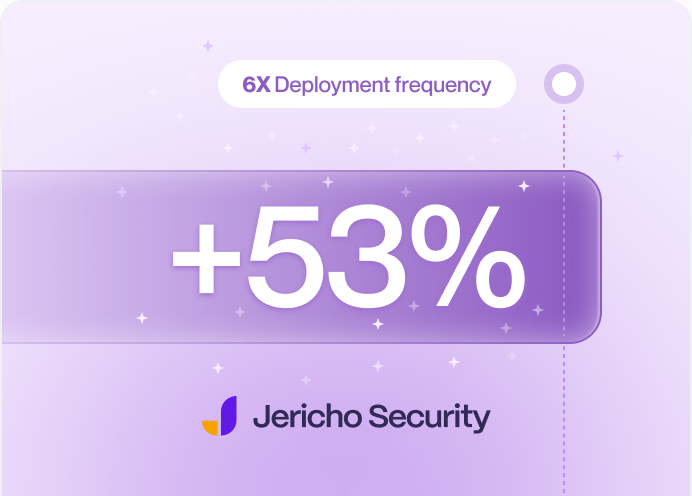
Jericho Security: 6x deployment frequency and +53% throughput after standardizing on Openlayer.

Backed by Y Combinator and Race Capital. SOC 2 Type II.
Founded by ex-Apple/Siri ML engineers.

Named in the 2026 Gartner Market Guide for AI Evaluation and Observability Platforms.

Endorsed by Guillermo Rauch (Vercel CEO) and Max Mullen (Instacart founder).
AI governance is the set of policies, processes, and controls that determine how an organization decides which AI systems get built or bought, how those systems are reviewed and approved, how they are monitored once live, and how the organization proves its rules were actually followed.
Openlayer turns governance from a documentation exercise into a running system: it keeps a live inventory of every AI system, runs testing and monitoring against each one, enforces policy at runtime through guardrails, and generates audit evidence automatically as that work happens.
Openlayer assigns every AI system a risk classification at intake based on the frameworks an organization follows, then matches the level of testing, monitoring, and approval to that risk level, so higher-risk systems get more oversight and lower-risk systems move faster.
Intake, risk scoring, approval routing, evidence collection, and compliance mapping can be managed and automated through Openlayer, reducing the manual coordination that otherwise happens across email, spreadsheets, and separate systems.
Governance applies from the moment a system is discovered or proposed, through development, testing, and approval, and continues once it is in production with ongoing monitoring, guardrails, and periodic re-review. Oversight does not stop at launch.
Openlayer's inventory and governance workflows cover AI embedded in purchased software and third-party vendor tools alongside systems built internally, so an organization governs more than just the AI it wrote itself.
Each AI system moves through a standardized intake and approval workflow with defined stage gates, named approvers, and a time-stamped, attributable decision at each step, in place of ad hoc email approvals.
Every registered AI system maintains a living record of its owner, intended use, risk classification, approvals, test results, and monitoring history. This gives teams a centralized foundation for model cards, system documentation, and governance records.
Traditional GRC tools document what the policy is. Openlayer connects that policy to what the AI system actually does at runtime, so approvals, monitoring, and enforcement all feed the same evidence trail instead of leaving GRC as a paper record.
Openlayer includes pre-built compliance mappings to major frameworks, including the EU AI Act, ISO/IEC 42001, and the NIST AI Risk Management Framework, with additional mappings for industry-specific and regional requirements.
Governance is built for regulated enterprises in industries such as finance, telecom, healthcare, and cybersecurity, where an ungoverned AI system carries real financial, security, or regulatory consequences.