MLflow reviews, pricing, and alternatives (January 2026)
You're using MLflow to track experiments and manage model versions. That's fine for development. But when you deploy GenAI systems in regulated industries, you need behavioral testing, runtime security, and automated compliance mapping. If you're exploring ML lifecycle management tools that go beyond logging and versioning, this comparison breaks down MLflow's strengths, its limitations, and the alternatives built for production governance.
TLDR:
- MLflow handles experiment tracking and model versioning but lacks security guardrails, automated testing, and compliance automation for production AI systems.
- Alternatives like Braintrust and LangSmith require custom test implementation, while Openlayer provides 100+ prebuilt tests across modalities.
- Real-time security guardrails that block prompt injections and PII leakage separate production-ready platforms from logging-only tools.
- Openlayer adds governance, automated compliance mapping to EU AI Act and NIST RMF, and continuous risk monitoring on top of existing MLflow workflows.
What is MLflow and how does it work?
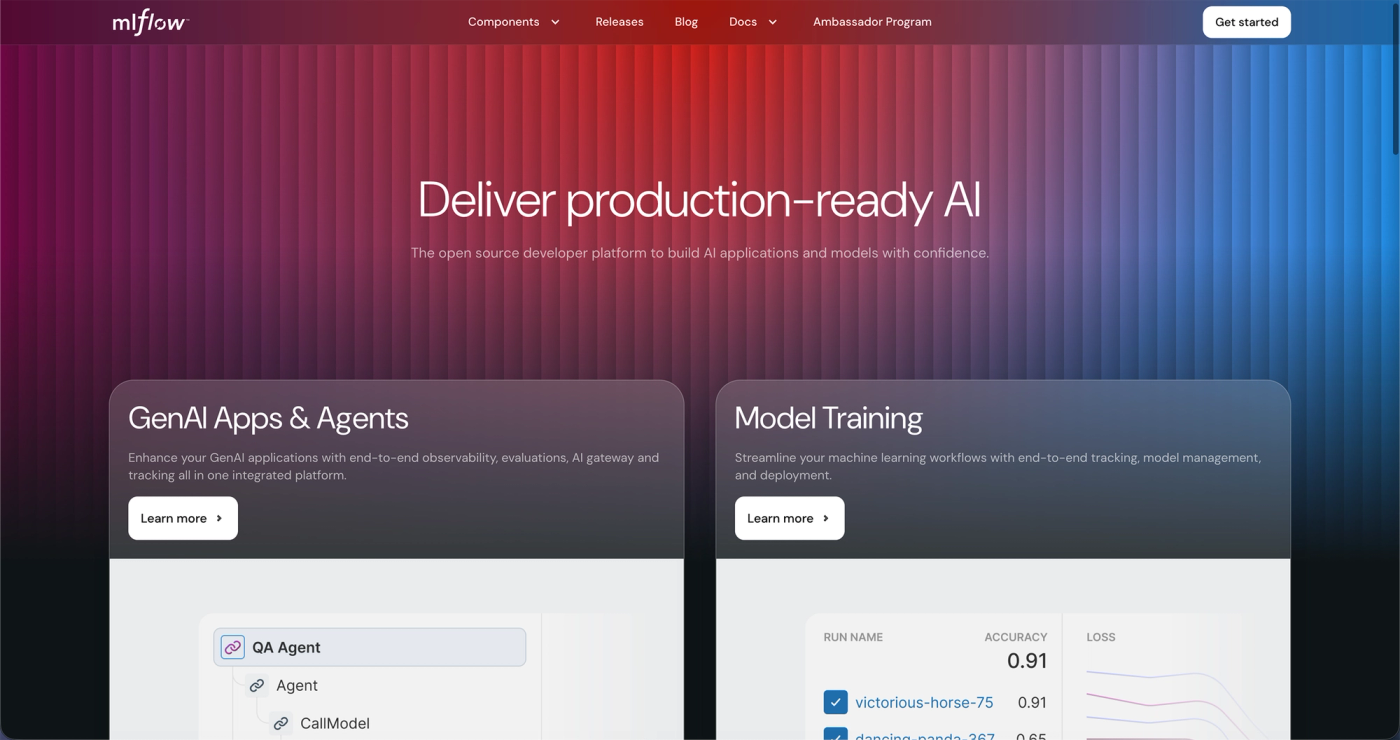
MLflow is an open-source ML lifecycle management system released under the Apache 2.0 license. Created by Databricks, it helps engineering teams track experiments, package models, and manage deployments.
The tool organizes work through four components:
- Tracking logs parameters, metrics, and artifacts from each training run.
- The Model Registry handles versioning and stage transitions with approval workflows.
- Projects standardize code packaging and execution.
- Models define a common format for deploying across serving environments.
Teams use MLflow to log hyperparameters during training, store model binaries with metadata, and retrieve versioned models for inference. Unity Catalog integration adds centralized governance for models in Databricks environments.
MLflow focuses on versioning, reproducibility, and deployment automation. It captures training metadata and deployment locations but does not evaluate model behavior for bias, toxicity, or adversarial robustness. It tracks lineage but does not enforce security guardrails or detect production drift.
Why consider MLflow alternatives?
MLflow handles experiment tracking and model versioning well for teams building their first MLOps workflows. Parameter logging and artifact storage work reliably, and Unity Catalog integration provides lineage tracking within Databricks environments.
But, production requirements expose gaps:
- MLflow cannot block prompt injections or prevent PII leakage in real time. Security testing requires custom integration work outside the tool.
- Validation logic falls on your team. There's no test library for hallucinations, bias, or toxicity. You write custom evaluation code for each model type, then maintain it as frameworks evolve. Multimodal testing across text, vision, and audio requires separate tooling.
- Continuous monitoring stops at metric logging. MLflow doesn't detect anomalies, score risk levels, or trigger alerts based on policy violations. Compliance teams in regulated industries need audit trails mapped to EU AI Act, NIST RMF, or ISO 42001. MLflow provides none of this.
Organizations deploying GenAI systems or operating under regulatory oversight evaluate alternatives when they need security guardrails, automated testing, and compliance automation. MIT research shows that while 80% of organizations actively explore AI tools and launch pilots, only 5% successfully reach production with measurable business impact, highlighting the critical need for production-ready governance tools.
Best Overall MLflow alternative: Openlayer
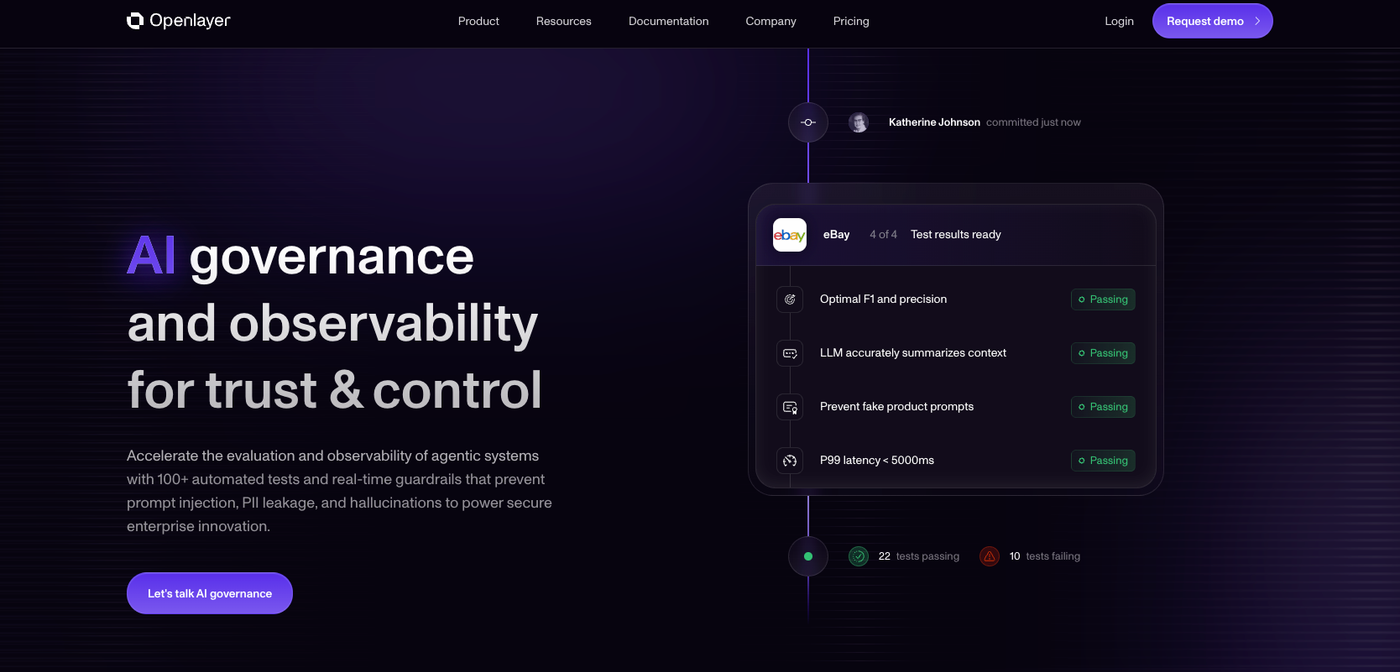
Openlayer is an AI governance and observability solution that provides end-to-end oversight across ML, GenAI, and agentic systems in both development and production. Unlike MLflow's focus on experiment tracking and registry, Openlayer delivers automated testing, security guardrails, continuous monitoring, and compliance automation.
What Openlayer offers: a library of 100+ automated behavioral tests covering hallucinations, bias, toxicity, PII leakage, drift, robustness, and adversarial attacks across text, vision, tabular, audio, and agent workflows. Real-time security guardrails actively block prompt injections, data exfiltration, malicious queries, and PII/IP leakage before reaching downstream systems. Continuous monitoring includes anomaly detection, risk scoring, and policy-based alerts tied to risk tiers and compliance thresholds. Automated compliance mapping to EU AI Act, NIST RMF, ISO 42001, TRAIGA, OWASP, and LGPD with continuous evidence capture and audit-ready dashboards.
Openlayer is great for regulated enterprises in financial services, healthcare, insurance, and telecom deploying mixed ML and GenAI systems that require unified governance, runtime protection, and regulatory compliance at scale.
Braintrust
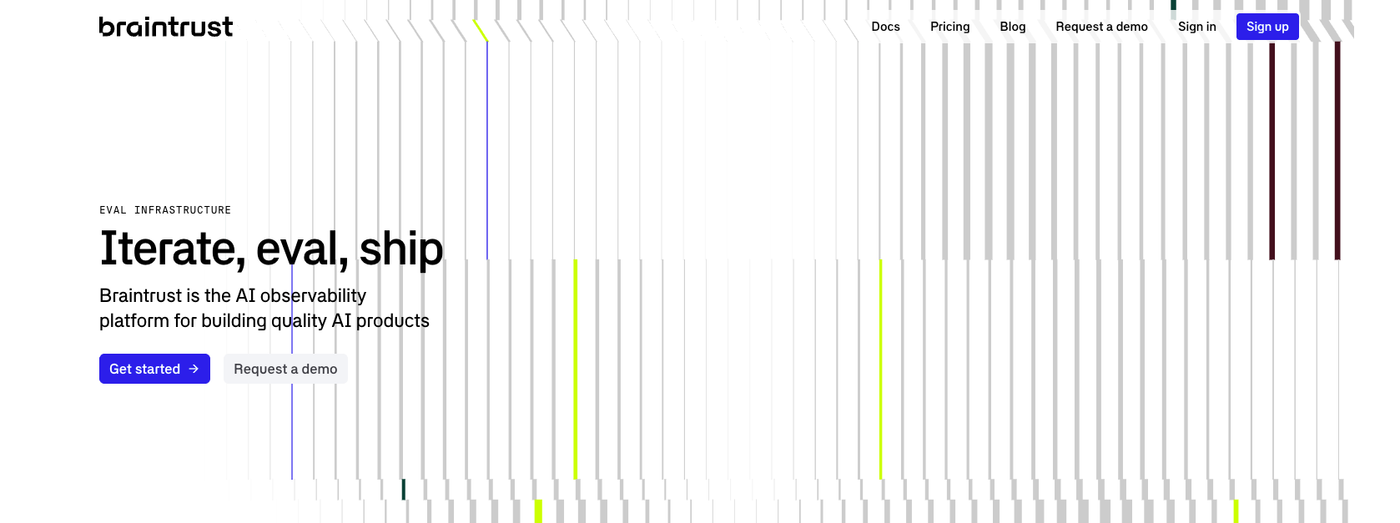
Braintrust provides evaluation and observability for LLM applications with flexible datasets, scorers, and CI integration. It enables evaluation gates in CI/CD workflows and automatic regression detection through custom-defined tests. But, it lacks prebuilt test library, requiring manual implementation of most safety, security, and quality metrics. It also doesn't have real-time blocking of unsafe behavior or automated compliance mapping to regulatory frameworks. Braintrust is good for engineering teams building LLM applications that need code-driven evaluation frameworks and can invest time defining custom tests and scorers.
LangSmith
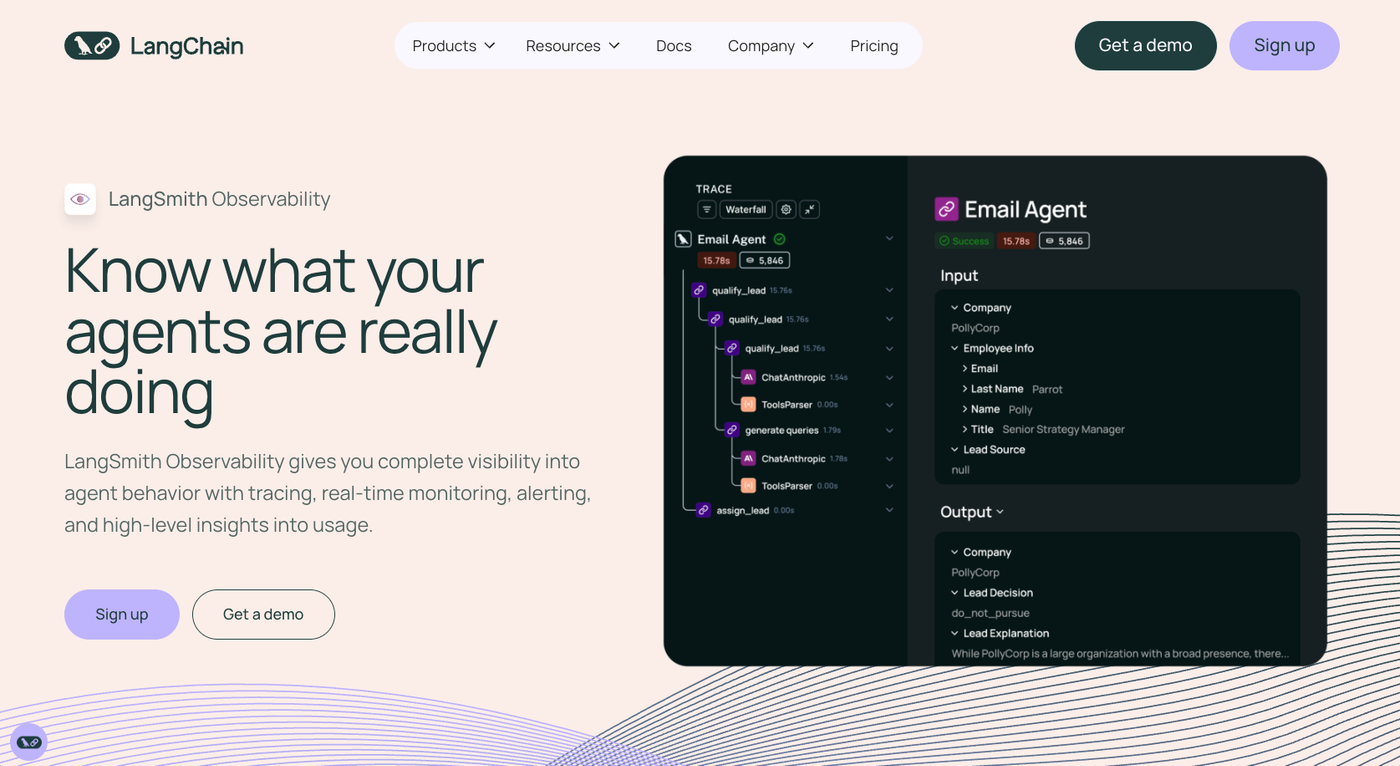
LangSmith delivers developer-focused observability and tracing for LangChain-based LLM applications with detailed traces for prompts, model calls, tool usage, and agent steps alongside cost tracking and version comparisons. Its key limitation is that it's tied to LangChain-based workflows and does not support multi-framework or traditional ML model oversight. Additionally, it doesn't have any real-time security guardrails, statistical anomaly detection, or compliance alerting. LangSmith is good for development teams building LLM applications on LangChain that need detailed trace-level debugging and prompt iteration tools.
Langfuse
Langfuse provides open-source observability for LLM applications with detailed tracing, prompt management, and cost tracking across multiple frameworks. It captures traces for model calls, retrieval steps, and agent actions with flexible tagging and filtering. However, it lacks real-time security enforcement, automated behavioral testing, and compliance framework mapping. Langfuse focuses on diagnostic observability rather than preventive governance. Langfuse is good for engineering teams building LLM applications across multiple frameworks that need open-source tracing and cost visibility without vendor lock-in.
Deepchecks
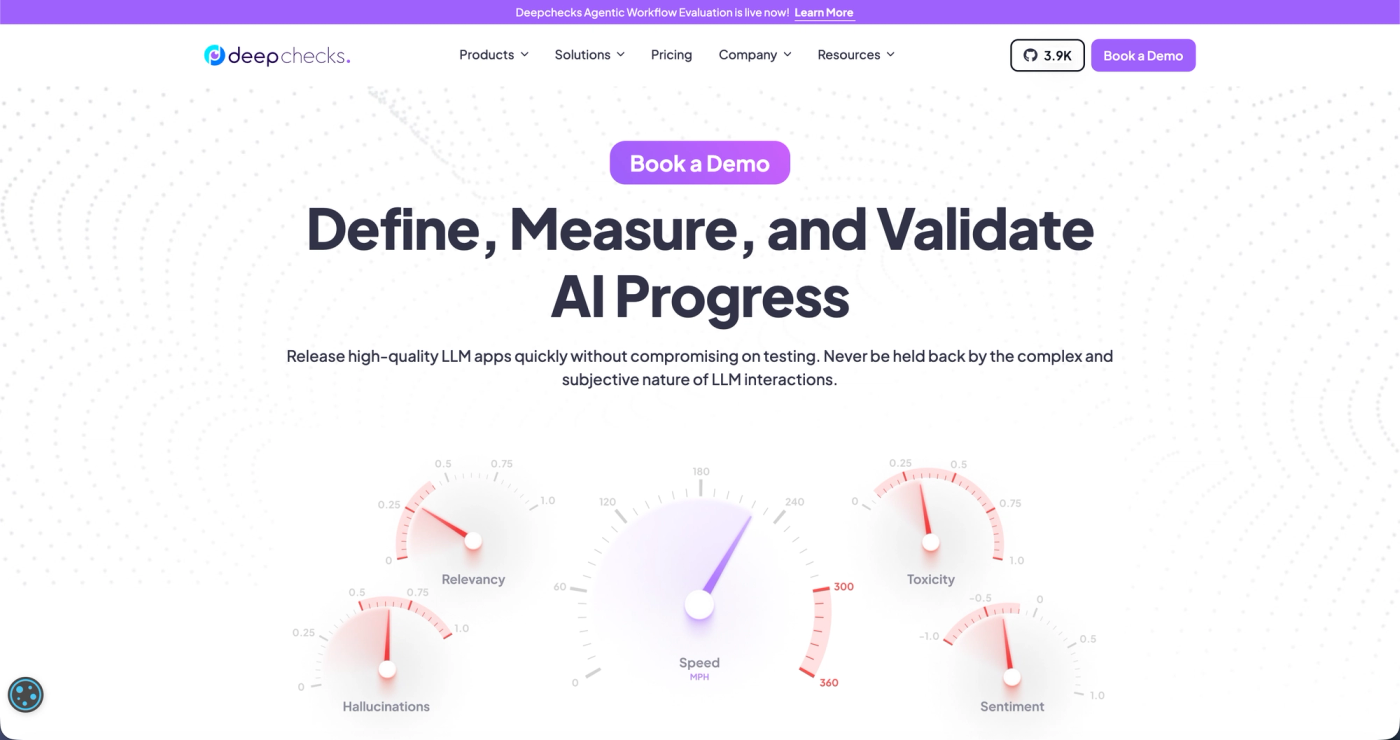
Deepchecks provides open-source testing and monitoring for ML and LLM systems with focus on data quality validation and model performance checks. It offers pre-deployment testing suites for tabular data, computer vision, and NLP models alongside production monitoring for drift and data integrity. However, it lacks real-time security guardrails, automated compliance mapping, and comprehensive behavioral testing for GenAI systems. Deepchecks focuses on traditional ML validation rather than enterprise governance. Deepchecks is good for data science teams building traditional ML models that need open-source data quality validation and basic drift detection.
Feature comparison: MLflow vs top alternatives
| Capability | MLflow | Openlayer | Braintrust | LangSmith | Langfuse | Deepchecks |
|---|---|---|---|---|---|---|
| Automated test library | ✗ | ✓ 100+ tests across modalities | ✗ User-defined | ✗ User-defined | ✗ User-defined | Limited pre-deployment |
| Real-time security guardrails | ✗ | ✓ Blocks prompt injection, PII leakage | ✗ | ✗ | ✗ Observational only | ✗ |
| Continuous anomaly detection | Basic logging | ✓ Risk-scored alerts | Threshold alerts | ✗ | ✗ | Limited production |
| Compliance framework mapping | ✗ | ✓ EU AI Act, NIST, ISO 42001 | ✗ User-implemented | ✗ | ✗ | ✗ |
| Multi-framework support | ✓ | ✓ ML, GenAI, agents | ✓ LLM focus | LangChain only | ✓ LLM focus | ✓ ML and LLM |
| Production monitoring | Metric logging | ✓ Continuous with enforcement | ✓ Diagnostic | ✓ Diagnostic | ✓ Diagnostic | Limited |
| Governance workflows | Unity Catalog lineage | ✓ Risk tiers, approvals, evidence | CI gates only | ✗ | ✗ Observational | ✗ |
MLflow and Deepchecks offer broad framework support but lack security guardrails and compliance automation. Braintrust, LangSmith, and Langfuse provide observability for LLM workflows but require custom implementation for testing, security, and governance. Openlayer combines automated testing, real-time blocking, continuous monitoring, and regulatory mapping in a single solution.
Why Openlayer is the best MLflow alternative
MLflow delivers reliable experiment tracking and model registry for engineering workflows. When AI systems move to production in regulated environments, organizations need capabilities MLflow doesn't provide.
We built Openlayer to fill these gaps. Where MLflow logs metrics, we evaluate behavior. Where MLflow versions models, we enforce security policies. Where MLflow stores artifacts, we generate compliance evidence.
You keep MLflow for tracking and versioning. Openlayer sits on top to add what's missing: behavioral testing before release, runtime guardrails during inference, and continuous risk monitoring across deployments. Real-time blocking stops threats that logging only documents after the fact.
Compliance automation separates us from alternatives. We map your AI systems to EU AI Act, NIST RMF, and ISO 42001 automatically, generating audit-ready evidence as models run. MLflow requires you to build this separately.
Teams don't replace MLflow with Openlayer. They extend it when they need governance, security, and regulatory alignment at enterprise scale.
Final thoughts on ML lifecycle management alternatives
Your choice of MLflow alternatives depends on what your production systems need beyond experiment tracking. If you're deploying in regulated industries, you need automated testing for safety issues, real-time security guardrails, and compliance mapping that MLflow can't provide. Openlayer works alongside your existing MLflow setup to add governance, security, and regulatory alignment. We handle the behavioral testing and runtime protection while your tracking and versioning stay in place.
FAQ
When should you consider moving away from MLflow?
Consider alternatives when you need real-time security guardrails, automated behavioral testing, or compliance mapping to regulatory frameworks like EU AI Act or NIST RMF. MLflow handles experiment tracking and versioning well, but lacks built-in protection against prompt injections, PII leakage, or production anomalies.
What features should you prioritize when comparing MLflow alternatives?
Prioritize automated test libraries for bias, toxicity, and hallucinations; real-time blocking of security threats; continuous anomaly detection with risk scoring; and automated compliance mapping. Teams in regulated industries should verify the tool supports their specific frameworks and provides audit-ready evidence.
Can I use Openlayer alongside MLflow?
Yes. Openlayer layers on top of existing MLOps tools like MLflow to add behavioral testing, security guardrails, and compliance automation without replacing your experiment tracking or model registry workflows.
How does Openlayer differ from LangSmith or Braintrust for LLM evaluation?
Openlayer provides 100+ prebuilt tests across all modalities and real-time blocking of unsafe behavior, while LangSmith and Braintrust require custom test implementation and offer only observability without runtime enforcement. Openlayer also supports traditional ML models and automated compliance mapping, not just LLM workflows.
What compliance frameworks does Openlayer support that MLflow doesn't?
Openlayer automatically maps AI systems to EU AI Act, NIST RMF, ISO 42001, TRAIGA, OWASP, and LGPD with continuous evidence capture and audit-ready dashboards. MLflow provides no compliance automation, requiring teams to build this separately.