6 Top AI Governance Tools for Financial Services (July 2026)
You run financial AI in a regulatory environment where the consequences of a model failure are both technical and legal. A biased lending decision can trigger a fair lending investigation. A miscalibrated fraud model can violate consumer protection standards before anyone on your team notices the drift. The EU AI Act's August 2026 deadline for high-risk systems is not a distant target anymore, and financial institutions are still figuring out which models fall under those obligations and what documentation auditors will demand during conformity assessments. AI governance tools for financial services are designed to manage that complexity: they track every deployed model so nothing runs outside a governance perimeter, measure demographic parity and fairness continuously across the model lifecycle, block outputs that breach defined thresholds before they reach customers, and generate the structured audit records that map to SR 11-7, Article 43 of the EU AI Act, and related model risk frameworks. The challenge is that governance tools cover different parts of that stack. Some produce policy documentation but no runtime enforcement. Others monitor production outputs but generate no compliance evidence. We're breaking down where each tool draws the boundary and what gaps you need to fill separately.
TLDR:
- AI governance tools for financial services manage risk and compliance for credit scoring, fraud detection, and insurance models facing EU AI Act (August 2026) and SR 11-7 obligations.
- Tools split into policy documentation (Credo AI, IBM watsonx.governance, OneTrust, Collibra) versus runtime enforcement, with most stopping at audit trails without blocking unsafe outputs.
- Financial institutions need runtime guardrails that block noncompliant outputs before they reach customers, beyond logs reviewed after incidents occur.
- Openlayer blocks unsafe outputs at the API boundary while generating Article 43 conformity records through 100+ pre-built tests and real-time monitoring of 13 session-level metrics.
What Are AI Governance Tools for Financial Services?
AI governance tools for financial services are software built to help institutions manage risk, stay compliant, and maintain control over AI running in regulated functions. The category exists because financial AI carries consequences most industries don't face: a miscalibrated credit scoring model can violate lending fairness laws, while a drifting fraud detection system can draw regulatory sanction before any engineer notices a performance gap. The CFPB has clarified that institutions using AI in credit decisions must test models for fairness and comply with existing consumer protection laws.
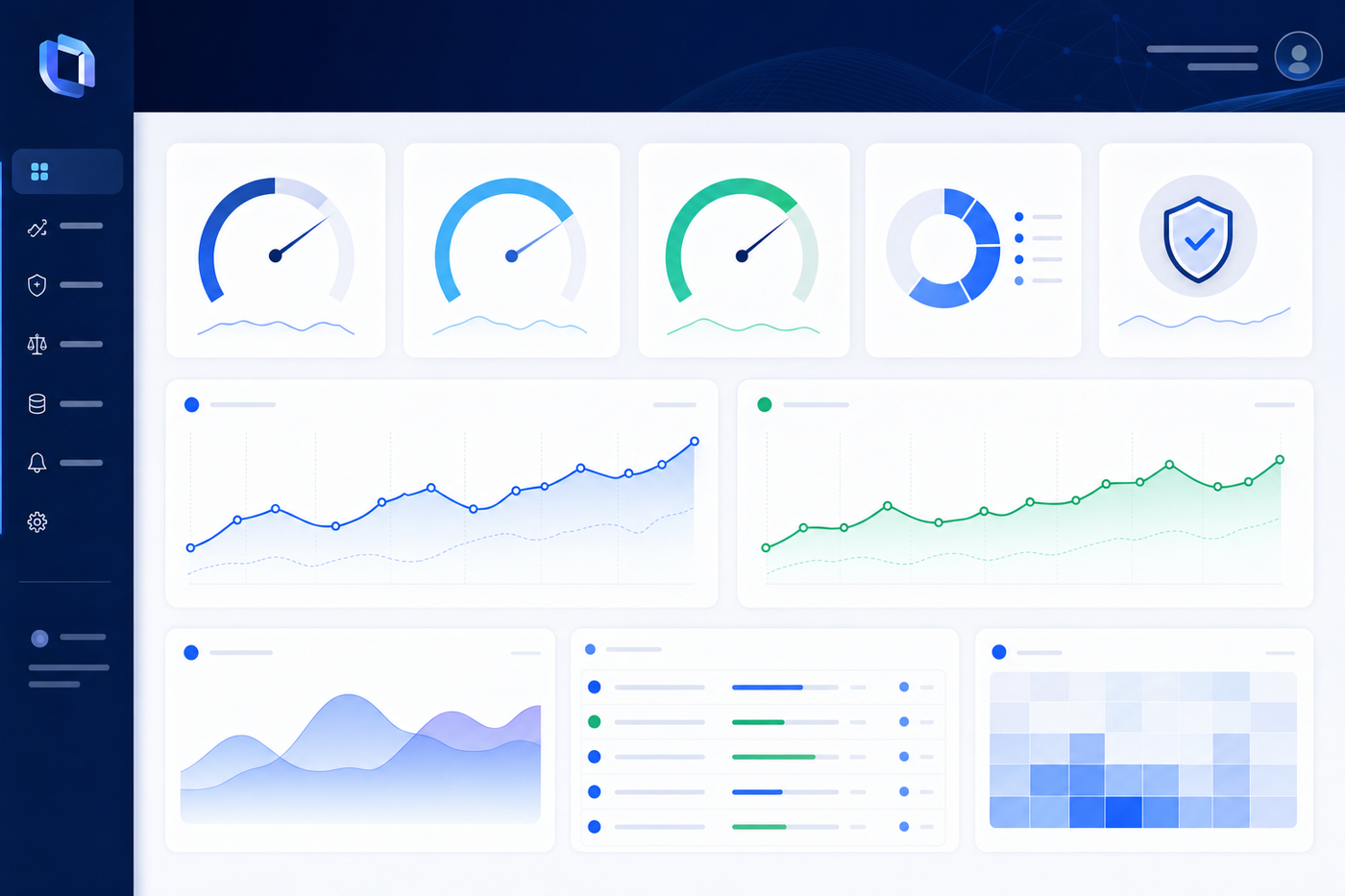
The regulatory pressure is concrete and growing. The EU AI Act classifies credit scoring, insurance risk assessment, and fraud detection as high-risk systems, each carrying audit documentation and human oversight requirements with an August 2026 enforcement deadline. In the US, SR 11-7 model risk management guidance and SR 15-9 set expectations that examiners now apply to AI. These aren't aspirational standards; they're the checklist auditors bring.
What these tools actually cover
The functional scope varies widely across vendors, but the core governance domains financial institutions need to account for include:
- Model inventory and registration: tracking every AI system in production, its intended use, risk classification, and the team that owns it, so shadow deployments don't accumulate outside any governance perimeter.
- Bias and fairness monitoring: measuring demographic parity gaps and disparate impact across protected classes on an ongoing basis, beyond deployment time.
- Audit trail generation: producing the documentation records, evaluation results, and decision logs that examiners ask to see during model risk reviews.
- Policy enforcement at inference: blocking or flagging outputs that violate defined thresholds before they reach downstream systems or customers.
How We Ranked AI Governance Tools for Financial Services
Five criteria shaped every ranking in this list.
Regulatory coverage depth: Tools were assessed on whether they map controls to specific obligations under the EU AI Act, SR 11-7, DORA, and the CFPB's model risk guidance, beyond general AI governance frameworks. A tool that covers only internal policy documentation without connecting to enforceable financial services requirements ranked lower.
Runtime enforcement vs. policy documentation: Tools that actively block noncompliant outputs or flag threshold breaches in production ranked above tools that stop at audit trails and static risk registers.
Financial services specificity: Generic AI governance tooling was assessed against purpose-built or deeply configured financial services capabilities, credit model fairness testing, explainability for adverse action notices, and transaction monitoring drift detection.
Audit-readiness of evidence artifacts: Regulators and examiners ask for specific records. Tools were assessed on whether they produce documentation that satisfies SR 11-7 model inventories, EU AI Act Annex IV technical documentation, and DORA incident reporting requirements out of the box.
Integration with existing model infrastructure: Financial institutions run complex model stacks. Tools were assessed on SDK availability, compatibility with MLOps pipelines, and the ability to monitor third-party vendor models alongside internally developed ones.
Best Overall AI Governance Tool for Financial Services: Openlayer
Openlayer sits at the intersection of evaluation, observability, and governance across the full AI lifecycle, from development through production. That scope matters in financial services, where a model's behavior in staging and its behavior under live transaction volume can diverge in ways that create regulatory exposure before any human reviewer notices.
The core differentiator is enforcement, not documentation. Where most governance tools generate policy records and audit logs, Openlayer's guardrails block non-compliant outputs before they cross the API boundary. For a lending model, that means a response that would violate fair lending thresholds never reaches the end user. The audit trail captures the block, the reason, and the model version that triggered it.
Here is what that looks like across the governance lifecycle:
Development and Pre-Deployment
- 100+ pre-built tests cover fairness, groundedness, toxicity, and task-specific quality metrics. Teams can set deployment gates that block a model version from advancing if demographic parity gaps exceed defined thresholds or groundedness scores fall below an approved floor.
- LLM-as-a-judge evaluation runs at 81.3% human correlation, giving compliance reviewers a defensible quality signal that does not require manual spot-checking at scale.
- SDKs in Python, TypeScript, Java, and Go let engineering teams wire evaluation into existing CI/CD pipelines without a separate deployment workflow.
Production Monitoring and Incident Response
- Real-time output monitoring tracks 13 session-level metrics, flagging drift and behavioral regressions as they appear in live traffic instead of retrospective batch reviews.
- When a threshold breach occurs, Openlayer logs the input record, raw output, model version hash, and confidence score as a structured incident artifact. That record maps directly to what an auditor reviewing conformity assessment evidence would ask to see under EU AI Act Article 43 obligations.
- Automated compliance mapping connects monitoring results to regulatory frameworks including the EU AI Act and NIST AI RMF, so governance leads are not manually cross-referencing framework obligations against system logs.
Where Openlayer Has Constraints
No single tool closes the full governance gap. Openlayer does not replace the legal and compliance judgment calls that financial institutions need when classifying systems under the EU AI Act's high-risk criteria or when drafting the technical documentation Annex IV requires. It generates the evidentiary record; it does not write the policy. Teams with thin compliance functions will still need external counsel or a dedicated governance lead to own the framework-mapping decisions that sit above the tooling layer.
Best for ML engineering and AI governance teams in financial services that need runtime enforcement beyond observability. Most suitable for organizations that already have compliance counsel and need the technical evidence layer those teams rely on during audits.
Credo AI
Credo AI is purpose-built for AI governance, focused on policy documentation, risk assessment, and regulatory mapping across frameworks like the EU AI Act, NIST AI RMF, and ISO 42001. Financial services teams use it to build model inventories, assign risk tiers, and generate the documentation packages auditors expect.
Here is where the scope boundary matters for financial services teams assessing the tool:
- Credo AI covers the policy and documentation layer well, producing risk assessments and compliance reports that map model behavior to regulatory requirements.
- It does not monitor live model outputs, enforce behavioral thresholds, or flag drift once a model is in production. Governance artifacts are generated pre-deployment; runtime enforcement is outside its scope.
- Integration with existing ML infrastructure requires additional tooling to close the gap between documented policy and what models actually do in production.
Bottom line
Best for organizations that need structured regulatory documentation and model risk inventories. Most suitable for governance and compliance teams whose primary deliverable is audit-ready policy evidence instead of production monitoring.
IBM watsonx.governance
IBM watsonx.governance sits inside the broader watsonx ecosystem, which means it inherits both the strengths and the constraints of that architecture. Coverage spans AI governance and data governance, but only within IBM's stack. Organizations running models outside that ecosystem will find the integration story much thinner.
There are a few things to understand about how it handles governance in practice.
What it covers
- Policy documentation and model risk management workflows built for regulated industries, with particular depth in financial services use cases.
- Factsheet automation that captures model metadata, intended use, and risk classification in a structured record auditors can review.
- Bias detection and fairness monitoring against configurable demographic thresholds, with reporting outputs designed to satisfy SR 11-7 model validation and related model risk guidance.
Where it stops
- Governance coverage applies to models registered and run within the IBM ecosystem. Models deployed outside watsonx, including third-party LLM API integrations or fine-tuned models running in separate infrastructure, fall outside its governance perimeter.
- It does not enforce behavioral thresholds at the API boundary in real time. Policy documentation and monitoring exist; blocking unsafe outputs before they leave inference does not.
Bottom line
Best for organizations already committed to IBM infrastructure that need model risk documentation and fairness reporting aligned to financial services regulatory expectations. Most suitable for teams where governance means record-keeping and audit readiness over active runtime enforcement.
OneTrust
OneTrust approaches AI governance from its existing data privacy and trust foundation, extending that coverage into AI risk management. The tool helps organizations inventory AI systems, map data flows, and document risk assessments against frameworks like the EU AI Act and NIST AI RMF.
Where OneTrust Fits in Financial Services
For financial institutions already running OneTrust for privacy compliance, the AI governance module slots in without requiring a separate vendor relationship. Coverage spans policy documentation, vendor risk assessments, and audit trail generation.
But OneTrust's governance layer stops at documentation. It does not monitor live model outputs, enforce behavioral thresholds, or flag drift after deployment. Teams get a structured record of what a model was approved to do, not a runtime signal about what it is actually doing.
Key Features
- Centralized AI system inventory with risk classification mapped to EU AI Act and NIST AI RMF tiers, so compliance teams can track which models are in scope for high-risk obligations.
- Data flow mapping that connects AI systems to the underlying data assets they process, supporting documentation requirements under financial regulations like GDPR and CCPA.
- Audit-ready policy and assessment records that capture pre-deployment approvals, risk sign-offs, and framework mappings in a format reviewable by regulators.
Limitations
- No production monitoring: behavioral drift, output quality degradation, and fairness metric changes go undetected after deployment.
- No automated enforcement gates: there is no mechanism to block outputs that violate a documented policy at inference time.
- Governance coverage is documentation-layer only, which leaves a gap between what a model was approved to do and what it does at scale in production.
Best for financial institutions that need to extend an existing OneTrust privacy program into AI system inventorying and pre-deployment risk documentation. Most suitable for compliance teams managing EU AI Act or NIST AI RMF documentation obligations who have a separate solution handling runtime monitoring.
Arize AI
Arize AI approaches AI governance from an observability-first position. The tool covers model monitoring, drift detection, and output tracing in production, giving ML teams visibility into how deployed models behave over time. For financial services teams that want detailed performance telemetry on live models, it offers a capable foundation.
But observability coverage is where Arize AI's governance story stops. It does not generate audit-ready documentation, map model behavior to regulatory frameworks like the EU AI Act or SR 11-7, or produce the conformity evidence financial regulators expect. Monitoring dashboards are not a compliance record.
Where the Gap Shows Up in Practice
For financial services in particular, the absence of structured governance outputs creates real problems at audit time:
- No automated mapping from model performance data to regulatory obligations, meaning compliance teams manually reconstruct traceability after the fact.
- No policy enforcement layer that blocks noncompliant outputs before they reach downstream systems or customers.
- No pre-built framework alignment for SR 11-7, MRM guidelines, or EU AI Act high-risk system requirements.
Best for teams that need production observability and are comfortable building governance documentation separately. Most suitable for organizations where the ML engineering function and compliance function operate with distinct tooling, and the compliance gap is managed through a parallel workflow.
Collibra
Collibra enters the AI governance conversation from a data governance foundation. The product has expanded to cover AI use case documentation, data lineage tracking, and policy management, making it a reasonable fit for financial institutions that already run Collibra for data cataloging and want to extend that governance perimeter to AI assets without introducing a separate vendor.
The coverage gap worth knowing: Collibra governs the data and metadata layer. It does not monitor live model outputs, enforce behavioral thresholds, or flag drift in production. Teams get strong pre-deployment documentation and data lineage, but runtime enforcement lives outside its scope.
Who It Fits
Collibra works best for organizations where data governance and AI governance share an owner and where the priority is asset registration, policy documentation, and audit-ready data lineage instead of production monitoring.
- Existing Collibra customers can extend AI asset tracking without rebuilding their governance taxonomy from scratch, which reduces procurement friction in large enterprises.
- Financial institutions subject to data residency and lineage requirements get traceable records of which datasets trained which models, satisfying pre-deployment audit expectations.
- Teams that need a unified catalog across structured data, unstructured data, and AI models will find the cross-asset visibility useful.
But if your AI risk program requires behavioral monitoring after deployment, demographic parity tracking across live inference, or automated compliance mapping to frameworks like the EU AI Act or NIST AI RMF, Collibra does not cover that ground. Those capabilities require a separate layer.
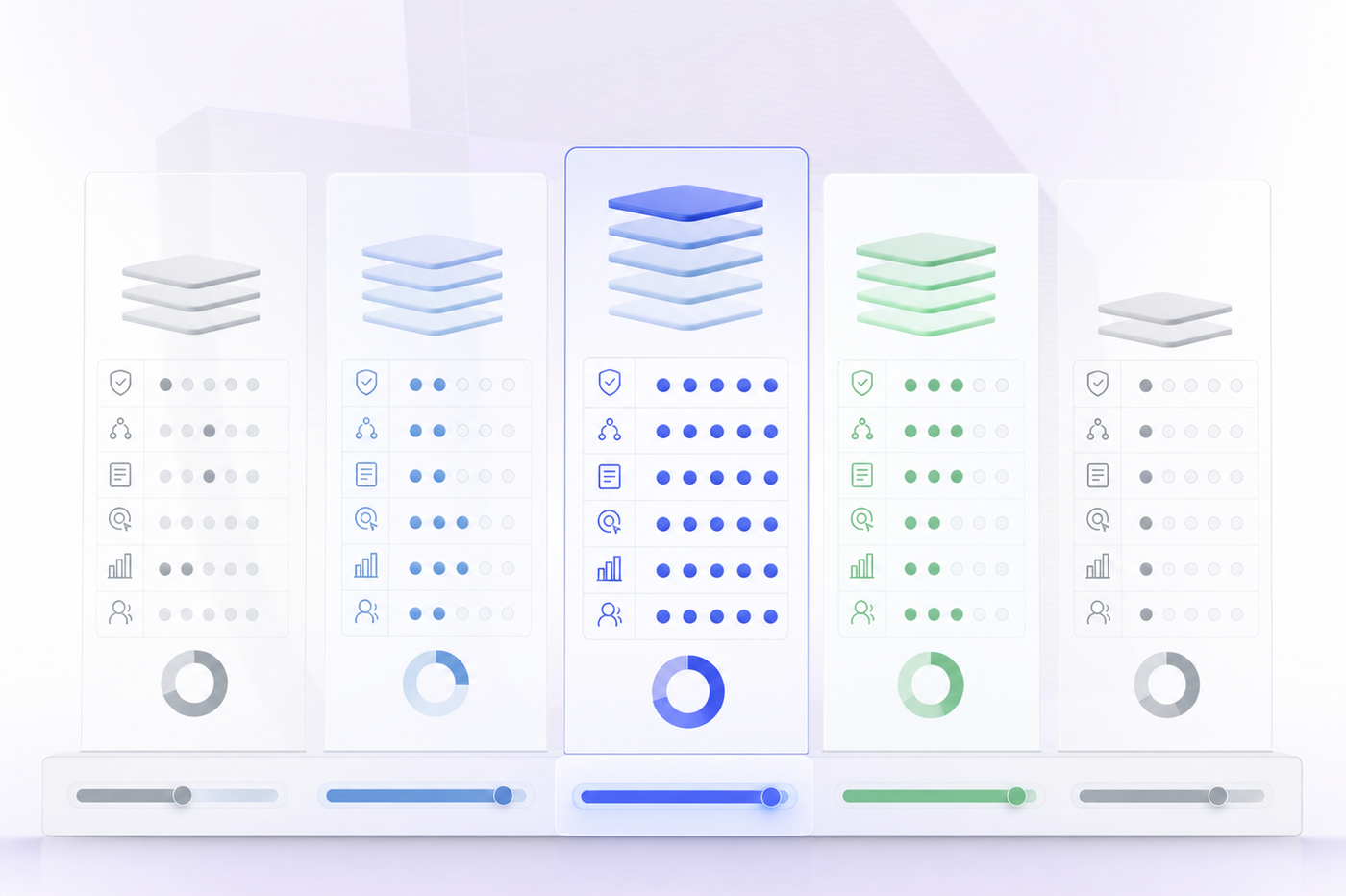
Feature Comparison Table of AI Governance Tools for Financial Services
The six tools in this post cover different parts of the governance stack. Here is how they compare across capabilities that financial services teams typically need to satisfy audit and regulatory requirements.
| Feature | Openlayer | Credo AI | IBM watsonx.governance | OneTrust | Arize AI | Collibra |
|---|---|---|---|---|---|---|
| Pre-built behavioral tests (100+) | Yes | No | No | No | No | No |
| Real-time guardrails block unsafe outputs | Yes | No | No | No | No | No |
| EU AI Act automated compliance mapping | Yes | Yes | Yes | No | No | No |
| SR 11-7 model validation support | Yes | No | Yes | No | No | No |
| CI/CD deployment gates | Yes | No | No | No | Yes | No |
| Fairness testing with statistical significance | Yes | Yes | Yes | No | No | No |
| Real-time PII enforcement | Yes | No | No | No | No | No |
| Framework-agnostic (multi-cloud) | Yes | Yes | No | Yes | Yes | Yes |
| Audit-ready evidence generation | Yes | Yes | Yes | Yes | No | No |
A few patterns worth noting as you read across the rows. Credo AI and IBM watsonx.governance are the strongest governance-layer tools in this group, covering compliance mapping, fairness testing, and audit evidence. But neither enforces behavioral constraints at runtime or blocks unsafe outputs before they reach end users. Arize AI brings CI/CD integration and production monitoring, though it stops well short of compliance documentation or audit trail generation. OneTrust and Collibra cover data and privacy governance within their respective ecosystems, with no runtime AI enforcement to speak of. Openlayer is the only tool in this comparison that covers pre-deployment testing, runtime blocking, and audit-ready compliance mapping within a single workflow.
Why Openlayer Is the Best AI Governance Tool for Financial Services
Financial services firms sitting inside the EU AI Act's August 2026 deadline for high-risk systems need more than a policy document and a spreadsheet. They need a tool that covers evaluation, observability, and governance as a single continuous workflow, from the moment a model is in development through every inference it runs in production.
Openlayer is built for exactly that scope. Where most governance tools stop at documentation or policy configuration, Openlayer adds active runtime enforcement: guardrails that block unsafe outputs before they leave the API boundary, not after a reviewer catches them in a log. That distinction matters in financial services, where a single non-compliant credit decision or a biased lending output can trigger regulatory action before your team has finished writing the incident report.
What Openlayer Covers Across the AI Lifecycle
There are three layers where governance work actually happens in financial services, and Openlayer operates across all of them.
- Pre-deployment evaluation: 100+ pre-built tests covering fairness, accuracy, groundedness, and toxicity run against models before they reach production. Teams can set enforcement gates that block deployment if demographic parity gaps exceed 5% or groundedness scores fall below defined thresholds, generating pass/fail records that go directly into the conformity assessment record auditors ask for under Article 43 of the EU AI Act.
- Runtime observability and enforcement: Once a model is live, Openlayer monitors outputs in real time. Guardrails enforce behavioral thresholds continuously, blocking outputs that violate policy before they reach downstream systems. For high-risk financial applications like credit scoring or fraud detection, this is the difference between a prevented violation and a documented one.
- Audit trail and compliance mapping: Every evaluation result, threshold decision, and guardrail trigger is logged in a structured, auditable record. That record maps to EU AI Act obligations, NIST AI RMF controls, and ISO 42001 requirements, so compliance evidence is produced as a byproduct of normal operations instead of being assembled manually before an audit.
LLM-as-a-Judge at Production Scale
For financial services teams using LLMs in customer-facing workflows, output quality is a governance question as much as a product quality question. Openlayer's LLM-as-a-judge evaluation runs at 81.3% human correlation, giving teams a scalable mechanism for assessing response quality, factual accuracy, and policy adherence across high volumes of inference without requiring human review of every output.
Where Openlayer Fits in the Competitive Market
Credo AI and IBM watsonx Governance both cover AI governance well at the policy and risk documentation layer. Neither provides the runtime enforcement layer Openlayer adds. Credo AI produces governance evidence and tracks policy commitments; it does not monitor live model outputs or enforce behavioral thresholds in production. IBM watsonx Governance covers model risk management inside the IBM ecosystem with strong explainability tooling; teams outside that ecosystem face integration overhead, and runtime guardrails are not the focus.
Openlayer's position is the complement to both: the layer where documented policy becomes enforced behavior, and where evaluation results become the evidentiary record that satisfies Article 43 conformity assessment requirements without sitting in a separate governance tool disconnected from production.
FAQ
What should financial services firms look for in AI governance tools?
The most important capabilities are audit trail generation, bias and fairness testing, regulatory reporting, and runtime enforcement of compliance policies. Tools that only document policies without monitoring live model behavior leave a gap between what governance says and what models actually do in production.
How do AI governance tools support regulatory compliance?
They map model behavior to specific regulatory requirements, such as SR 11-7, the EU AI Act, or FCRA, and produce the evidentiary records auditors expect: risk assessments, test results, monitoring logs, and incident reports.
Is AI governance only relevant for large banks?
No. Regulatory obligations under SR 11-7, ECOA, and the EU AI Act apply based on the risk level and use case of the model, not the size of the institution. Community banks, credit unions, and fintechs deploying credit scoring or fraud detection models face the same documentation and oversight requirements.
How is AI governance different from model risk management?
Model risk management focuses on validating model accuracy and fitness for purpose before deployment. AI governance is broader: it covers fairness, transparency, regulatory alignment, and ongoing behavioral monitoring after a model goes live. The two are complementary; governance without model risk management leaves technical validation gaps, and model risk management without governance leaves compliance and audit gaps.
Final Thoughts on AI Governance Tools for Financial Services
Financial services firms deploying high-risk AI systems need tools that enforce policy at inference time, beyond documenting it before deployment. The regulatory pressure is concrete: EU AI Act obligations carry €15 million fines and August 2026 deadlines, while SR 11-7 examiners are already asking for evidence your governance tooling may not produce. If your current stack covers observability but not compliance mapping, or generates policy records but doesn't block unsafe outputs, you're managing two separate workflows when you need one. Contact our team to see how evaluation, enforcement, and audit-ready evidence work together across the full AI lifecycle.
FAQ
How do I choose between AI governance tools that focus on documentation versus runtime enforcement?
Tools like Credo AI and OneTrust produce audit-ready policy records and risk assessments, while platforms like Openlayer add behavioral enforcement that blocks noncompliant outputs before they reach production. Choose documentation-focused tools if your primary deliverable is regulatory evidence for audits, and enforcement-focused platforms if you need to prevent compliance violations in live systems before they create exposure.
What regulatory frameworks do financial services AI governance tools typically cover?
Most enterprise-grade tools map to the EU AI Act, NIST AI RMF, and ISO 42001, though coverage depth varies widely. The EU AI Act's August 2026 high-risk system deadline applies to credit scoring, fraud detection, and insurance pricing functions, making framework-specific mapping a core requirement for financial institutions operating in or serving European markets.
Can AI governance tools monitor third-party vendor models alongside internally developed ones?
This depends on the tool's integration architecture. Platforms with SDK support and API-based ingestion can monitor vendor-supplied models if you can instrument the inference layer, but tools that require deep pipeline integration often struggle with black-box vendor systems where you control neither the training process nor the deployment infrastructure.
Which type of AI governance tool works best for financial institutions with thin compliance teams?
Organizations without dedicated AI compliance counsel should focus on tools that automate regulatory mapping and generate audit-ready evidence artifacts, since manual framework cross-referencing becomes a bottleneck during examinations. Tools that only provide observability dashboards without structured compliance outputs will require substantial internal expertise to translate technical telemetry into the documentation records SR 11-7 or EU AI Act auditors expect to see.
When should a financial institution consider runtime guardrails instead of post-deployment monitoring alone?
Runtime enforcement becomes necessary when the cost of a single noncompliant output exceeds the cost of false positives from aggressive blocking. For high-risk functions like credit decisions or adverse action notices, where a fairness violation or PII leak creates immediate regulatory exposure, blocking unsafe outputs before they reach customers prevents incidents instead of documenting them after the fact.