Best AI evaluation platforms for LLM testing (December 2025 update)
Your AI system works perfectly in testing, then fails in production with edge cases you never anticipated. Traditional testing methods don't account for probabilistic outputs, multimodal inputs, or adversarial prompts. That's where LLM evaluation software comes in, running automated checks across scenarios that would take weeks to test manually. We're comparing the platforms that validate safety, accuracy, and compliance across your entire AI lifecycle.
TLDR:
- AI evaluation tools test models before deployment and monitor them in production for accuracy, drift, and safety issues
- Enterprise teams need automated testing, real-time security guardrails, and compliance mapping to EU AI Act and NIST
- Multimodal AI systems require validation across text, vision, audio, and tabular data with unique cross-modal failure modes
- Openlayer provides 100+ automated tests, real-time blocking of prompt injections and PII leaks, and automated compliance mapping for regulated industries
What is an AI evaluation tool
AI evaluation tools test whether your models work as intended. They validate performance, catch errors, and measure quality across different scenarios before you ship to users. These tools operate in two phases:
- Development testing (before deployment). During development, they run systematic checks on model outputs, edge cases, and data quality.
- Production monitoring (after deployment). In production, they track live performance and detect when something breaks.
For traditional ML, evaluation focuses on accuracy, drift, and data integrity. For AI systems using LLMs, agents, or RAG pipelines, the scope expands to include hallucinations, prompt injections, toxicity, and output consistency.
Without structured evaluation, teams identify problems through user complaints or incidents. With evaluation infrastructure in place, you identify issues during CI/CD runs or within minutes of production anomalies.
What is multimodal AI testing
Multimodal AI testing validates systems that process text, images, audio, video, or tabular data together. These models must maintain accuracy across different formats at once, not simply handle each type in isolation.
Cross-modal interactions create unique failure modes:
- A model might interpret an image correctly but generate irrelevant descriptions;
- Or it might handle text prompts well but fail when visual context is added.
Each modality has distinct failure patterns, and testing requirements multiply with each combination.
Customer support bots analyze screenshots with chat messages. Document processing tools extract data from PDFs containing text and tables. Medical AI interprets imaging scans alongside patient records. Each application requires validation across all input types.
Key evaluation criteria for AI testing solutions
We looked at each solution across five dimensions that matter for enterprise AI teams:
- Evaluation Capabilities: Does it provide pre-deployment testing? Can you run automated tests in CI/CD? Does it cover your specific use case, whether that's LLM outputs, agent behavior, or ML predictions?
- Observability: Can you monitor live systems in production? Does it track performance metrics, detect anomalies, and surface issues before users report them?
- Governance: Does it provide system inventory, risk classification, and approval workflows? Can compliance teams see what's deployed and who owns it?
- Compliance: Does it map to regulatory frameworks like EU AI Act, NIST, or OWASP? Can it generate audit trails and evidence for regulators?
- Security: Does it test for prompt injection, jailbreaks, and PII leakage? Can it block threats in real time?
No single tool excels across all five. Some focus purely on evaluation. Others focus on logging and observability. A few tackle governance but lack runtime security.
Best overall solution for AI testing and evaluation: Openlayer
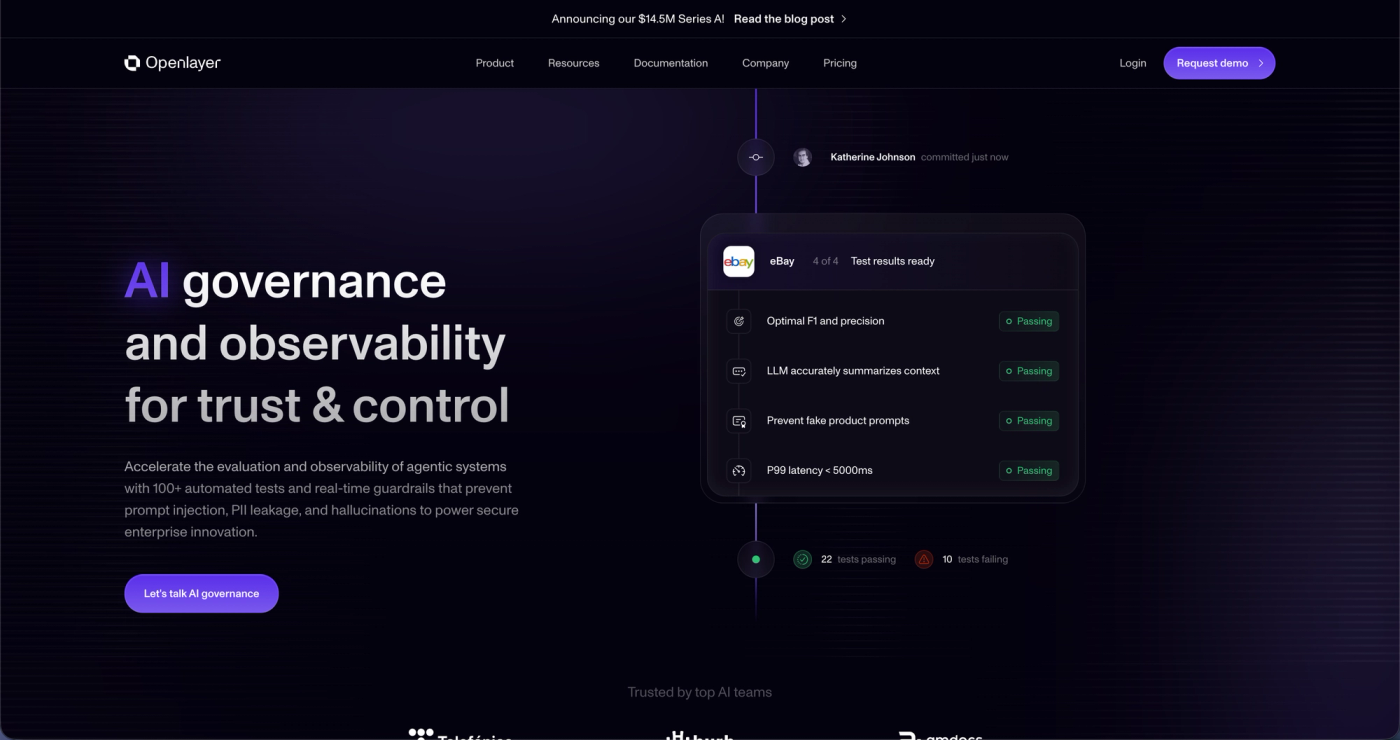
Openlayer covers the full lifecycle: evaluation during development, continuous monitoring in production, and automated governance across both. It provides centralized oversight for enterprises managing AI systems under regulatory scrutiny.
The tool includes 100+ prebuilt tests that validate hallucinations, bias, toxicity, PII exposure, and security vulnerabilities across text, vision, tabular, audio, and agent workflows, with prompt evaluation integrated into CI/CD pipelines. Tests integrate with CI/CD pipelines and block deployments when critical checks fail. Real-time guardrails prevent prompt injections and data exfiltration before they reach downstream systems.
AI monitoring tracks live outputs, drift, anomalies, and latency. Alerts trigger when performance degrades or risks arise. Compliance dashboards automatically map projects to EU AI Act, NIST RMF, ISO 42001, TRAIGA, OWASP, and LGPD with audit trails and evidence collection built in.
Openlayer works across models, agents, RAG systems, and third-party AI, providing centralized visibility regardless of framework or deployment environment.
Langfuse

Langfuse is an observability tool built for developers who need granular visibility into AI application behavior. It captures detailed traces for every prompt, model call, and agent step, making it easier to debug complex workflows and understand where things break.
Key features
Langfuse has a number of key features in an AI evaluation platform:
- The tool logs every interaction with cost and latency metadata. You can compare versions side by side to see how prompt changes or model updates affect outputs.
- OpenTelemetry integration handles high-throughput production environments, and the open-source codebase allows self-hosting for teams with data residency requirements.
- Langfuse provides a flexible evaluation framework where you define datasets, experiments, and custom scorers. This supports offline testing and A/B comparisons, though you build the test logic yourself.
- It integrates with third-party guardrail libraries like LLM Guard or NeMo Guardrails, logging whether security measures triggered.
Limitations
Langfuse has a number of limitations:
- Langfuse doesn't include prebuilt tests, automated drift detection, or real-time blocking of unsafe outputs.
- Evaluation is manual and code-first.
- There's no governance layer beyond observability, and no compliance mapping to regulatory frameworks.
- Regulatory scrutiny continues to intensify, but Langfuse doesn't support audit requirements.
The bottom line
Best suited for engineering teams building AI applications who want trace-level debugging during development and have minimal governance needs.
Braintrust
Braintrust gives you full control over evaluation design. You define datasets, tasks, and scorers to build tests that match your quality and safety requirements. Human and AI feedback loops integrate directly, letting you refine tests based on actual outputs.
Key features
Braintrust has a number of key features in an AI evaluation platform:
- Evaluation gates in CI/CD pipelines block deployments when performance falls below your thresholds.
- Role-based access controls let teams collaborate securely across experiments and production.
- Brainstore, the logging system, supports fast full-text search and trace analysis with dashboards for performance trends.
- Automated alerts fire when metrics cross your boundaries.
- The Loop agent flags recurring production issues and converts them into evaluation cases, expanding test coverage over time.
Limitations
Braintrust has a number of limitations:
- Braintrust ships without prebuilt tests, so you manually build hallucination checks, toxicity detection, and PII scanning.
- There's no real-time blocking of unsafe outputs.
- Alerts trigger human review, not automatic intervention.
- Governance isn't included, and compliance frameworks like EU AI Act or NIST require you to build custom scorers. All regulatory checks are your responsibility.
The bottom line
Best for engineering teams with technical depth who want to build custom evaluation criteria and handle governance separately.
Langsmith
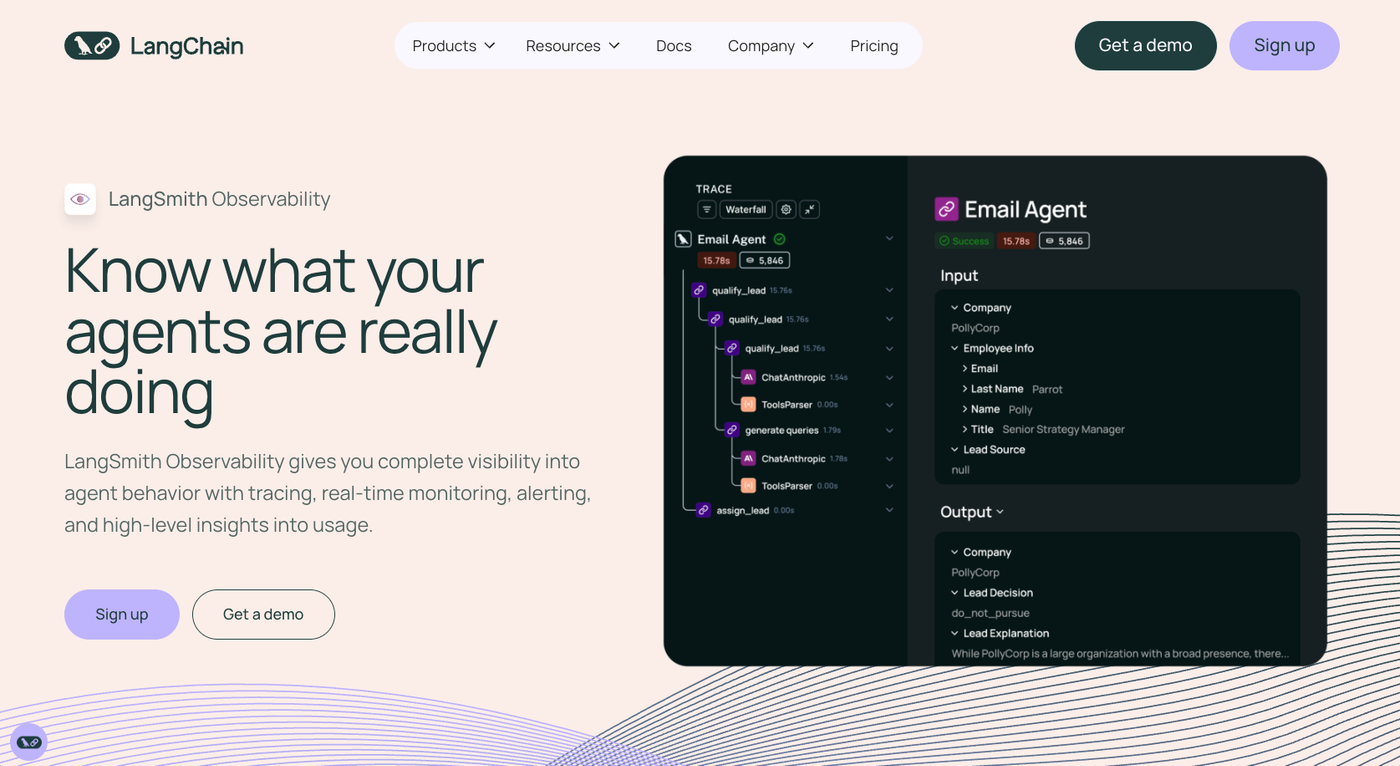
Langsmith provides trace-level debugging for AI workflows. It captures detailed logs for every prompt, chain step, and model call, helping developers troubleshoot issues in development.
Key features
Langsmith has a number of key features in an AI evaluation platform:
- The tool works for engineering teams building with specific frameworks.
- You can inspect traces, compare prompt versions, and run evaluations using custom scorers.
Limitations
Langsmith has a number of limitations:
- Langsmith doesn't block unsafe outputs in real time or prevent prompt injection.
- There's no automated test library for hallucinations, bias, or toxicity.
- Anomaly detection, drift monitoring, and compliance dashboards aren't included.
The bottom line
Best for single-team engineering projects where trace inspection drives debugging and compliance isn't required.
IBM Watsonx Governance
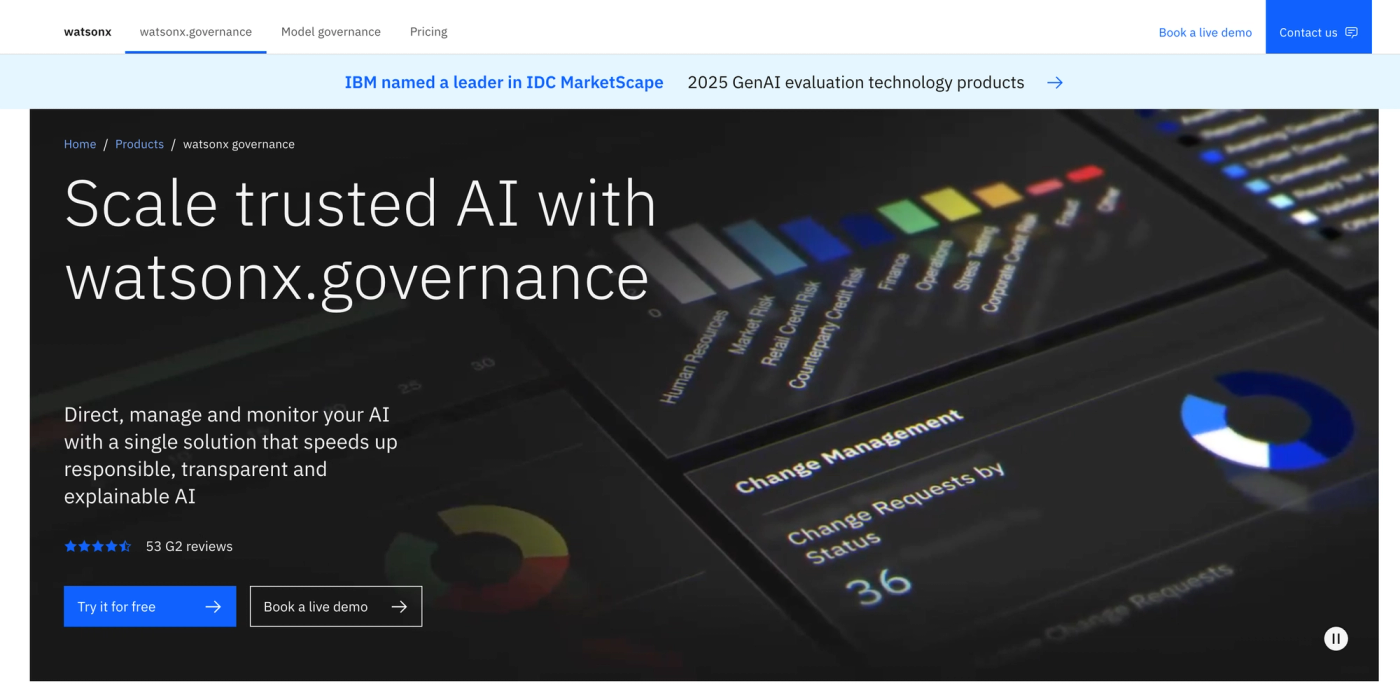
IBM Watsonx Governance provides policy-driven oversight for organizations running AI on IBM infrastructure. The system offers fairness monitoring, explainability dashboards, and workflow controls through Watsonx.orchestrate, with mapping to EU AI Act, NIST, and ISO standards.
Key features
IBM Watsonx Governance has a number of key features in an AI evaluation platform:
- The tool monitors bias and validates model behavior across IBM's AI and data suite.
- Risk dashboards flag policy violations, and governance workflows manage agent environments within orchestrate.
Limitations
IBM Watsonx Governance has a number of limitations:
- Operates mainly within IBM's stack, with limited visibility into non-IBM systems.
- It identifies prompt injections and PII risks but lacks real-time blocking.
- There's no multimodal or adversarial testing beyond bias and explainability.
- Framework mapping requires IBM-delivered services to configure and doesn't auto-update with runtime evidence.
The bottom line
Best for enterprises standardized on IBM infrastructure who need policy oversight and fairness validation within that ecosystem.
Deepchecks
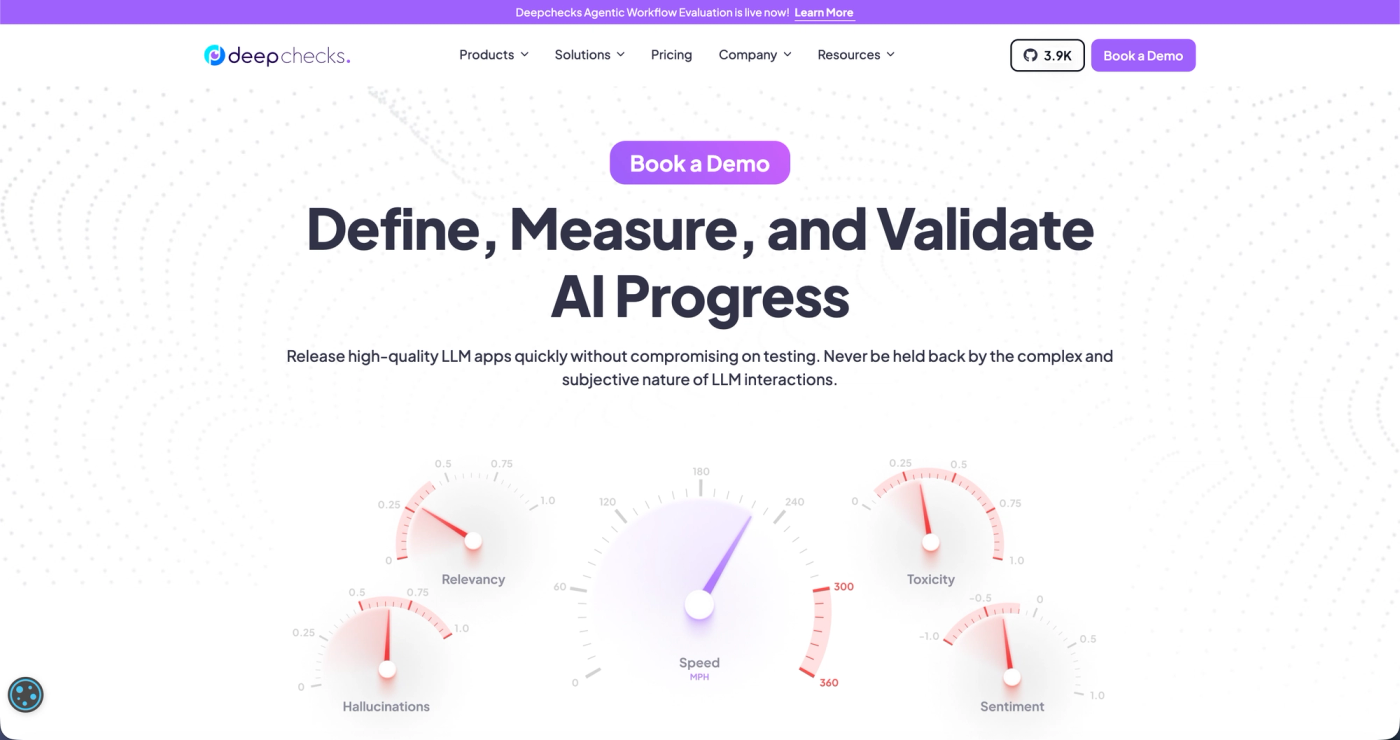
Deepchecks runs structured test suites for ML and AI systems during pre-deployment validation. It checks training data quality, model predictions, and output consistency before launch.
Key features
Deepchecks has a number of key features in an AI evaluation platform
- The tool supports both traditional ML models and AI system outputs through configurable test suites.
- Basic monitoring capabilities track performance after deployment.
Limitations
Deepchecks has a number of limitations:
- Deepchecks functions as a point-in-time testing solution without continuous anomaly detection or enterprise alerting.
- Runtime protections like prompt injection blocking and PII guardrails aren't available.
- While it catches data quality problems during validation, it doesn't map to compliance frameworks like EU AI Act, NIST, or ISO standards. No audit trails or regulatory evidence collection included.
The bottom line
Works for teams using offline validation as their main risk control method, facing limited regulatory requirements, and not needing production security or compliance automation.
MLflow
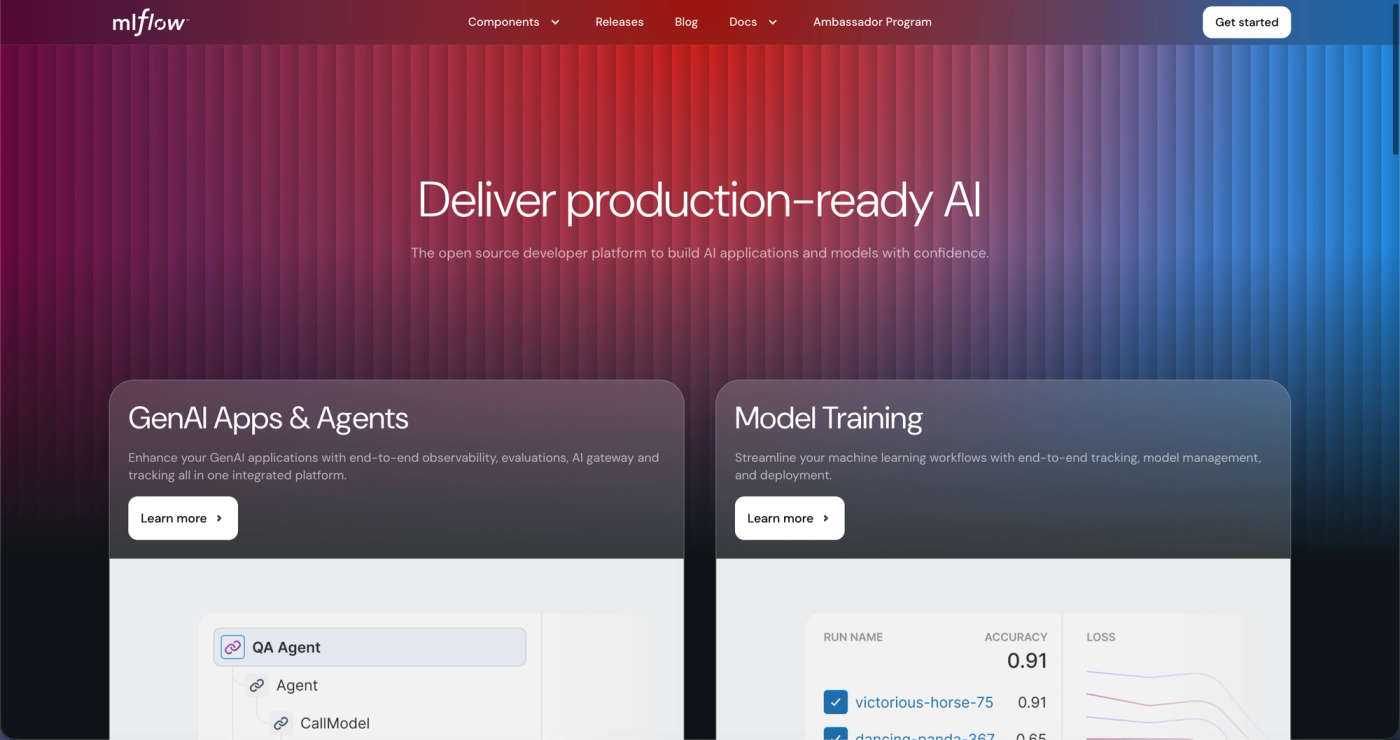
MLflow handles experiment tracking and model registry. It logs runs, parameters, metrics, and artifacts with version control for model lineage. Unity Catalog integration adds access controls and catalog management.
Key features
MLFlow has a number of key features in an AI evaluation platform:
- The tool functions as MLOps infrastructure.
- It tracks what you ran and what you deployed.
Limitations
MLflow has a number of limitations:
- MLflow doesn't include automated tests for hallucinations, bias, or security vulnerabilities.
- There's no runtime protection against prompt injection or PII leakage.
- Continuous anomaly detection and risk-based alerting aren't available. Regulatory frameworks like EU AI Act or NIST require manual mapping.
The bottom line
Best for teams early in their MLOps journey who need experiment tracking and model versioning without regulatory, security, or risk management requirements.
Credo AI
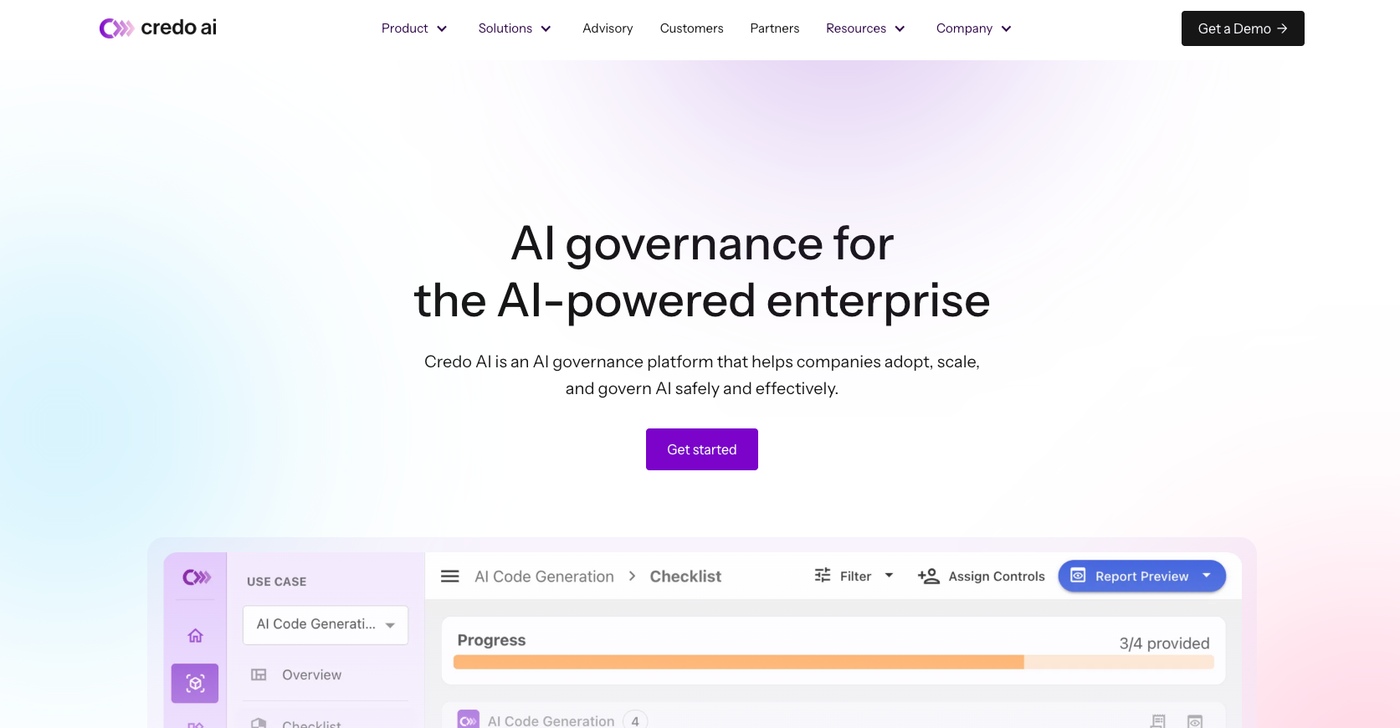
Credo AI handles governance and compliance documentation. It structures policy workflows, tracks AI system inventory, and generates audit artifacts for regulators.
Key features
Credo AI has a number of key features in an AI evaluation platform:
- The AI Registry maintains a central inventory of AI systems with automated risk assessments.
- Policy Packs translate regulations like EU AI Act, NIST AI RMF, ISO 42001, NYC Local Law 144, and Colorado SB21-169 into structured workflows with auto-generated model cards, fairness reports, and compliance summaries.
- The open-source Lens framework standardizes assessments across performance, fairness, transparency, and robustness dimensions.
Limitations
Credo AI has a number of limitations:
- Credo AI doesn't ship automated behavioral tests for hallucinations, toxicity, or security vulnerabilities.
- It provides governance-level oversight without low-level observability like real-time drift detection or per-request metrics.
- There's no runtime enforcement or technical guardrails.
The bottom line
Best for regulated enterprises that need compliance documentation and structured governance workflows where technical testing and monitoring are handled separately.
Comparison table
| Solution | Automated testing | Real-time guardrails | Compliance mapping | Multimodal support | Best for |
|---|---|---|---|---|---|
| Openlayer | 100+ prebuilt tests | Yes | EU AI Act, NIST, ISO 42001, OWASP, LGPD | Text, vision, audio, tabular, agents | Regulated enterprises with production AI |
| Langfuse | Custom scorers only | No | No | Framework-agnostic | Engineering teams needing trace debugging |
| Braintrust | Build your own | No | Manual implementation | Framework-agnostic | Teams building custom evaluation logic |
| Langsmith | Custom scorers | No | No | Framework-specific | Single-team projects using supported frameworks |
| IBM Watsonx | Fairness and explainability checks | No | EU AI Act, NIST, ISO | IBM stack only | IBM-standardized enterprises |
| Deepchecks | Pre-deployment test suites | No | No | ML and AI outputs | Teams using offline validation |
| Credo AI | None | No | EU AI Act, NIST, ISO 42001, NYC LL144, CO SB21-169 | Documentation layer | Compliance documentation workflows |
How to choose the right AI evaluation solution for your team
Below are a number of recommendations as you look at the right AI evaluation solution:
- Start with your regulatory environment. Teams facing EU AI Act, NIST, or sector-specific requirements need compliance mapping and audit trails built in from day one.
- Consider your AI maturity. Early-stage teams need trace debugging and iterative testing. Production systems at scale require continuous monitoring, anomaly detection, and runtime security.
- Review your security posture. If you handle PII, financial data, or proprietary information, look for real-time guardrails that block prompt injections and data exfiltration automatically.
- Assess team structure. Single engineering teams can manage custom evaluation logic. Cross-functional organizations spanning data science, security, and compliance benefit from unified oversight with prebuilt tests and shared dashboards.
- Check your existing stack. Some tools integrate broadly across frameworks. Others work only within specific ecosystems. On-premises requirements, data residency constraints, and deployment environments narrow your options quickly.
FAQ
When should we start testing AI systems?
Start testing before your first production deployment. Running evaluations during development catches issues when they're cheapest to fix. Waiting until after launch means finding problems through user complaints or compliance violations.
How do you balance testing with deployment speed?
Integrate tests into CI/CD pipelines so validation happens automatically. Automated checks run in minutes, not days. This prevents shipping broken outputs without slowing iteration cycles.
What metrics matter most?
It depends on your use case. Traditional ML focuses on accuracy and drift. LLM systems require hallucination rates, latency, and safety checks. Regulated industries add PII exposure and bias metrics. Start with what breaks user trust, then expand coverage.
How does AI evaluation differ from software testing?
Software tests check deterministic logic. AI evaluation handles probabilistic outputs that vary between runs. You validate behavior patterns across diverse scenarios instead of expecting identical results every time.
Final thoughts on AI evaluation and testing solutions
LLM evaluation software should align with your compliance needs and deployment scale. If you're shipping AI systems under regulatory scrutiny, automated testing and real-time guardrails prevent issues before they reach users. Teams in earlier stages can give more weight to trace-level debugging and build governance capabilities as requirements expand.