Best OneTrust AI Governance Alternative in July 2026
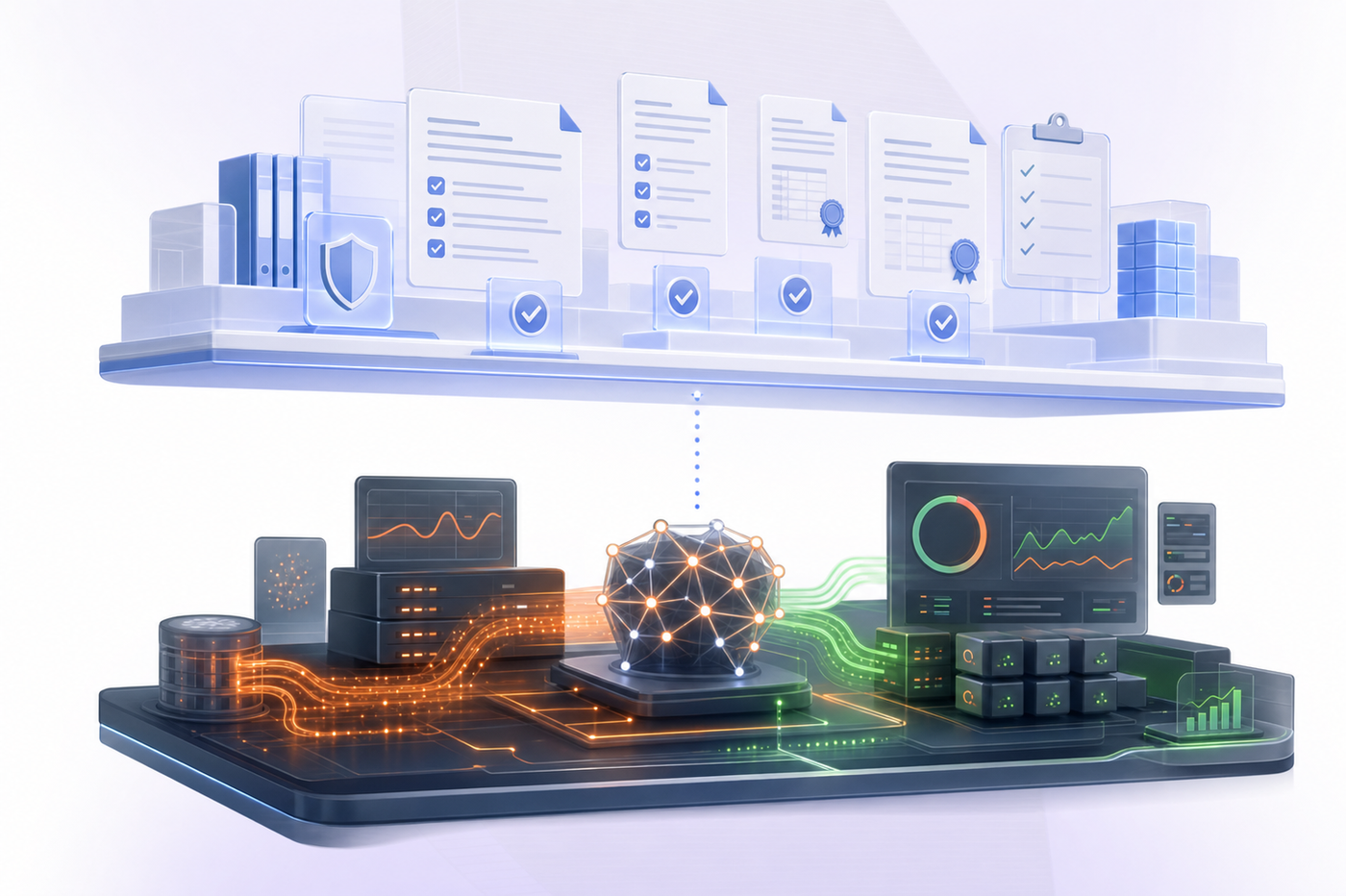
If your AI governance needs stop at policy frameworks and audit trails, OneTrust covers substantial ground. It registers AI systems, runs risk assessments, and generates documentation that maps to regulatory requirements. But for teams deploying models into production, governance doesn't end at documentation. A policy document that says outputs must be grounded doesn't catch hallucinations in production; a risk assessment doesn't block toxic responses before they reach users. You need runtime monitoring that flags when a model starts producing skewed results at scale. You need guardrails that block unsafe outputs before they surface to users. You need evaluation pipelines that catch quality regressions before deployment, not policy checklists that say those checks should happen. The tools below are the OneTrust AI governance alternatives that handle both sides: the policy layer and the enforcement layer, without forcing you to stitch together separate systems for compliance and control.
TLDR:
- OneTrust handles policy documentation and risk assessments but stops at the policy layer with no runtime monitoring or behavioral enforcement after deployment.
- Teams need runtime enforcement to close the gap between governance-as-documentation and governance-as-enforcement where most AI incidents occur.
- Alternatives split into governance-layer tools that go deeper on AI-specific risk and full evaluation-and-enforcement stacks for production AI.
- Openlayer blocks unsafe outputs before they leave the API boundary and maps evaluation results to EU AI Act and NIST AI RMF requirements automatically.
What Is OneTrust AI Governance and How Does It Work?
OneTrust AI Governance is a policy and documentation layer built on top of OneTrust's broader privacy and compliance suite. It gives organizations a structured way to inventory AI systems, assign risk classifications, and generate documentation artifacts that satisfy regulatory requirements like the EU AI Act and NIST AI RMF. In March 2026, OneTrust announced expanded capabilities including AI agent detection and continuous monitoring features.
The core workflow follows a register-assess-document pattern. Teams log AI systems into a centralized inventory, run risk assessments against configurable frameworks, and produce audit-ready reports. OneTrust connects this governance layer to its existing data mapping and consent management infrastructure, so organizations already running OneTrust for privacy compliance can extend the same workflows to cover AI.
There are a few things worth understanding about where OneTrust's scope ends:
- It operates at the policy and documentation layer, not at runtime. Once a model is deployed, OneTrust does not monitor live outputs, detect drift, or enforce behavioral thresholds against production traffic.
- Risk assessments are point-in-time artifacts. They capture the state of a system at assessment time but do not update automatically as model behavior changes post-deployment.
- It is built for governance and compliance professionals first. Teams that need evaluation pipelines, LLM-as-a-judge scoring, or CI/CD-integrated testing will find those capabilities outside OneTrust's scope.
For organizations whose primary need is governance documentation and regulatory audit readiness, OneTrust covers substantial ground. But for teams that need the gap between policy and production closed, the register-assess-document pattern alone leaves meaningful exposure.
Why Consider OneTrust AI Governance Alternatives?
OneTrust built its reputation in data privacy compliance, and its AI governance module reflects that lineage. The tooling leans toward policy documentation, consent management, and regulatory mapping instead of runtime oversight of model behavior. For organizations whose AI governance needs stop at policy frameworks and audit trails, that may be sufficient.
But teams shipping models into production face a different set of problems. A policy document doesn't catch output drift. A consent workflow doesn't flag when a model starts producing demographically skewed results at scale. The gap between governance-as-documentation and governance-as-enforcement is where most AI incidents actually happen. Runtime enforcement validates agent behavior and model-driven execution through continuous governance, not periodic audits.
There are a few recurring reasons teams start looking for alternatives:
- Runtime monitoring is absent: OneTrust doesn't track live model outputs, enforce behavioral thresholds, or detect drift after deployment. Teams relying on it for post-deployment oversight are working without a safety net.
- Evaluation depth is limited: Pre-deployment testing for LLM behavior, fairness metrics, and failure mode coverage requires tooling OneTrust wasn't built to supply.
- Enforcement gaps at the API boundary: Blocking unsafe outputs before they reach users requires active guardrails wired into the inference path, not a governance layer sitting above it.
- Scope mismatch for technical teams: ML engineers and data scientists need tooling that integrates with model registries, CI/CD pipelines, and evaluation workflows, not primarily with privacy consent flows.
The alternatives below cover the governance and enforcement surface that OneTrust leaves open, ranging from policy-layer tools that go deeper on AI-specific risk to full evaluation-and-enforcement stacks designed for production AI.
Best OneTrust AI Governance Alternatives in July 2026
Openlayer sits at a different layer than most tools in this space. Where governance-focused products stop at policy documentation and risk categorization, Openlayer operates at the model output level, enforcing behavioral thresholds before responses leave the API boundary.
There are three capabilities that set it apart for teams with active compliance obligations:
- Evaluation depth with pre-built coverage: Openlayer ships with 100+ pre-built tests spanning hallucination detection, toxicity, groundedness, and demographic fairness. Teams can run these against LLM outputs during development and gate deployment on pass/fail results, so quality regressions never reach production silently.
- LLM-as-a-judge at human-grade correlation: Automated evaluation reaches 81.3% correlation with human judgment, which means teams get scalable output review without manual review bottlenecks. The judgment scores become part of the evidentiary record auditors can inspect.
- Runtime enforcement beyond logging: Guardrails block outputs that fall below configured thresholds before they surface to users. This is the architectural gap most governance tools leave open: they document policy intent but hand enforcement back to the team.
Openlayer also generates audit-ready documentation across the model lifecycle, mapping evaluation results and monitoring logs to the evidence artifacts that EU AI Act conformity assessments and NIST AI RMF reviews require.
Best for: ML engineering and AI governance teams that need both development-time evaluation and production enforcement in a single workflow, without stitching together separate monitoring and compliance tools.
Most suitable for: Organizations under EU AI Act high-risk system obligations or NIST AI RMF alignment requirements that need a traceable record from first evaluation run through post-deployment monitoring.
What they offer:
Openlayer sits at the intersection of evaluation, observability, and governance, covering the full AI lifecycle from development through production. Where most tools in this space stop at policy documentation or post-hoc diagnostics, Openlayer adds active runtime enforcement: guardrails that block unsafe outputs before they leave the API boundary instead of only flagging them after the fact.
The governance layer maps evaluation results directly to compliance frameworks. Pass/fail records, metric scores, and flagged failure modes become the evidentiary record auditors review, automatically organized against EU AI Act obligations, NIST AI RMF controls, and ISO 42001 requirements. Teams get audit-ready documentation without manually assembling it from scattered logs.
There are three areas where Openlayer's coverage goes deeper than governance-only tools:
- Behavioral testing across 100+ pre-built tests, with CI/CD integration so evaluation gates run before any model reaches production. Teams can block deployment if groundedness scores fall below a set threshold or toxicity probability exceeds 0.15: enforcement defined at the policy level, applied automatically at the pipeline level.
- LLM-as-a-judge evaluation at 81.3% human correlation, giving teams a scalable way to assess output quality on dimensions that rule-based checks miss: reasoning coherence, factual grounding, response appropriateness.
- Production monitoring with drift detection and threshold-based alerting, so degradation that appears after deployment triggers the same governance workflows as pre-deployment failures, not a separate, disconnected process.
SDKs are available in Python, TypeScript, Java, and Go, keeping integration friction low regardless of the team's existing stack.
Feature Comparison: OneTrust vs Top Alternatives
The table below maps coverage across the tools most commonly assessed alongside OneTrust. Tools built from a governance-first angle cover intake and compliance mapping well, while those built from an observability angle tend to cover monitoring but skip policy workflows entirely.
| Feature | OneTrust AI Governance | Openlayer |
|---|---|---|
| AI system intake and registration | Yes | Yes |
| Pre-built behavioral test library | No | Yes (100+ tests) |
| Real-time guardrails and blocking | Limited (announced March 2026) | Yes |
| CI/CD deployment gates | No | Yes |
| Continuous production monitoring | Yes (as of March 2026) | Yes |
| Automated compliance framework mapping | Yes | Yes |
| Statistical bias and fairness testing | No | Yes |
| Agent and multi-agent governance | Yes (as of March 2026) | Yes |
A few patterns worth noting as you read across this table. The observability-first tools, Langfuse and Arize AI, cover production monitoring but stop at observation: they surface diagnostics but do not enforce behavioral thresholds or map findings to compliance frameworks. That gap matters if your procurement driver is regulatory coverage instead of output visibility. On the governance side, OneTrust and Credo AI handle registration and framework mapping at the policy layer but currently lack the pre-built test library, CI/CD gating, and runtime enforcement that catch and block behavioral failures before they reach production. Openlayer is the only tool in this set that spans intake, pre-deployment testing, CI/CD gates, real-time blocking, and production monitoring in a single audit trail.
Frequently Asked Questions About OneTrust AI Governance
What does OneTrust AI governance actually cover?
OneTrust's AI governance module handles risk assessments, policy management, and documentation workflows for AI systems. It maps reasonably well to pre-deployment compliance tasks like inventorying AI use cases, running privacy impact assessments, and maintaining audit trails for regulatory review. What it does not do is monitor live model outputs, enforce behavioral thresholds at inference time, or flag drift in production. The governance coverage stops at the policy layer.
Is OneTrust enough for EU AI Act compliance?
For high-risk system obligations under the EU AI Act, documentation and risk assessment workflows alone are not sufficient. Article 43 conformity assessment requirements, post-market monitoring logs, and human oversight records all require evidence generated during and after deployment: runtime output logs, drift detection records, and blocked-output audit trails. OneTrust can help organize pre-deployment documentation, but teams will need runtime monitoring and enforcement tooling to satisfy the full obligation set.
What do teams typically add alongside OneTrust?
Teams assessing OneTrust for production AI programs commonly pair it with a runtime observability and evaluation tool to cover the gaps. The combination that appears most often: OneTrust handles the policy and documentation layer while a tool like Openlayer handles live output monitoring, automated compliance mapping, and behavioral threshold enforcement once models are running.
Who are the strongest OneTrust AI governance alternatives?
Credo AI and IBM watsonx Governance are the two most direct alternatives at the governance layer. For teams that need both governance coverage and runtime enforcement in a single tool, Openlayer covers evaluation, observability, and compliance mapping across the full model lifecycle.
Why Openlayer Is the Best OneTrust AI Governance Alternative
Openlayer sits in a different category from the tools covered in this list. Where OneTrust and its closest alternatives stop at policy documentation, risk registers, and audit trail generation, Openlayer adds a layer that none of them provide: active runtime enforcement at the inference boundary.
That distinction matters because governance without enforcement is fundamentally a documentation exercise. A policy that says "outputs must not contain hallucinations" is not the same as a system that blocks hallucinated outputs before they reach users. Openlayer closes that gap.
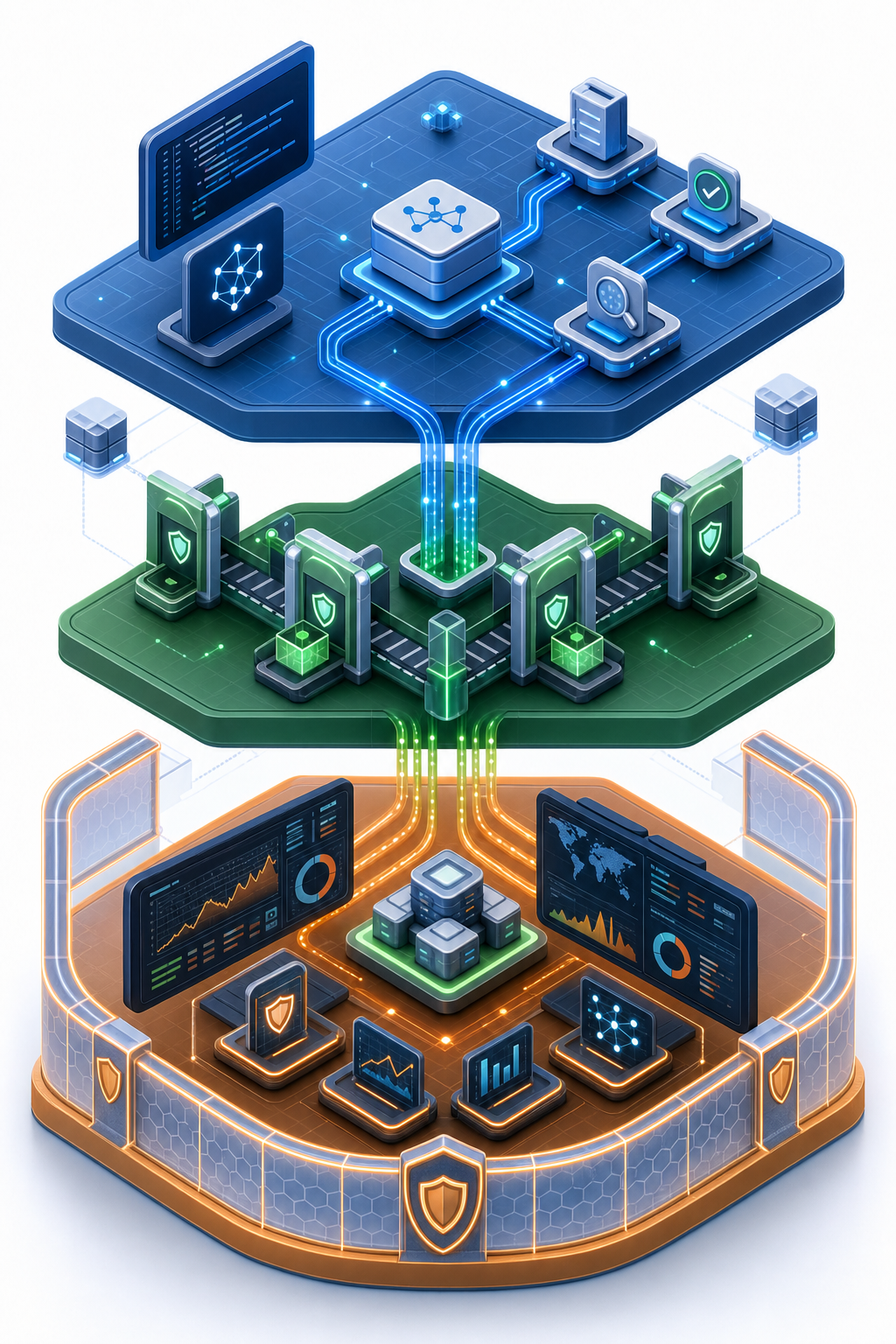
Here is what that looks like in practice across the AI lifecycle:
Development and Evaluation
Before a model ships, Openlayer runs 100+ pre-built tests covering safety, fairness, groundedness, and task-specific quality. LLM-as-a-judge scoring reaches 81.3% correlation with human reviewers, which means automated evaluation catches the failure modes that manual review misses at scale. Teams get pass/fail records, metric scores, and flagged failure modes as structured artifacts, not summary dashboards, so the evaluation output becomes the evidentiary record an auditor would ask for during conformity assessment.
SDKs in Python, TypeScript, Java, and Go mean evaluation integrates into existing CI/CD pipelines without requiring teams to rebuild their workflows around a new toolchain.
Production Monitoring and Enforcement
Once deployed, Openlayer monitors live model outputs in real time across 13 session-level metrics. But monitoring alone is not the differentiator. The differentiator is that Openlayer's guardrails actively block unsafe outputs before they leave the API boundary. If a groundedness score falls below a configured threshold, the output does not reach the user. If toxicity probability exceeds the defined limit, the response is intercepted. That is enforcement, not observation.
This is the architectural gap that separates Openlayer from every tool in this comparison:
- OneTrust, Credo AI, and IBM watsonx Governance generate compliance documentation and risk assessments at the policy layer, but do not monitor live outputs or enforce behavioral thresholds at inference time.
- Collibra covers data governance within its ecosystem at the policy and lineage layer, with no runtime AI output enforcement or active blocking.
- Arize AI surfaces model performance diagnostics and drift signals for observation, but stops at detection. Enforcement and blocking are left to downstream integrations.
- Fiddler AI tracks fairness and drift metrics in production for diagnostic review, but does not block outputs based on behavioral thresholds or enforce policy at the API boundary.
Automated Compliance Mapping
Openlayer maps evaluation results and monitoring data directly to ISO 42001 requirements and other frameworks including the EU AI Act and NIST AI RMF. The audit trail is not assembled manually after the fact. Pass/fail records, threshold configurations, override logs, and incident flags accumulate continuously and are queryable by framework requirement. When an auditor asks for evidence of human oversight measures or post-market monitoring data, that record already exists.
Who Openlayer Is Best For
Openlayer is the right choice for teams that need governance to function as an active control layer, not a reporting layer. That includes:
- ML and AI engineering teams shipping models into regulated environments who need enforcement gates in their deployment pipeline, not documentation of what those gates should be.
- Governance and compliance leads who need audit-ready evidence generated automatically across the model lifecycle, not assembled from spreadsheets before each review.
- Organizations subject to EU AI Act high-risk obligations or similar frameworks where conformity assessment requires demonstrable, continuous monitoring records tied to specific system behaviors.
If your primary need is policy documentation, vendor questionnaire management, or enterprise risk register integration, OneTrust or Credo AI may be a better starting point. But if you need a system that enforces the policies you write, Openlayer is the tool that closes the loop.
Final Thoughts on OneTrust and Its Alternatives
Governance without enforcement is a documentation problem, not a compliance solution. OneTrust gives you the policy layer and audit trail structure, but it doesn't monitor live outputs, block unsafe responses, or flag drift after deployment. For teams shipping models under EU AI Act high-risk obligations or NIST AI RMF requirements, that gap is where most regulatory exposure actually lives. Openlayer fills it by enforcing policies at runtime, generating compliance evidence automatically, and connecting pre-deployment evaluation results to post-deployment monitoring in a single audit trail. Get in touch if you need both governance coverage and production enforcement without patching together separate tools.
FAQ
Why do teams look for alternatives to OneTrust AI Governance?
OneTrust covers policy documentation and risk assessment workflows well, but stops at the governance layer. Teams shipping models into production need runtime monitoring, behavioral threshold enforcement, and pre-deployment evaluation pipelines that OneTrust wasn't built to supply. The gap between governance-as-documentation and governance-as-enforcement is where most AI incidents occur.
When should you consider switching from a policy-only governance tool?
Consider switching when you're facing regulatory obligations that require continuous production monitoring records, beyond pre-deployment documentation. If you're under EU AI Act high-risk system obligations or similar frameworks where conformity assessment requires demonstrable, ongoing behavioral evidence tied to live model outputs, a policy-layer tool alone leaves compliance gaps open.
What features should you focus on when comparing OneTrust alternatives?
Focus on three capabilities: pre-deployment evaluation depth with automated testing across safety, fairness, and quality dimensions; runtime enforcement that blocks unsafe outputs before they reach users; and automated compliance mapping that converts evaluation results into audit-ready evidence organized against regulatory requirements. Tools that cover only one or two of these require integration work to close the gap.
Can a governance tool replace production monitoring, or do you need both?
You need both, but they don't have to be separate products. Governance tools that operate at the policy layer require you to add monitoring infrastructure separately. Platforms that span evaluation, observability, and governance give you a single audit trail from first test run through post-deployment monitoring, eliminating the integration burden and the risk that compliance evidence lives in disconnected systems.