IBM WatsonX reviews, pricing, and alternatives (December 2025)
You're running AI systems across multiple clouds, and you need governance that works everywhere, not simply inside IBM's stack. That's why teams compare enterprise AI platforms like WatsonX against alternatives that offer runtime enforcement and cross-stack visibility. WatsonX delivers compliance documentation and drift detection for IBM-native environments. But if your models live on AWS, Azure, or custom infrastructure, and you need real-time blocking of prompt injections and PII leakage, the constraints become obvious.
TLDR:
- IBM WatsonX handles policy documentation and compliance tracking but lacks real-time guardrails to block prompt injections or PII leakage before execution
- WatsonX requires manual framework mapping and IBM infrastructure, limiting coverage for multi-cloud AI systems running outside the IBM stack
- Alternatives like Braintrust and LangSmith offer developer-focused evaluation without compliance mapping or security blocking
- Openlayer provides 100+ automated tests with real-time threat prevention and automatic EU AI Act/NIST compliance mapping across any infrastructure
What is IBM WatsonX and how does it work?
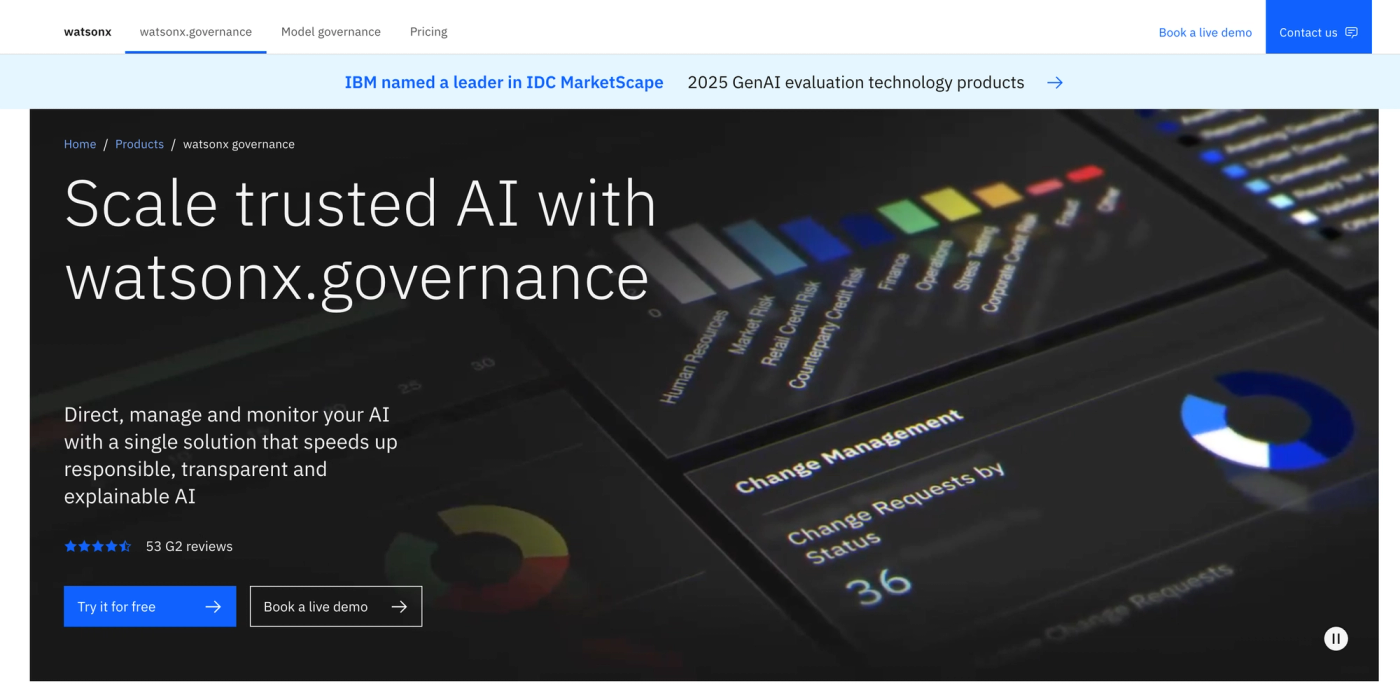
IBM WatsonX.governance is IBM's toolkit for managing and monitoring AI systems across their lifecycle. It tracks model risk and shows regulatory compliance when AI systems are distributed across multiple teams and business units.
The system captures model metadata through factsheets, structured records that document each model's purpose, training data, performance metrics, and ownership. It translates regulations and internal policies into rules that can be applied as models move through development and deployment. Customizable dashboards let risk managers and compliance teams track which models are compliant, which require attention, and where potential issues exist.
WatsonX.governance is built for large enterprises already standardized on IBM infrastructure. If your organization runs on IBM Cloud Pak for Data or uses Watson Studio extensively, the integration is straightforward. The approach leans on documentation and policy tracking instead of runtime enforcement, making it suited for organizations where governance means maintaining audit trails and showing compliance through structured records.
Why consider IBM WatsonX alternatives?
WatsonX.governance works for organizations standardized on IBM infrastructure that want compliance documentation managed through IBM-delivered services. Financial institutions use the governance documentation when already committed to IBM Cloud Pak for Data. That tight coupling to IBM's ecosystem creates constraints that send teams looking elsewhere. But there are a number of limitations:
- The biggest gap is runtime enforcement. WatsonX handles policy documentation and post-deployment tracking, but won't block a prompt injection or stop PII from leaking in real time. AI systems that need guardrails to prevent security risks before production require more proactive tools than factsheets and dashboards.
- Testing coverage is limited. WatsonX offers fairness and explainability checks without a library of automated behavioral tests across modalities. Teams building agentic workflows or multimodal systems must assess hallucinations, adversarial inputs, and edge cases across text, vision, and audio themselves or through IBM services.
- Framework mapping requires manual configuration and ongoing services engagement. Translating EU AI Act requirements or NIST controls into WatsonX rules is a consulting exercise, not an automated process. Organizations with multiple AI systems across jurisdictions need continuous, automated compliance mapping.
- Hybrid and multi-cloud environments expose friction. Running AI systems outside the IBM stack means limited visibility and governance through WatsonX. Teams with models on AWS, Azure, or non-IBM LLM providers need coverage across their entire AI estate.
Best IBM WatsonX alternatives in December 2025
Openlayer
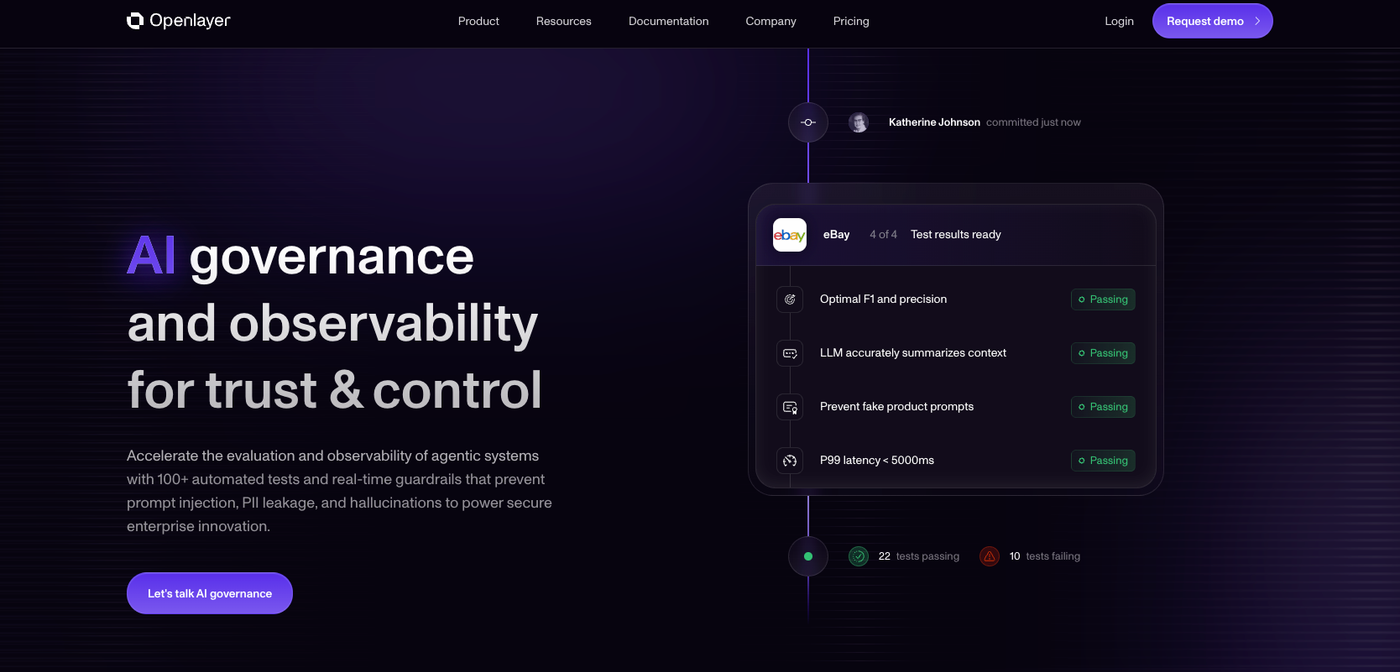
Openlayer delivers AI governance and observability that enforces control in runtime, not simply on paper. The difference is apparent: 100+ automated tests across hallucinations, bias, toxicity, and PII leakage run continuously in development and production. Real-time guardrails block prompt injections and data exfiltration before they reach downstream systems. Automated compliance mapping translates EU AI Act, NIST RMF, ISO 42001, and OWASP requirements into continuous risk assessments and audit-ready evidence.
The bottom line
Openlayer covers agents, RAG, LLMs, and traditional ML across any stack. Organizations with AI already in production across financial services, healthcare, telecom, and insurance use us when policy documentation alone isn't enough.
Credo AI
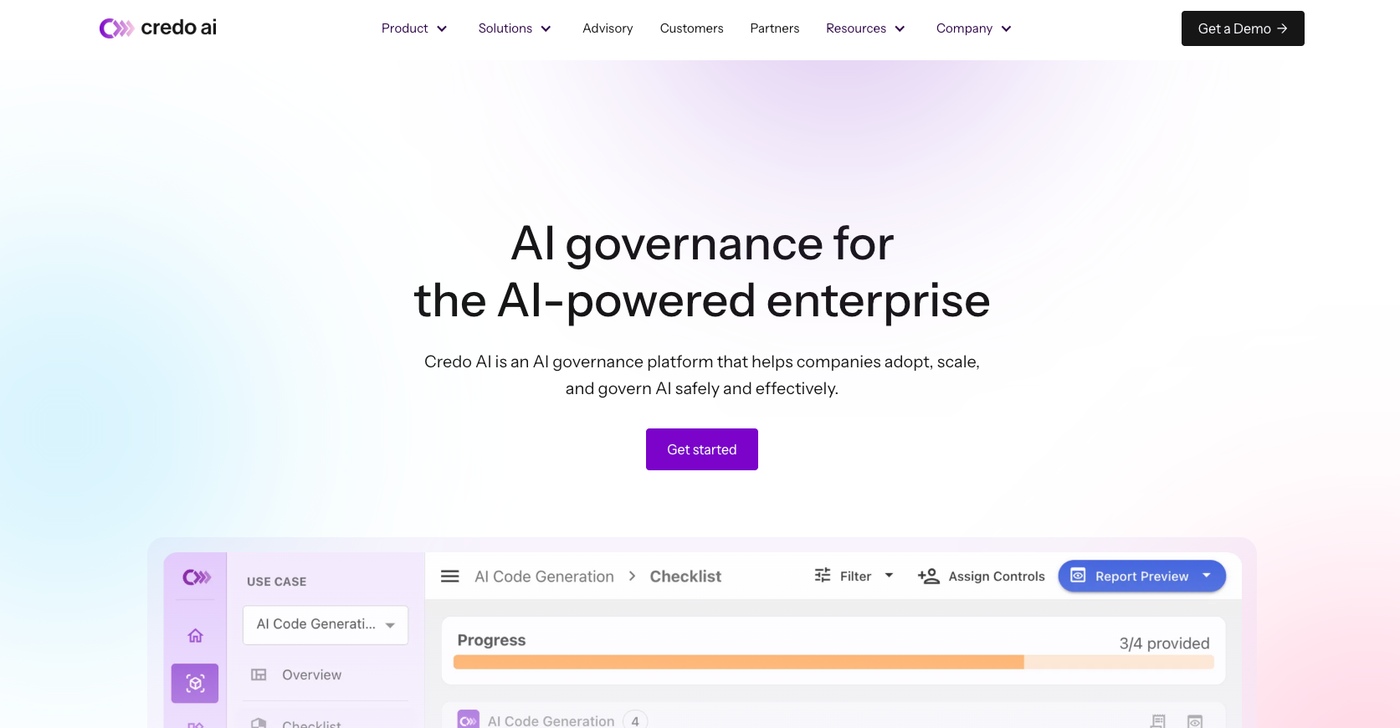
Credo AI focuses on policy-driven oversight and responsible AI assessments. Their AI Registry inventories systems and use cases, while Policy Packs translate regulations into governance workflows. Risk assessments and compliance artifacts are generated through structured evidence collection.
Key strengths
Credo AI has several strengths when considering it as an alternative to IBM WatsonX
- Policy-driven oversight and responsible AI assessments
- AI Registry for inventorying systems and use cases
- Policy Packs that translate regulations into governance workflows
- Structured evidence collection for compliance artifacts
- Serves enterprises with dedicated governance teams
Limitations
Credo AI has several limitations as an alternative to IBM WatsonX
- No real-time guardrails or runtime enforcement
- No technical protections like blocking prompt injections
The bottom line
They serve enterprises with dedicated governance teams managing compliance processes. The gap: no real-time guardrails or runtime enforcement, and no technical protections like blocking prompt injections.
Collibra
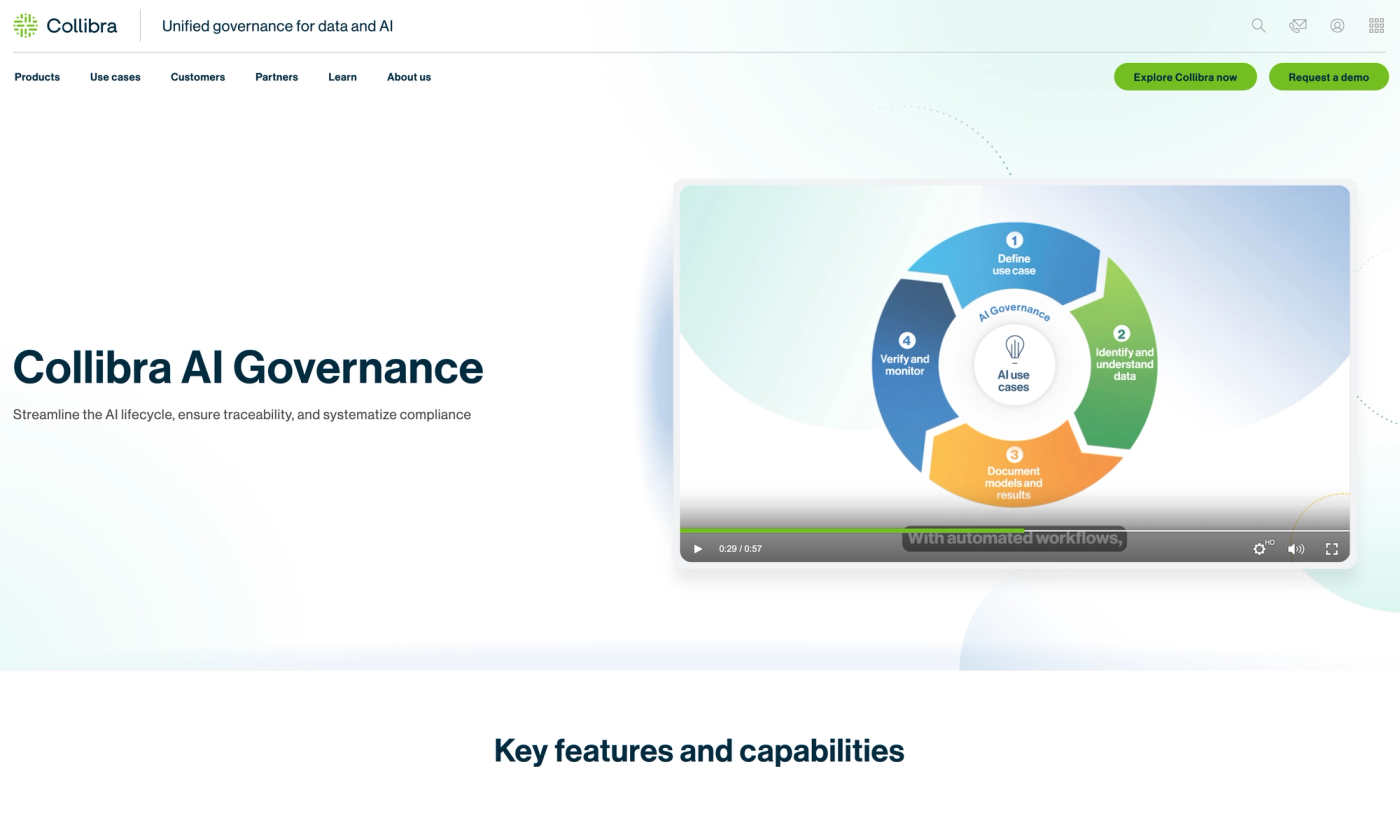
Collibra is a data intelligence solution that extends enterprise data governance into AI governance through its AI Governance solution. The solution catalogs AI models alongside data assets, tracks lineage from training data through deployment, and enforces data quality standards across AI workflows.
Key strengths
- Unified data and AI governance that connects model metadata to underlying data assets, providing end-to-end lineage visibility
- Enterprise data catalog integration that inventories AI systems within existing data governance frameworks and policies
- Automated metadata collection that captures model attributes, training datasets, and ownership information across the AI lifecycle
- Policy enforcement workflows that route AI systems through approval processes based on risk classification and data sensitivity
Limitations
Collibra focuses on metadata management and lineage tracking instead of technical AI validation. The solution lacks automated behavioral testing for model performance, bias, or adversarial robustness. No runtime guardrails exist to prevent prompt injections or block PII leakage during inference. AI governance operates through documentation and approval workflows instead of continuous technical monitoring.
The bottom line
Collibra serves enterprises with mature data governance programs looking to extend catalog and lineage capabilities into AI. Organizations already standardized on Collibra for data management gain consistent oversight. The gap: no automated testing, real-time protection, or continuous monitoring for AI systems in production.
OneTrust
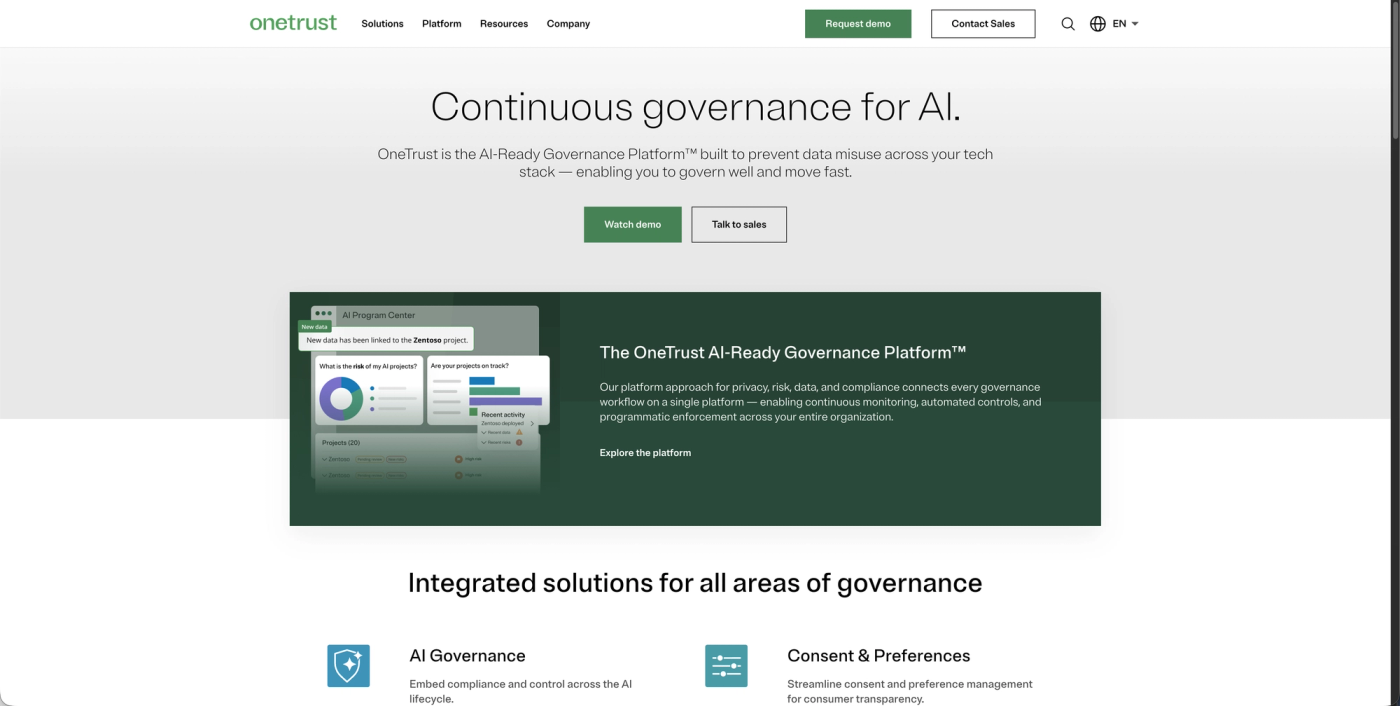
OneTrust is an enterprise trust solution that extends privacy and data governance capabilities into AI risk management. Their AI Governance module inventories AI systems, assesses risks through questionnaires and frameworks, and generates compliance documentation across privacy regulations and emerging AI standards.
Key strengths
- Privacy-first AI governance that connects AI risk assessments directly to existing data protection and privacy compliance workflows
- Extensive framework library covering GDPR, CCPA, and emerging AI regulations with pre-built assessment templates
- Enterprise-scale policy management with workflow automation for risk reviews, approvals, and stakeholder sign-offs
- Third-party AI vendor assessments that assess external AI systems and services against internal risk criteria
Limitations
OneTrust approaches AI governance as an extension of privacy compliance instead of technical AI operations. The solution lacks runtime enforcement capabilities: no real-time guardrails to block prompt injections or prevent PII leakage during inference. Testing coverage is limited to questionnaire-based assessments without automated behavioral tests for hallucinations, bias, or adversarial robustness.
The Bottom Line
OneTrust serves enterprises with existing privacy and compliance teams looking to extend existing governance processes into AI. Organizations already using OneTrust for privacy management gain unified oversight. The gap: no technical protections or continuous monitoring for AI systems in production.
Feature Comparison: IBM WatsonX vs Top Alternatives
| Alternative | Primary focus | Best for | Runtime protection | Automated testing | Compliance mapping | Multi-cloud support |
|---|---|---|---|---|---|---|
| Openlayer | AI governance with runtime enforcement and continuous testing | Organizations needing real-time threat prevention across any infrastructure | Yes - blocks prompt injections and PII leakage before execution | 100+ automated tests across hallucinations, bias, toxicity, and PII leakage | Automatic mapping to EU AI Act, NIST RMF, ISO 42001, OWASP | Full support across AWS, Azure, IBM, and custom infrastructure |
| Credo AI | Policy-driven oversight and responsible AI assessments | Enterprises with dedicated governance teams managing compliance processes | No - documentation and assessment focused | Limited - structured evidence collection without behavioral tests | Manual setup through Policy Packs that translate regulations | Yes - not infrastructure-dependent |
| Collibra | Data intelligence solution extending into AI governance | Enterprises with mature data governance programs looking to extend catalog capabilities | No - focuses on metadata management and lineage tracking | No - lacks automated behavioral testing for model performance | Documentation and approval workflows instead of automated mapping | Limited - primarily catalog and lineage focused |
| OneTrust | Privacy-first AI risk management extending data protection capabilities | Enterprises with existing privacy and compliance teams extending existing processes | No - questionnaire-based assessments without runtime enforcement | No - assessment templates without automated behavioral tests | Pre-built templates for GDPR, CCPA, and emerging AI regulations | Cloud-based with focus on privacy compliance workflows |
WatsonX handles drift detection and policy documentation but lacks runtime protection and automated testing. Credo AI offers governance workflows without technical guardrails. Braintrust and LangSmith provide evaluation tools for developers but no compliance mapping or security blocking.
Why Openlayer is the best IBM WatsonX alternative
We enforce AI governance and compliance in runtime. Real-time guardrails block prompt injections and PII leakage before they reach downstream systems, with Openlayer Governance providing the enforcement layer. WatsonX detects vulnerabilities through documentation and monitoring. We prevent them.
We automate compliance mapping. 100+ prebuilt tests and continuous framework alignment to EU AI Act, NIST RMF, and ISO 42001 happen without manual configuration or consulting engagements. This matters now more than ever: August 2, 2025, marked the EU AI Act's enforcement with penalties up to €35 million or 7% of global turnover, with over 70 new AI directives entering force worldwide between 2024 and 2025.
We provide unified oversight across any AI system. Visibility into IBM, AWS, Azure, and custom-built models from a single control plane instead of being confined to IBM-native tools.
Final thoughts on enterprise AI governance tools
WatsonX serves organizations standardized on IBM infrastructure, but if you need runtime protection and cross-stack visibility, WatsonX alternatives like Openlayer deliver what documentation alone can't. We block prompt injections and data leakage before they reach production, with 100+ automated tests running continuously. Your AI systems get real-time guardrails and automated compliance mapping across any cloud or on-premises environment.
FAQ
When should you consider moving away from IBM WatsonX?
Consider alternatives if you need real-time security guardrails, automated behavioral testing across modalities, or governance coverage for AI systems running outside IBM infrastructure. WatsonX handles policy documentation and drift detection but won't block prompt injections or prevent PII leakage before execution.
What features should you consider most important when comparing WatsonX alternatives?
Put runtime enforcement capabilities first (blocking threats in real time), automated test libraries covering hallucinations and adversarial inputs, framework mapping that translates regulations into continuous assessments, and cross-stack visibility for AI systems deployed across multiple cloud providers.
How does runtime enforcement differ from detection-only governance?
Runtime enforcement blocks security threats and policy violations before they execute, while detection-only systems identify issues after they occur through monitoring and documentation. Real-time guardrails prevent prompt injections and data exfiltration at the moment of inference instead of flagging them in post-deployment reviews.
Can you govern AI systems deployed outside the IBM ecosystem?
WatsonX provides limited visibility for models running on AWS, Azure, or non-IBM LLM providers. Organizations with hybrid or multi-cloud AI deployments need governance platforms that cover their entire AI estate regardless of infrastructure, not simply IBM-native tools.