Best Multimodal AI Testing Platforms (Dec 2025)
When you test a multimodal AI system, you're not simply checking if it understands images or generates good text. You're validating whether outputs from different modalities align semantically, whether hallucinations creep in when text references visual context, and whether bias compounds across inputs. Standard evaluation tools weren't built for this. We reviewed platforms that position themselves as AI testing platforms for multimodal systems to see which ones handle the full scope of what can go wrong.
TLDR:
- Multimodal AI testing validates vision and text models together, catching cross-modal failures single-modality checks miss
- Real-time security guardrails block prompt injections and PII leaks before reaching production systems
- Automated compliance mapping to EU AI Act, NIST, and ISO 42001 eliminates manual documentation bottlenecks
- Openlayer delivers governance, observability, and security at enterprise scale with continuous drift detection
What is multimodal AI testing
Multimodal AI testing assesses models that process vision and text inputs together. These systems analyze images alongside language, requiring validation across both modalities and their interactions. There are several risks which differ from single-modality evaluation:
- A model might generate accurate image descriptions while missing when captions contradict visual evidence.
- Cross-modal alignment failures occur when outputs from different modalities don't match semantically.
- Hallucinations become harder to catch because text can appear plausible without verifying against visual context.
Testing must account for bias in each modality separately and in their combinations. A healthcare AI analyzing medical images with patient notes needs accuracy across both inputs. An e-commerce system pairing product photos with descriptions requires consistency between what users see and read. Single-modality checks miss these interaction failures.
Key evaluation factors for multimodal AI testing solutions
We looked at each solution across five dimensions that separate real testing from basic logging:
- Automated test coverage determines whether the tool provides prebuilt tests for hallucinations, bias, toxicity, and cross-modal alignment or requires teams to build evaluations from scratch. Solutions with extensive test libraries reduce time to deployment.
- Security controls include real-time guardrails for prompt injection, jailbreaks, and PII leakage. Multimodal models remain vulnerable to cross-modal attacks where adversarial inputs exploit vision-text interactions. Effective testing catches these before production.
- Compliance mapping covers whether the tool automatically aligns projects with regulatory frameworks like EU AI Act, NIST RMF, and ISO 42001. Manual compliance documentation creates bottlenecks for regulated industries, especially as 48% of Fortune 100 companies now assign AI oversight to board-level committees, up from just 16% last year.
- Production observability means continuous monitoring that detects drift, anomalies, and regressions in live inference data. Offline evaluation alone misses degradation after deployment.
- CI/CD integration determines if tests run automatically on every code commit or model version, preventing regressions before release.
Best overall choice for multimodal AI testing platform: Openlayer
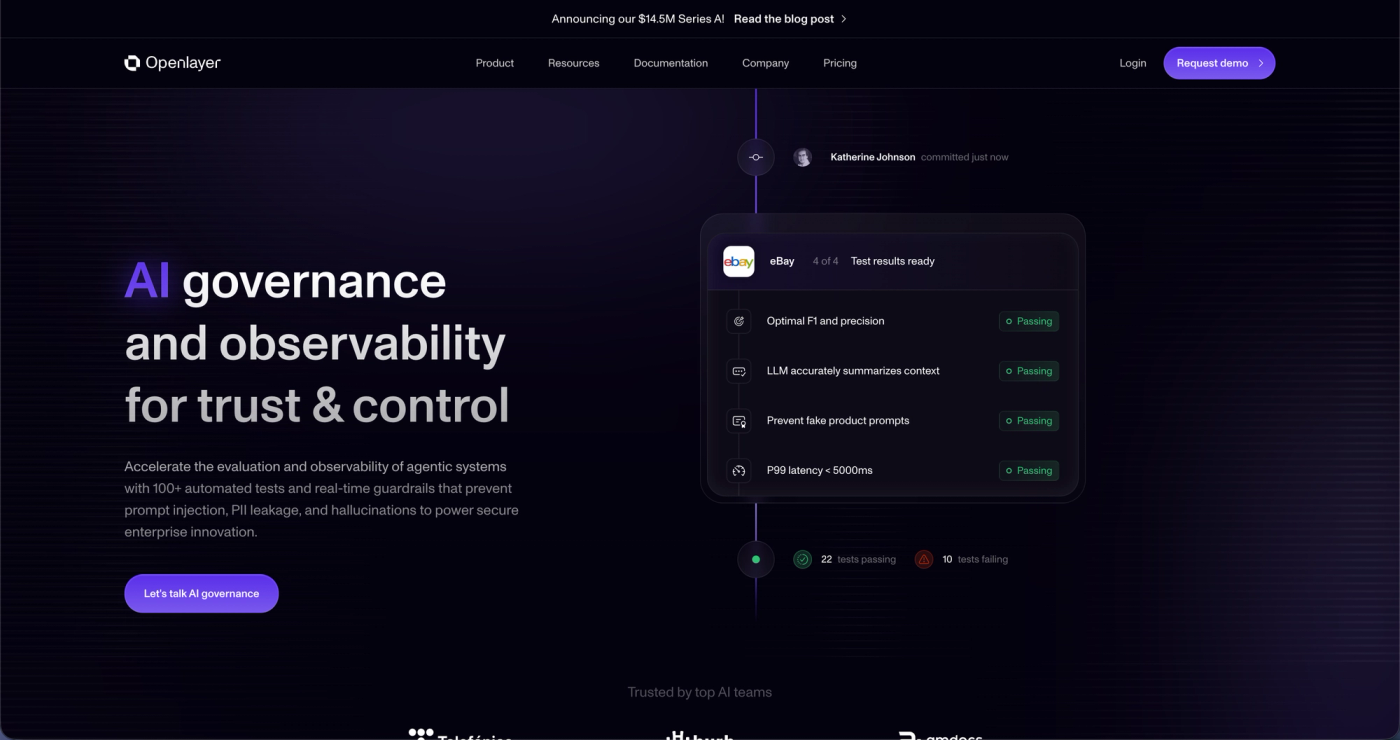
We built Openlayer to accelerate evaluation of agentic systems through automated tests and real-time guardrails. The solution supports both traditional ML and GenAI systems with full traceability across multimodal workflows.
Key features
Openlayer has a number of key features for multimodal AI testing:
- 100+ automated behavioral tests across text, vision, tabular, audio, and agent workflows. Tests cover hallucinations, bias, toxicity, drift, latency, and robustness, integrating directly into CI/CD pipelines to validate every model version before release.
- Real-time security guardrails automatically block prompt injections, PII leakage, and malicious queries before they reach downstream systems. ML observability continuously tracks outputs, latency, regressions, and anomalies with risk scoring and policy-based alerts.
- Automated compliance mapping to EU AI Act, NIST RMF, ISO 42001, OWASP, and LGPD frameworks generates audit-ready evidence and dashboards.
Langfuse

Langfuse is a developer-first observability tool that delivers detailed tracing for prompts, model calls, tool usage, and agent steps. It focuses on logging and introspection of LLM workflows with cost tracking and latency monitoring.
Key features
Langfuse has a number of key features for multimodal AI testing:
- Provides traces of every LLM and agent call with OpenTelemetry integration for high-throughput logging.
- Supports offline datasets and experiment runs for benchmarking LLM apps.
- You can define eval datasets, metrics, and scorers using LLM-as-a-judge, regex-based checks, or numeric scorers.
- The solution includes cost tracking, latency monitoring, and version comparisons for debugging.
Limitations
Langfuse has a number of limitations:
- Langfuse does not include a prebuilt test library and requires you to define eval logic yourself.
- It does not detect drift, monitor fairness or bias, or provide enforcement mechanisms to block unsafe outputs.
- Observability is diagnostic instead of protective, with no real-time blocking capabilities.
- Compliance mapping must be implemented by your organization.
Best for
Development teams building LLM apps that need detailed traces and logs for debugging, with the technical capacity to define custom evaluation logic and external systems for governance and compliance.
Braintrust
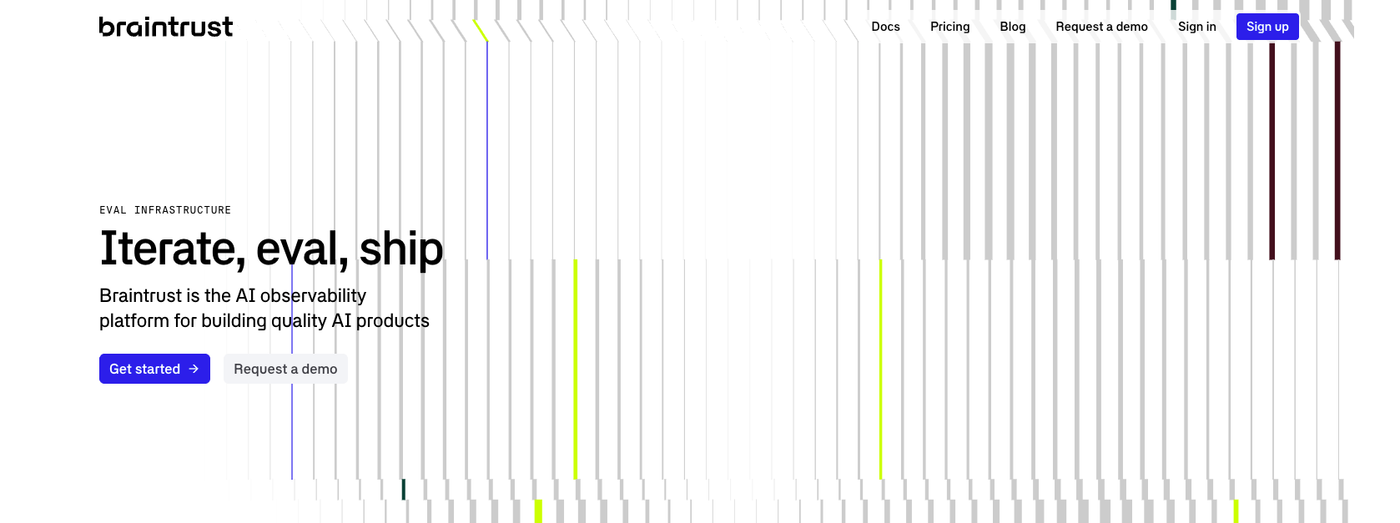
Braintrust is an evaluation and logging solution built around datasets, tasks, and scorers for custom test definitions. It supports CI/CD evaluation gates and automatic regression detection through human and LLM-based feedback.
Key features
Braintrust has a number of key features for multimodal AI testing:
- Provides a flexible evaluation framework where teams define custom tests using datasets, tasks, and scorers.
- Evaluation gates integrate into CI/CD workflows to catch regressions before deployment.
- Handles purpose-built logging with fast full-text trace analysis at scale.
- Dashboards and alerts trigger when quality or safety thresholds are crossed.
Limitations
Braintrust has a number of limitations:
- Braintrust lacks prebuilt tests and requires manual implementation of most safety and quality metrics.
- Dashboards surface issues but depend on human action, with no real-time blocking of unsafe behavior.
- Governance is not a core feature, leaving policy definition to the organization.
- Compliance checks for regulations must be configured within the evaluation suite without turn-key frameworks.
Best for
Engineering teams that can invest time building custom scorers and tests for their specific use cases, without immediate regulatory compliance requirements.
Langsmith
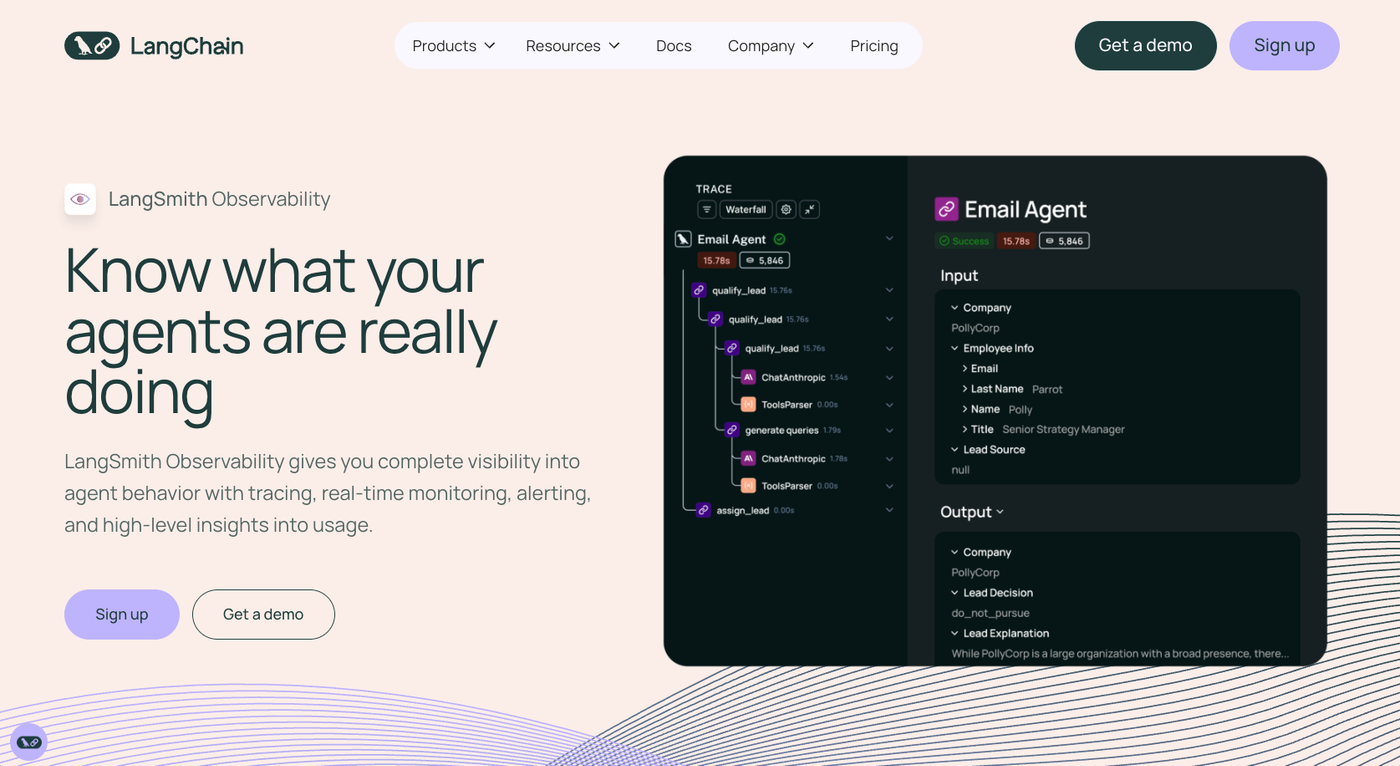
LangSmith is a developer tool for tracing and assessing LLM prompts and chains within LangChain workflows. It provides detailed traces and logs for debugging with prompt-level inspection capabilities.
Key features
Langsmith has a number of key features for multimodal AI testing:
- Delivers dev-centric tracing focused on LangChain flows with prompt and LLM evaluation for pipelines.
- You can inspect individual prompt executions, compare model outputs, and debug chain behavior through detailed trace logs.
- The solution integrates directly into LangChain development workflows for single-team projects.
Limitations
Langsmith has a number of limitations:
- Limited to LangChain-based workflows and does not cover multi-framework estates.
- It provides logging and trace analytics without real-time guardrails, statistical anomaly detection, or compliance alerting.
- here is no policy enforcement, framework alignment, or interfaces for risk and compliance stakeholders.
Best for
Development teams building LLM applications exclusively on LangChain that need debugging tools without regulatory compliance or enterprise governance requirements.
IBM Watsonx Governance
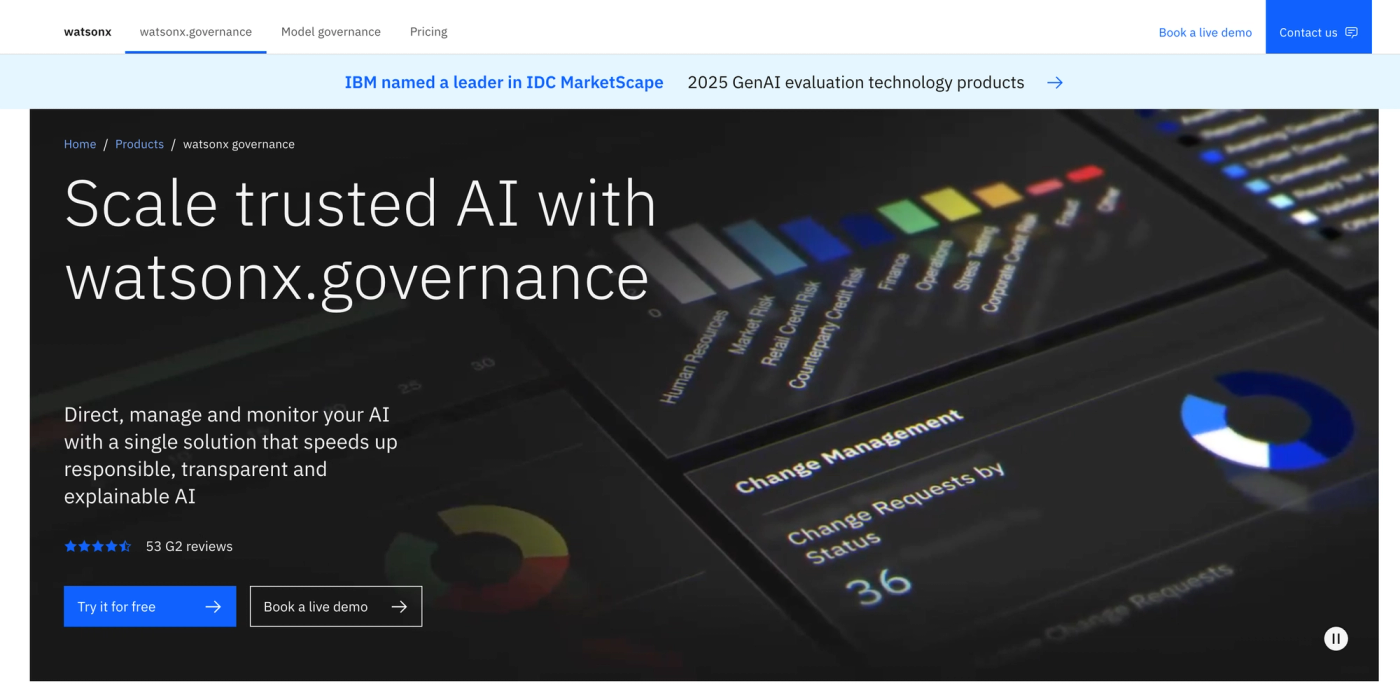
IBM Watsonx Governance provides policy-driven oversight with fairness and explainability checks for teams working within the IBM ecosystem. It includes governance dashboards and workflow-level controls through Watsonx orchestrate.
Key features
IBM Watsonx Governance has a number of key features for multimodal AI testing:
- Policy-driven oversight for fairness and explainability with framework mapping to EU AI Act, NIST, and ISO standards
- Risk dashboards tied to policy enforcement that provide workflow governance within Watsonx orchestrate
- IBM services available to help configure governance processes with tight integration across the IBM data and AI suite
Limitations
IBM Watsonx Governance has a number of limitations:
- Solution is aligned to the IBM stack with limited cross-stack visibility outside the Watsonx ecosystem.
- While it detects vulnerabilities, it does not block prompt injections or data exfiltration in real time.
- The solution focuses on bias and explainability checks without multimodal or adversarial testing across agents and edge cases.
- Finally, framework mapping requires manual configuration and is service-heavy.
Best for
Enterprises standardized on IBM infrastructure that need policy dashboards and fairness monitoring within the Watsonx ecosystem, with IBM services support for governance configuration.
Credo AI
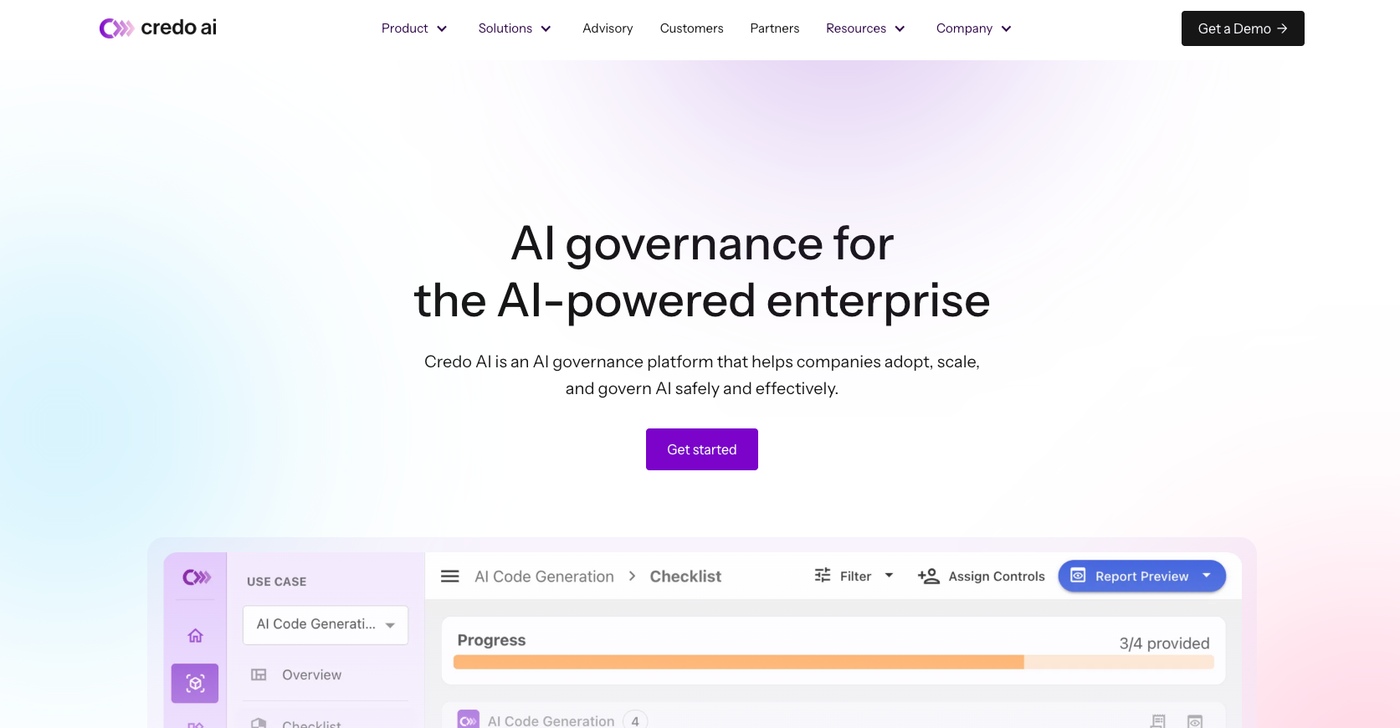
Credo AI handles policy-based governance and compliance documentation through its Lens framework for standardized model assessment. The focus is regulatory reporting workflows.
Key features
Credo AI has a number of key features for multimodal AI testing:
- An AI registry provides central inventory of all AI systems.
- Policy Intelligence automates risk assessments and suggests controls per use case.
- Policy Packs translate regulations into structured workflows for EU AI Act, NIST AI RMF, ISO 42001, Colorado SB21-169, and NYC Local Law 144.
- The solution auto-generates audit artifacts including model cards, bias reports, fairness analyses, and compliance summaries.
Limitations
Credo AI has a number of limitations:
- Credo AI lacks automated behavioral tests and requires integration with external tools for concrete validation.
- It does not provide real-time drift detection, per-request metrics, or trace-level debugging.
- Runtime enforcement and technical guardrails are not included.
Best for
Organizations needing policy documentation and regulatory reporting over runtime protection, with existing technical testing tools and dedicated compliance teams managing structured governance workflows.
MLflow
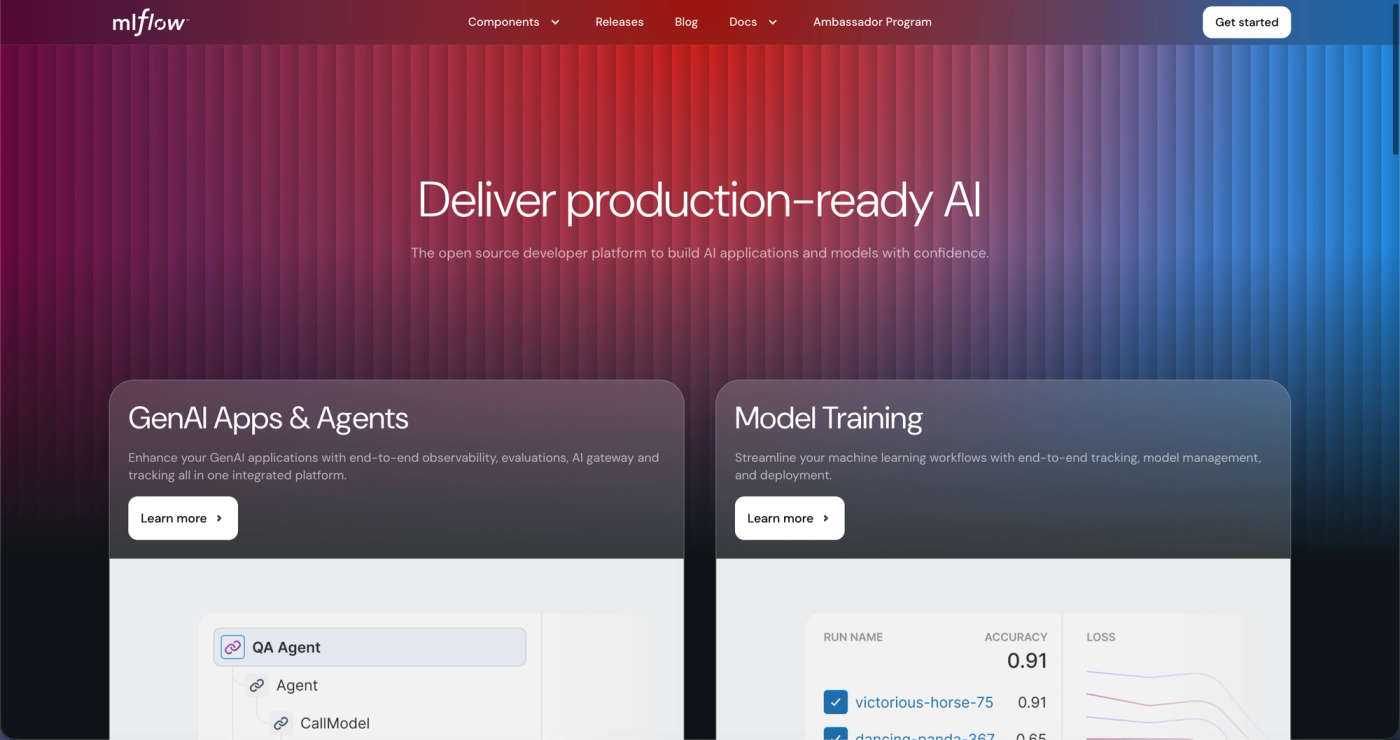
MLflow is an experiment tracking and model registry solution that logs metrics, parameters, and artifacts. It handles model versioning for traditional ML workflows.
Key features
MLflow has a number of key features for multimodal AI testing:
- MLflow tracks experiment runs, parameters, and metrics alongside artifact logging. Unity Catalog integration adds access control and data lineage.
- The model registry manages versions across the ML lifecycle.
Limitations
MLflow has a number of limitations:
- No runtime protection, input validation, or prompt attack prevention exists. Automated testing capabilities are absent.
- The focus remains on logging, not validation.
- Behavioral testing across vision and text modalities is unavailable.
- No regulatory mapping or audit views are provided beyond Unity Catalog's basic access controls.
Best for
Engineering teams managing traditional ML experiments who need version control and lineage tracking without GenAI testing or compliance requirements.
Deepchecks
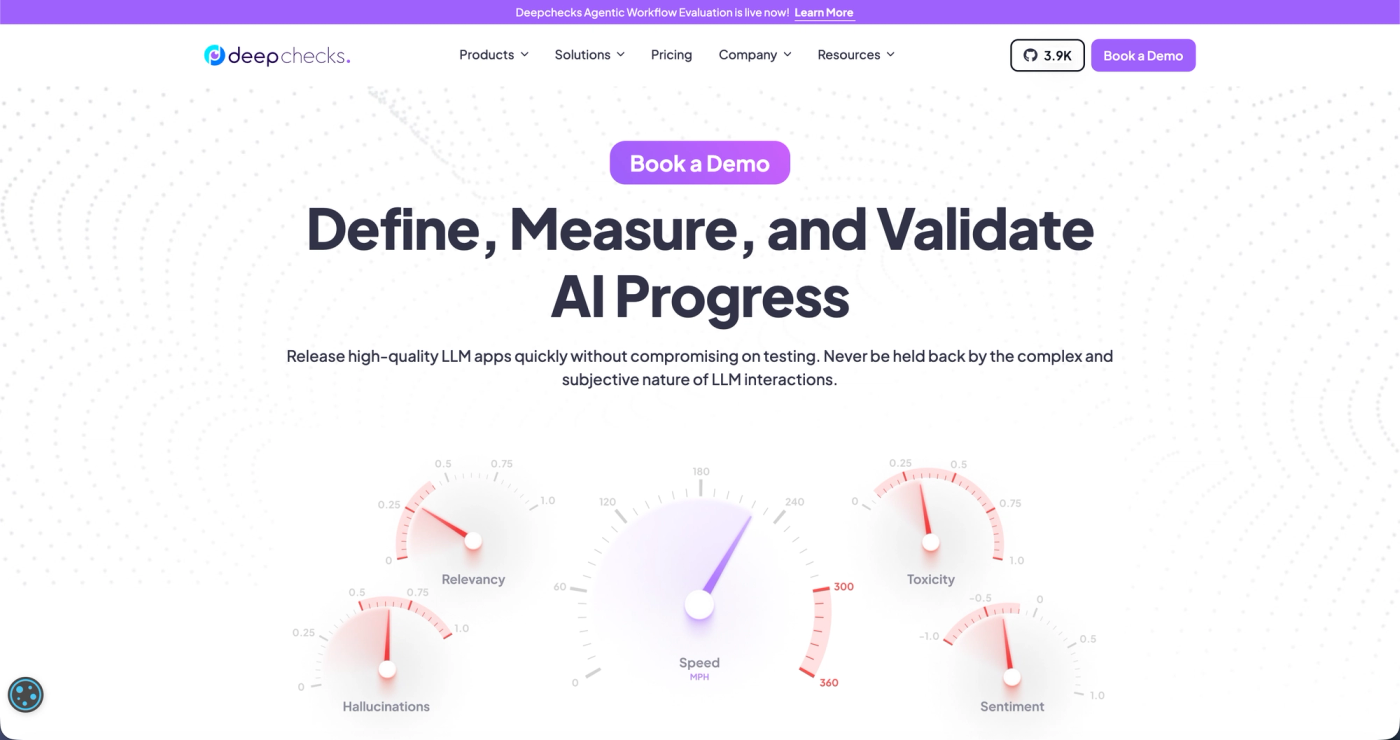
Deepchecks provides pre-deployment evaluation through structured test suites for traditional ML and LLM validation, with an emphasis on offline testing for data quality and model behavior.
Key features
Deepchecks has a number of key features for multimodal AI testing:
- Structured test suites cover data integrity, model performance, and drift checks.
- Pre-deployment validation catches data distribution shifts, label issues, and feature anomalies before production.
- LLM evaluations include basic quality metrics for text outputs.
Limitations
Deepchecks has a number of key features for multimodal AI testing:
- Detection stops at data issues without covering prompt attacks or adversarial inputs.
- No real-time guardrails block unsafe outputs.
- Framework alignment to NIST, EU AI Act, or ISO standards requires manual work.
- Production monitoring remains limited, with testing that's point-in-time instead of continuous risk scoring.
Best for
Teams managing traditional ML pipelines that need structured pre-deployment validation without production monitoring, real-time security controls, or compliance automation.
How to choose the right multimodal AI testing solution
There are a number of recommendations to help you select the right multimodal AI testing solution:
- Start with your regulatory requirements. If you need automated compliance mapping for EU AI Act, NIST, or ISO standards, narrow to solutions with framework alignment built in. Teams without near-term compliance obligations can emphasize evaluation capabilities.
- Assess your security posture. Organizations handling PII or operating in regulated industries require real-time guardrails that block unsafe outputs. Development teams in lower-risk environments may only need trace logging.
- Consider production scale. If you're deploying multimodal AI systems to users, continuous monitoring with drift detection and anomaly alerts becomes necessary. Early-stage projects focused on experimentation can work with offline evaluation alone.
- Assess test coverage needs. Teams with engineering capacity to write custom tests can use flexible frameworks. Organizations seeking faster deployment benefit from prebuilt test libraries covering common failure modes across modalities.
- Match the solution to your governance model. Single-team projects debugging LLM chains need different tools than enterprises managing hundreds of AI systems across departments with cross-functional oversight requirements.
Comparison table
| Solution | Automated tests | Security guardrails | Compliance mapping | Production monitoring | CI/CD integration | Best for |
|---|---|---|---|---|---|---|
| Openlayer | 100+ prebuilt multimodal tests | Real-time blocking | EU AI Act, NIST, ISO 42001 | Continuous drift detection | Native | Enterprise governance across ML and GenAI |
| Langfuse | Limited, custom required | None | None | Trace logging only | Yes | Development teams tracking LLM experiments |
| Braintrust | Custom evaluations | None | None | Basic metrics | Yes | Prompt engineering and iteration |
| Langsmith | LLM-focused evals | None | None | Trace analysis | Yes | LangChain users needing debugging |
| IBM Watsonx Governance | Policy-based checks | Configuration-based | Enterprise frameworks | Dashboard reporting | Limited | IBM ecosystem customers |
| Credo AI | Risk assessments | None | Multiple frameworks | Policy monitoring | Limited | Compliance documentation workflows |
| MLflow | Metric tracking | None | None | Model registry logs | Yes | Open-source ML experiment tracking |
| Deepchecks | Data validation tests | None | None | Data drift checks | Yes | Traditional ML data quality |
FAQ
What is the difference between multimodal AI testing and single-modality evaluation?
Multimodal AI testing validates models that process vision and text inputs together, checking both individual modalities and their interactions. Single-modality evaluation misses cross-modal alignment failures where outputs from different modalities don't match semantically, such as when text descriptions contradict visual evidence.
How do I integrate multimodal AI testing into my CI/CD pipeline?
Select a solution with native CI/CD integration that triggers automated test suites on every code commit or model version. The testing platform should block deployments when must-pass tests fail, preventing regressions before models reach production.
When should I look for real-time security guardrails over trace logging?
If your organization handles PII, operates in regulated industries, or deploys multimodal AI systems to end users, real-time guardrails that block prompt injections and data leakage become necessary. Development teams in lower-risk environments focused on experimentation can work with trace logging alone.
Can I use the same tests in development and production environments?
Yes, effective multimodal AI testing requires the same test library to run in both development and production. Development and production environments look different, so tests must live in both to catch issues during experimentation and detect drift or regressions after deployment.
What compliance frameworks require automated mapping for multimodal AI systems?
EU AI Act, NIST RMF, ISO 42001, OWASP, and LGPD all apply to multimodal AI systems in regulated industries. Solutions with automated compliance mapping generate audit-ready evidence and dashboards, while manual documentation creates bottlenecks for financial services, healthcare, and telecom organizations.
Final thoughts on selecting AI testing solutions
Multimodal systems fail in ways that text-only evaluation misses, and catching those failures before production matters more as you scale. Multimodal AI evaluation works best when your tooling matches your compliance needs and security posture. Start with your regulatory requirements, then layer in the technical capabilities that fit your team's capacity and timeline.