Best AI drift detection tools for production models (December 2025)
Model performance doesn't announce when it starts declining. Data distributions shift, concept relationships change, and your predictions drift away from reality. AI anomaly detection identifies these patterns while you can still act. Most teams find about about drift through user complaints or quarterly reviews. By then, the damage is done and you're in damage control mode instead of prevention mode.
TLDR:
- AI drift detection catches model degradation within hours instead of weeks or months after impact.
- Most drift tools offer logging or monitoring; few provide runtime enforcement and compliance mapping.
- Openlayer unifies drift detection, security guardrails, and automated compliance to EU AI Act and NIST RMF.
What is AI drift detection
AI drift detection identifies when production models degrade as real-world conditions evolve. Model drift occurs in three forms:
- data drift (input distributions shift),
- concept drift (relationships between inputs and outputs change), and
- prediction drift (model outputs deviate from expected patterns).
What does AI drift look like in the real world? Consider these examples: a fraud detection model trained on pre-pandemic spending patterns flags legitimate transactions as suspicious; or a recommendation engine optimized for summer traffic underperforms when fall arrives. The model hasn't broken, but the world it was built for no longer exists.
Most teams find out about drift weeks or months after it impacts users. According to recent research, 91% of ML models suffer from model drift, and models left unchanged for 6+ months saw error rates jump 35% on new data without monitoring. The core challenge is that development and production environments look different. Your training data is static; production data evolves.
Drift detection tools, though, monitor models continuously, catching degradation within hours instead of quarters. Drift detection validates that models maintain performance as conditions change.
How we ranked AI drift detection tools
We looked at each tool based on capabilities that matter when drift affects prediction quality and business outcomes. Our ranking considers:
- Detection coverage across data drift, concept drift, and prediction drift using statistical methods beyond threshold alerts
- Real-time monitoring that catches degradation within hours
- Automated testing integration with CI/CD pipelines for pre-deployment validation
- Multi-modal support spanning tabular data, text, vision, and audio models
- Security guardrails that prevent prompt injection, PII leakage, and data exfiltration
- Compliance automation for NIST RMF, EU AI Act, and ISO 42001
- Deployment flexibility including on-premises, private cloud, and SaaS options
Best overall AI drift detection tool: Openlayer
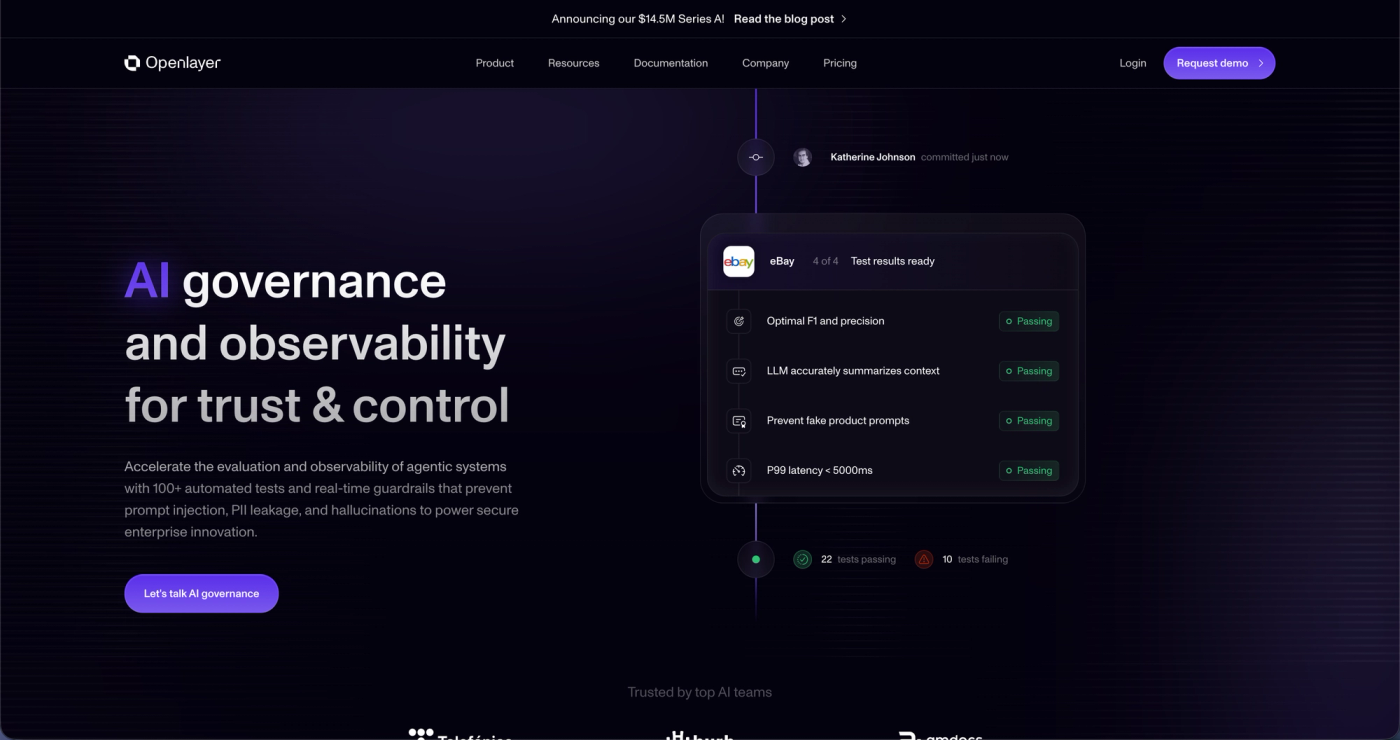
Openlayer detects drift while integrating governance, security, and compliance controls into a single ML observability system. The solution monitors models, agents, and data pipelines, triggering automated alerts based on policy thresholds and risk tiers.
Key features
OpenLayer includes a number of key features that developers need when assessing AI drift detection tools:
- 100+ automated behavioral tests run in CI/CD to detect hallucinations, bias, toxicity, drift, latency, and robustness issues across text, vision, tabular, and multimodal systems before each release
- Real-time guardrails prevent prompt injections, PII leakage, and unsafe outputs from reaching downstream systems, while production anomalies automatically convert into new test cases
- Compliance mapping to EU AI Act, NIST RMF, ISO 42001, and OWASP with continuous risk assessment and evidence capture
- Risk scoring, version tracking, and standardized review workflows across ML systems, AI agents, and RAG pipelines in development and production
Deployment options include on-premises, private cloud, and SaaS with SOC 2 compliance. The Openlayer MCP server extends these capabilities to Claude Desktop and other MCP-compatible environments.
Arize
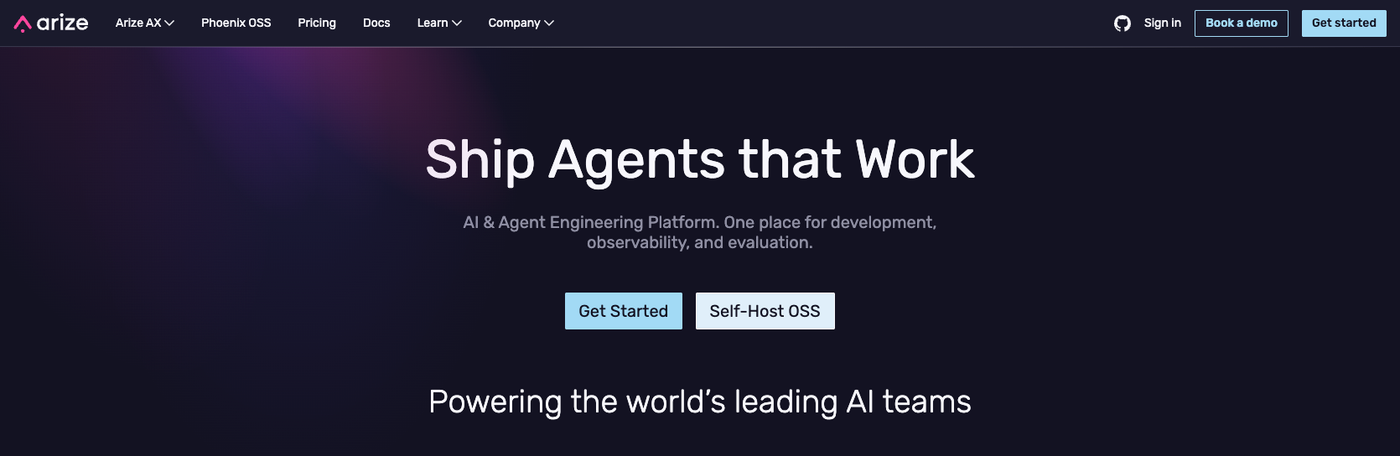
Arize provides AI observability and evaluation for ML and generative AI workflows, with monitoring and troubleshooting capabilities for production deployments.
Key features
Arize includes a number of key features that developers need when assessing AI drift detection tools:
- Automated monitoring and issue detection across ML and AI applications
- Data distribution testing to identify drift across prediction facets
- Tracing and debugging capabilities for identifying model performance degradation
- Open source option (Arize Phoenix) for development-focused observability
Limitations
Arize does not provide real-time guardrails that block unsafe outputs. Lacks automated compliance mapping to regulatory frameworks like EU AI Act or NIST RMF.
Bottom line
Arize surfaces drift through observability and diagnostics, but teams requiring runtime enforcement and regulatory compliance will need additional tooling. This is a good tool for teams needing observability-first tooling for ML model monitoring and debugging with emphasis on trace analysis and diagnostics.
Fiddler
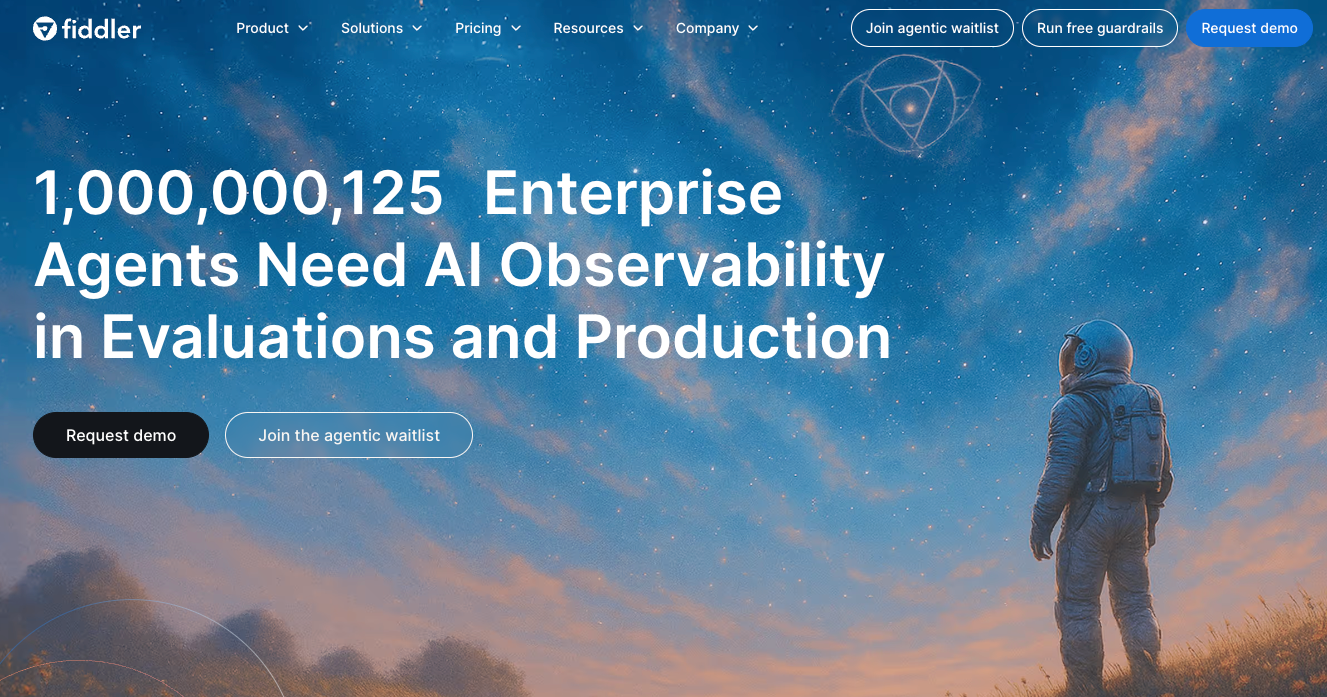
Fiddler offers AI observability with explainability at its core for ML and LLM monitoring. The solution focuses on transparency and responsible AI deployment through model performance management.
Key features
Fiddler includes a number of key features that developers need when assessing AI drift detection tools:
- Real-time monitoring for data drift, data integrity, outliers, and performance drops with root cause analysis and model diagnostics
- Algorithmic bias detection and fairness analysis for compliance requirements
- Trust Service for LLM quality and moderation with sub-100ms guardrails
Limitations
Fiddler does not have any pre-built library of automated behavioral tests. Teams must manually configure most drift detection metrics and thresholds instead of using turnkey test suites that run automatically in CI/CD.
Bottom line
Fiddler is good for organizations who want explainability and interpretability in their drift detection workflows above everything else, especially in regulated industries requiring transparency.
Langsmith
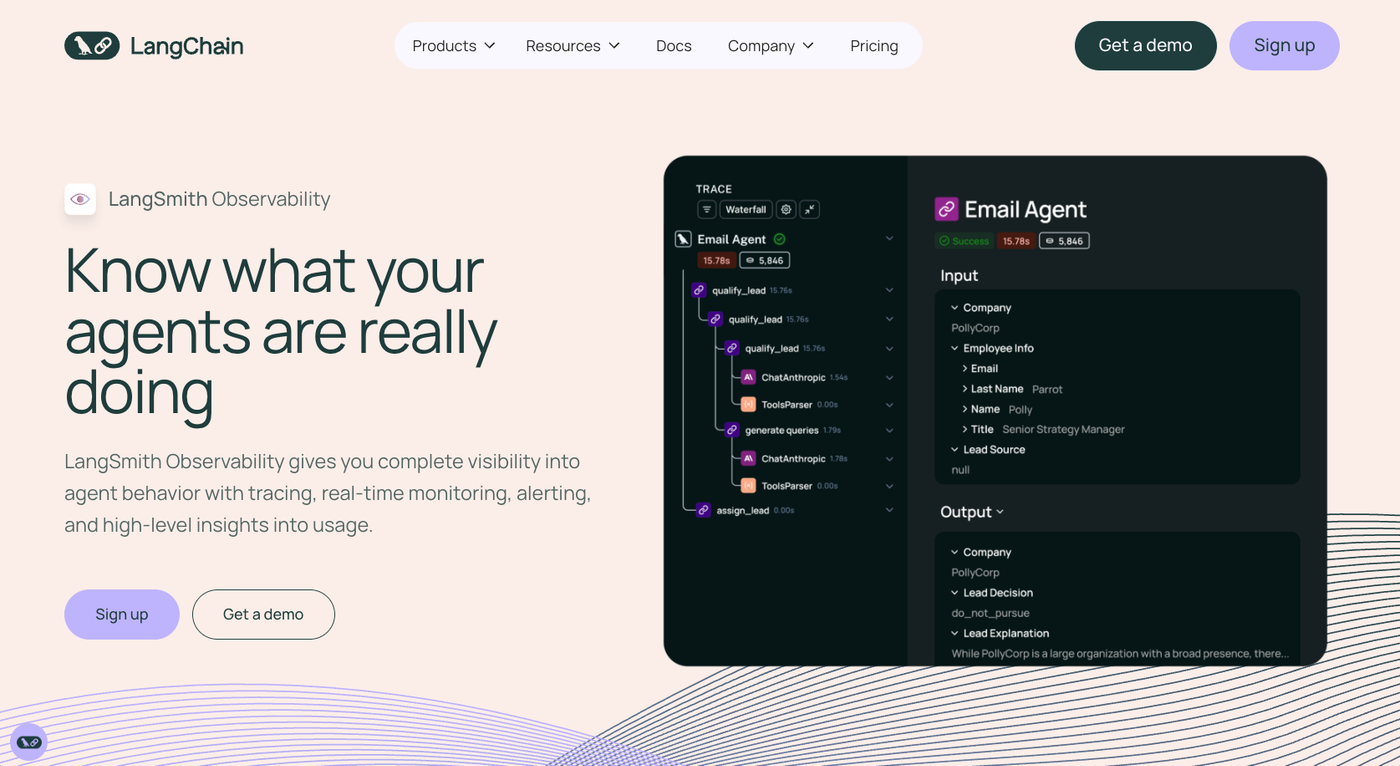
Langsmith provides development-focused tracing and evaluation for LangChain-based LLM applications. The tool targets engineers building with the LangChain framework who need prompt-level debugging.
Key features
Langsmith includes a number of key features that developers need when assessing AI drift detection tools:
- Detailed traces and logs for debugging LangChain pipelines and prompts
- Prompt-level and LLM-level evaluation capabilities for testing
- Dataset-based testing with experiment runs for benchmarking
- Developer-centric interface for single-team AI projects
Limitations
Langsmith is framework-dependent on LangChain with no multi-framework support. It lacks statistical anomaly detection, compliance alerting, risk scoring, and policy enforcement needed for production drift monitoring.
Bottom line
Langsmith helps debug LangChain apps but cannot monitor drift across diverse ML and AI systems or map findings to regulatory requirements. It is good for development teams building exclusively on LangChain who need granular trace inspection and prompt iteration tooling.
Braintrust
Braintrust offers evaluation framework and logging for AI application quality. The solution provides datasets, tasks, and scorers for custom testing with CI/CD integration for regression detection.
Key features
Braintrust includes a number of key features that developers need when assessing AI drift detection tools:
- Evaluation framework with datasets and custom scorers for defining test logic
- CI/CD integration that gates deployments based on evaluation results
- Production logging with full-text trace analysis across requests
- Feedback loops combining human review and LLM-based quality assessment
Limitations
Braintrust does not have any prebuilt test library. The solution lacks real-time blocking of unsafe outputs and automated compliance framework mapping, requiring manual safety check implementation.
Bottom line
Braintrust provides flexibility for custom evaluations but requires implementation work to achieve what comes pre-configured with automated tests and compliance mapping. It is good for teams with engineering resources to build custom evaluation metrics and drift detection logic.
Langfuse

Langfuse delivers developer-first LLM observability and tracing for production systems. The open source tool provides detailed logging for prompts, model calls, and agent steps with cost tracking.
Key features
Langfuse includes a number of key features that developers need when assessing AI drift detection tools:
- Traces for every LLM and agent call via OpenTelemetry
- Cost tracking and latency monitoring with version comparisons
- Self-hostable for data residency requirements
Limitations
Langfuse does not detect drift or monitor fairness. It does not have any enforcement or guardrails to block issues.
Bottom line
Langfuse logs what happened but cannot prevent unsafe outputs or detect drift proactively. It is good for teams seeking open source tracing with granular visibility into LLM workflows and the ability to self-host for security.
MLflow
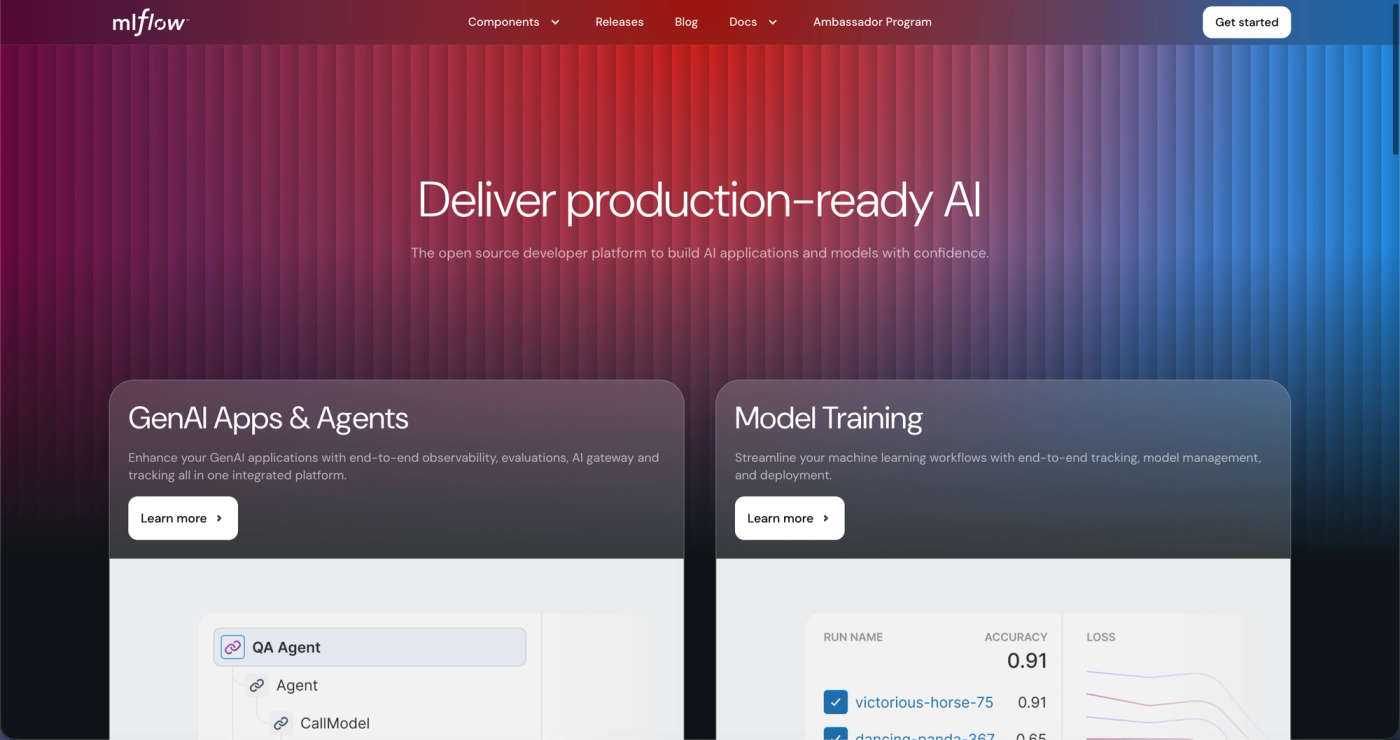
MLflow provides experiment tracking and model registry for ML workflows. The tool logs runs, parameters, metrics, and artifacts with lineage tracking through Unity Catalog.
Key features
MLflow includes a number of key features that developers need when assessing AI drift detection tools:
- Experiment tracking that logs runs, parameters, and model versions across ML projects
- Model registry with version control and artifact storage for reproducibility
- Integration with Databricks Unity Catalog for metadata governance
Limitations
MLflow doesn't have any drift detection capabilities or behavioral testing. It is missing runtime protections and regulatory mapping to frameworks like EU AI Act or NIST RMF.
Bottom line
MLflow handles experiment tracking but lacks drift monitoring, security guardrails, and compliance features. It is good for early-stage MLOps teams needing basic experiment tracking and registry without regulatory or security requirements.
Deepchecks
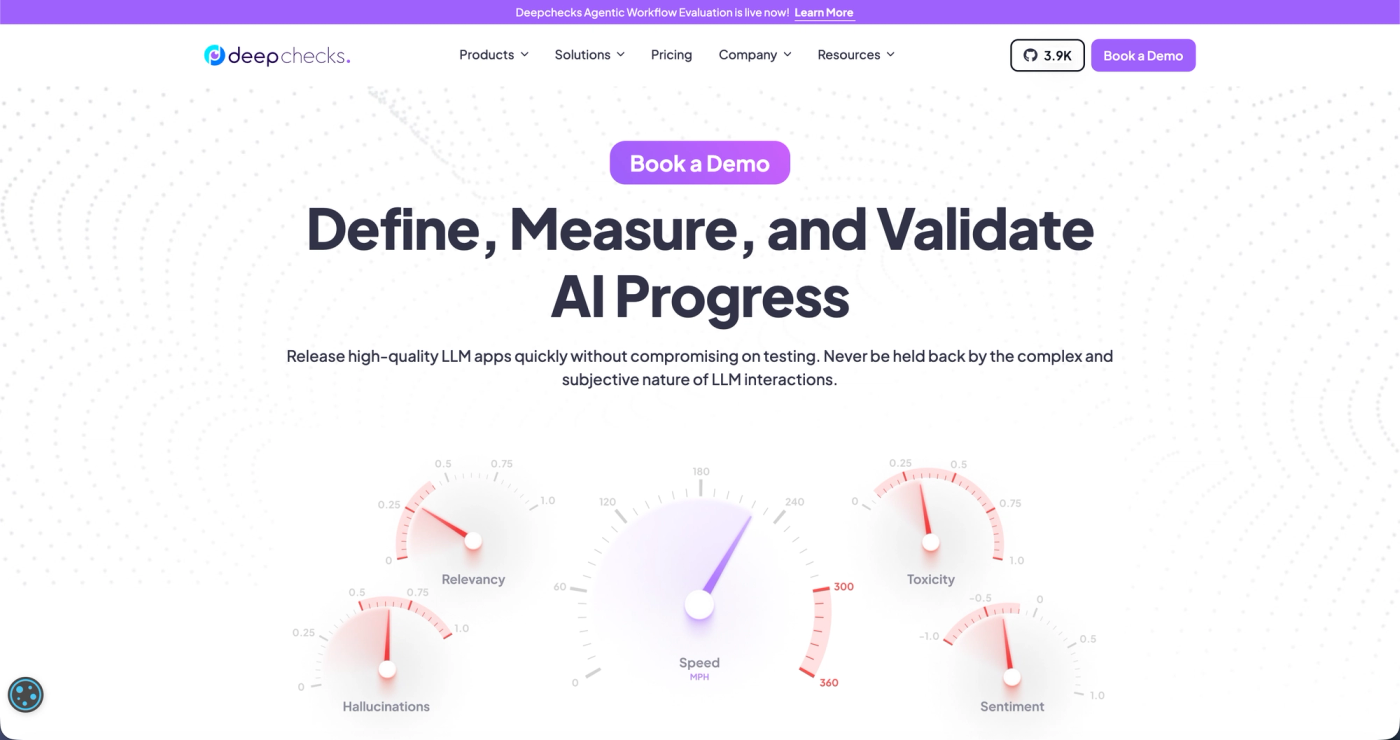
Deepchecks provides pre-deployment test suites for ML and LLM evaluation. The tool focuses on structured validation before models go live, with basic monitoring capabilities post-deployment.
Key features
Deepchecks includes a number of key features that developers need when assessing AI drift detection tools:
- Pre-deployment test suites that validate ML and LLM models before release
- LLM evaluation capabilities for quality assessment across common failure modes
- Traditional ML checks that validate data quality and model behavior
- Basic monitoring for deployed models with limited real-time capabilities
Limitations
Deepchecks has limited production integration without real-time guardrails. It doesn't have any system-level visibility across agents and pipelines. And, it is missing regulatory framework alignment and automated compliance reporting.
Bottom line
Deepchecks handles pre-deployment validation but cannot protect against runtime attacks or monitor drift continuously across production environments. It is good for teams that need structured pre-deployment validation and want to catch issues before models reach production environments.
Credo AI
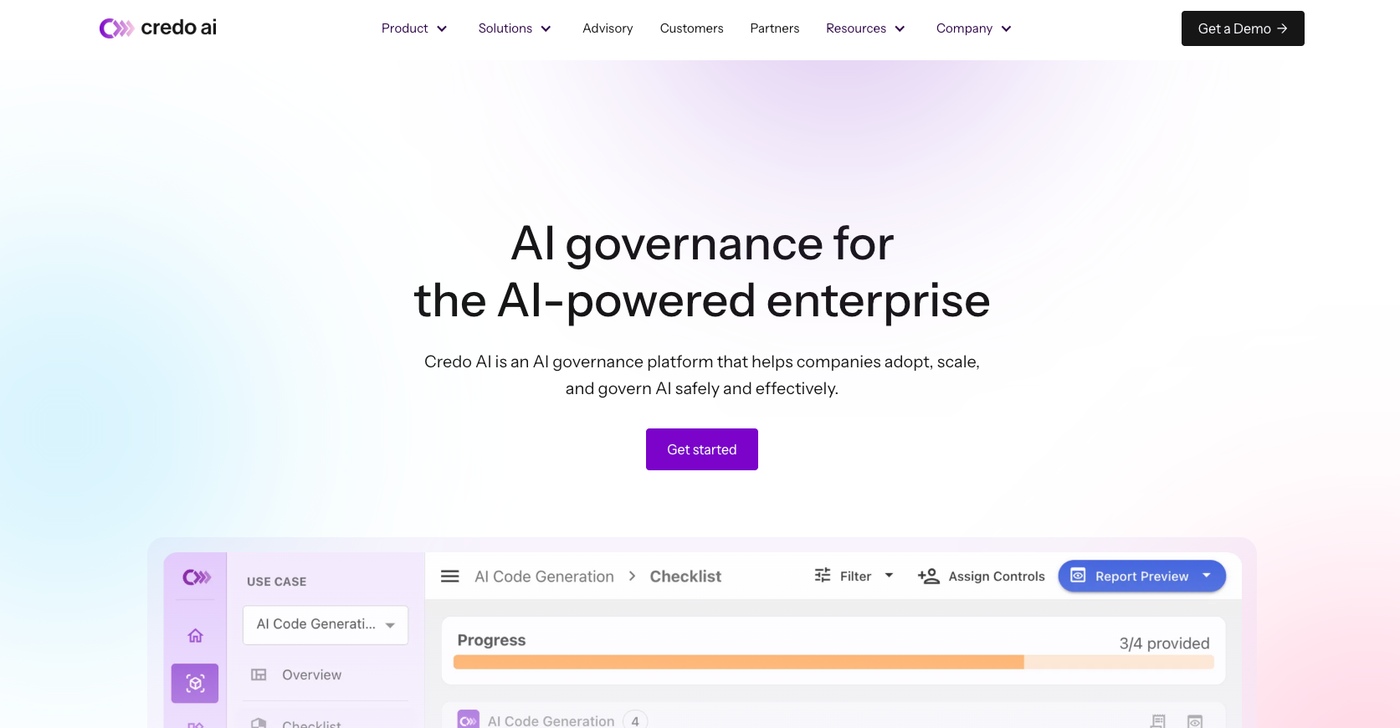
Credo AI provides AI governance and responsible AI assessment through policy-driven risk management workflows.
Key features
Credo.ai includes a number of key features that developers need when assessing AI drift detection tools:
- AI Registry that maintains a centralized inventory of AI systems across your organization
- Automated risk assessments that execute based on configurable policy rules
- Pre-built Policy Packs aligned with EU AI Act, NIST RMF, and ISO 42001 requirements
- Audit-ready documentation generated through governance workflows
Limitations
Credo.ai has no runtime guardrails or behavioral testing capabilities. It is missing per-inference observability metrics that track individual model predictions. And, it focuses on governance coordination instead of technical enforcement of model behavior.
Bottom line
Credo AI documents governance requirements but depends on separate tools for drift detection, while Openlayer detects and prevents issues through runtime tests and guardrails. It is good for compliance teams that need to document AI policies and coordinate risk management across multiple AI systems.
IBM Watsonx.governance
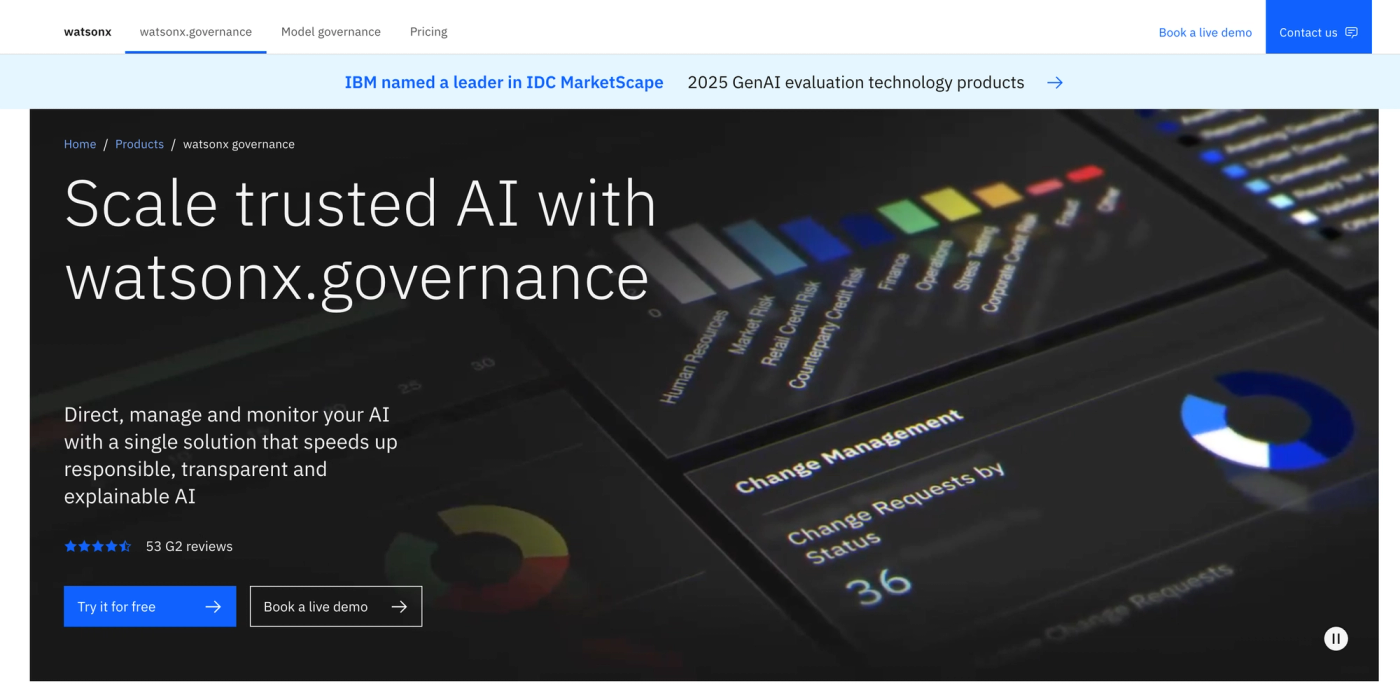
IBM Watsonx.governance provides policy-driven oversight for fairness and explainability within IBM environments, offering governance dashboards and workflow controls for AI deployments.
Key features
IBM Watsonx.governance includes a number of key features that developers need when assessing AI drift detection tools:
- Policy-driven oversight focused on fairness and explainability with framework mapping to EU AI Act, NIST, and ISO standards
- Native integration with the IBM Watsonx stack for unified management
- Workflow-level governance through Watsonx.orchestrate
Limitations
IBM Watsonx.governance works only within IBM environments with no cross-platform visibility. It cannot block prompt injection or data exfiltration in real time. No multimodal or adversarial testing for non-IBM systems.
Bottom line
IBM Watsonx.governance is good for enterprises standardized on IBM infrastructure who need native governance services with tight ecosystem integration.
Feature comparison table of AI drift detection tools
| Capability | Openlayer | Arize | Fiddler | Langsmith | Braintrust | Langfuse | MLflow | Deepchecks | Credo AI | IBM Watsonx |
|---|---|---|---|---|---|---|---|---|---|---|
| 100+ prebuilt behavioral tests | Yes | No | No | No | No | No | No | Limited | No | No |
| Real-time guardrails | Yes | No | Yes (sub-100ms) | No | No | No | No | No | No | No |
| Continuous drift detection | Yes | Yes | Yes | No | Limited | No | No | Limited | No | Limited |
| Automated compliance mapping | Yes | No | No | No | No | No | No | No | Yes | Yes |
| Multi-framework support | Yes | Yes | Yes | LangChain only | Yes | Yes | Yes | Yes | Yes | IBM only |
| Security (prompt injection/PII blocking) | Yes | No | Yes | No | No | No | No | No | No | No |
| CI/CD integration | Yes | Limited | Limited | Limited | Yes | Limited | Yes | Yes | No | No |
Why Openlayer is the best AI drift detection solution
Openlayer unifies drift detection with security and compliance in one system. We provide 100+ automated behavioral tests that run in CI/CD and continuous production monitoring with real-time guardrails that block unsafe outputs before they cause damage.
Automated mapping to EU AI Act, NIST RMF, and ISO 42001 makes drift detection an outcome of governance workflows. When drift occurs, you get both the alert and the compliance evidence showing how the issue maps to your risk framework.
Final thoughts on drift detection for production AI
Drift happens when your training data stops matching production reality, and AI anomaly detection determines how fast you respond. Tools that combine continuous monitoring with automated testing and compliance mapping turn drift from a crisis into a managed workflow. You can't prevent models from degrading, but you can control what happens when they do.
FAQ
What is the difference between data drift and concept drift?
Data drift occurs when input distributions shift (like customer demographics changing), while concept drift happens when the relationship between inputs and outputs changes (like fraud patterns evolving). Both require continuous monitoring because they degrade model accuracy in different ways.
How quickly can drift detection tools identify production issues?
Real-time drift detection tools catch degradation within hours through continuous monitoring and automated alerts. Without these tools, most teams find out about drift weeks or months after it impacts users, by which time a lot of potential business damage has already occurred.
Can I use drift detection tools with both traditional ML and LLM systems?
Multi-modal drift detection platforms monitor traditional ML models (tabular, vision, audio) and generative AI systems (LLMs, agents, RAG pipelines) in one system. Framework-specific tools like Langsmith only work with LangChain applications and cannot monitor drift across diverse model types.
When should I implement real-time guardrails versus post-deployment monitoring?
Real-time guardrails block unsafe outputs (prompt injections, PII leakage, toxic content) before they reach downstream systems or users. Post-deployment monitoring tracks performance trends over time but cannot prevent individual harmful predictions from causing immediate damage.
How do drift detection tools handle compliance requirements like EU AI Act or NIST RMF?
Automated compliance mapping connects drift detection findings directly to regulatory frameworks, generating audit-ready evidence when anomalies occur. Manual compliance approaches require separate documentation processes that don't integrate with technical monitoring systems.