
Build, test, and improveAI in one workflow.
Compare prompts, models, and agents, catch regressions, and debug failures using the SDK, CLI, IDE, and Git workflow your team already uses.
See development in action


 Failed


 Passed


Building AI is easy. Improving it is the hard part.
Teams can build an AI prototype in days, but turning it into a reliable production system requires hundreds of decisions across prompts, models, datasets, tools, and architecture. Without a shared development workflow, each change becomes another experiment.
The teams that win are measuring every change, learning from failures, and carrying what works directly into production.
EU AI Act
ISO/IEC 42001
NIST AI RMF
OSFI E-23
<5min
from an AI change to a measurable pass or fail result
One
command to test prompts, models, and agents before they ship
10x
iteration velocity from testing hypotheses instead of changing prompts blindly
Between prototypeand production,developers areflying blind.
Teams change prompts, swap models, update datasets, and rework agent workflows across notebooks and homegrown tools. Results are difficult to compare, successful configurations are hard to reproduce, and production failures rarely inform the next version.
No reliable baseline for the next experiment.
Prompt, model, and agent changes are difficult to compare when every experiment uses different datasets, metrics, and configurations.
Experiments and results scattered across notebooks and docs.
Each team maintains its own evaluation harness, prompt registry, datasets, and results. Successful experiments are difficult to reproduce, share, or maintain.
Production failures never make it back into development as test cases.
Incidents are patched and forgotten instead of becoming regression tests. The same failure can return because the development workflow never learned from production.
One development workflow from prototype to production.
Openlayer connects experiments, evaluations, traces, regression tests, and production feedback in one developer workflow. Teams can test every change, understand why it passed or failed, and keep the same standards running after deployment.
Every result stays connected to the version, dataset, and configuration that produced it. Governance evidence builds automatically in the background.
From prototype to production

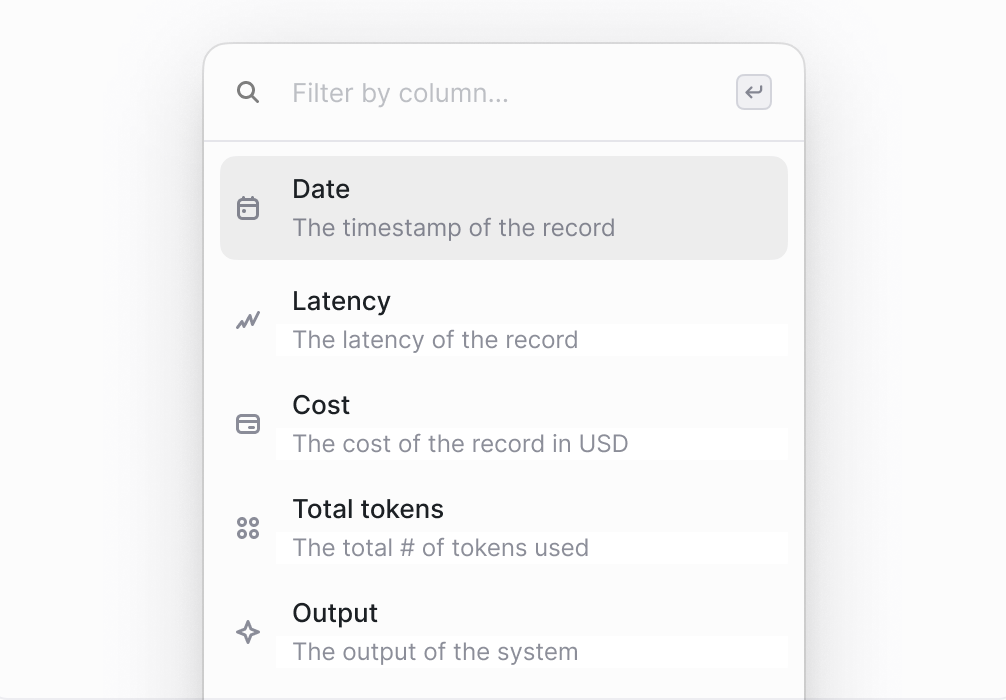
Dataset slicing and cohort analysis
Analyze performance across dataset versions, time periods, user cohorts, and subpopulations to find failures hidden by aggregate scores.
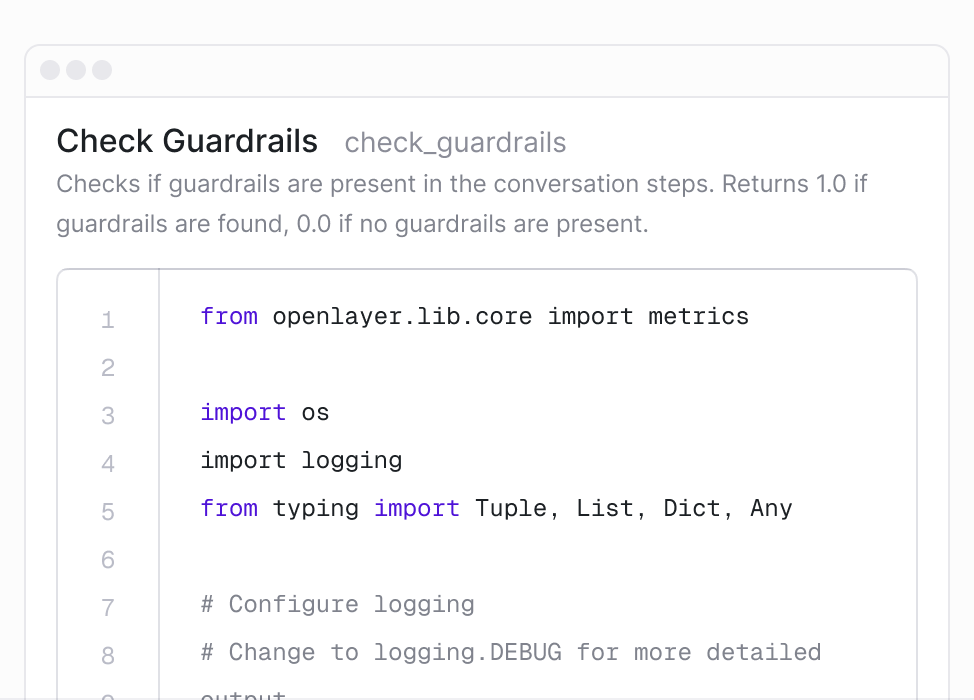
Custom metrics
Define business-specific metrics in code or natural language, including custom rubrics, deterministic checks, and adversarial tests.
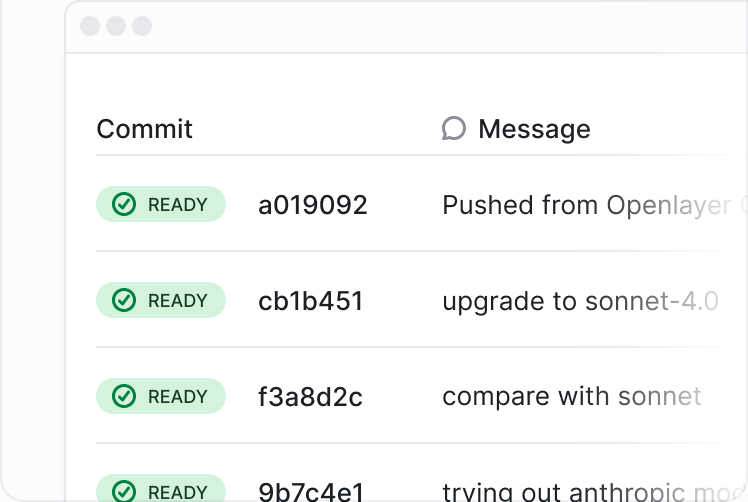
Experiment tracking and version comparison
Track every prompt, model, dataset, and architecture change. Compare results across versions and return to any previous configuration with complete history.
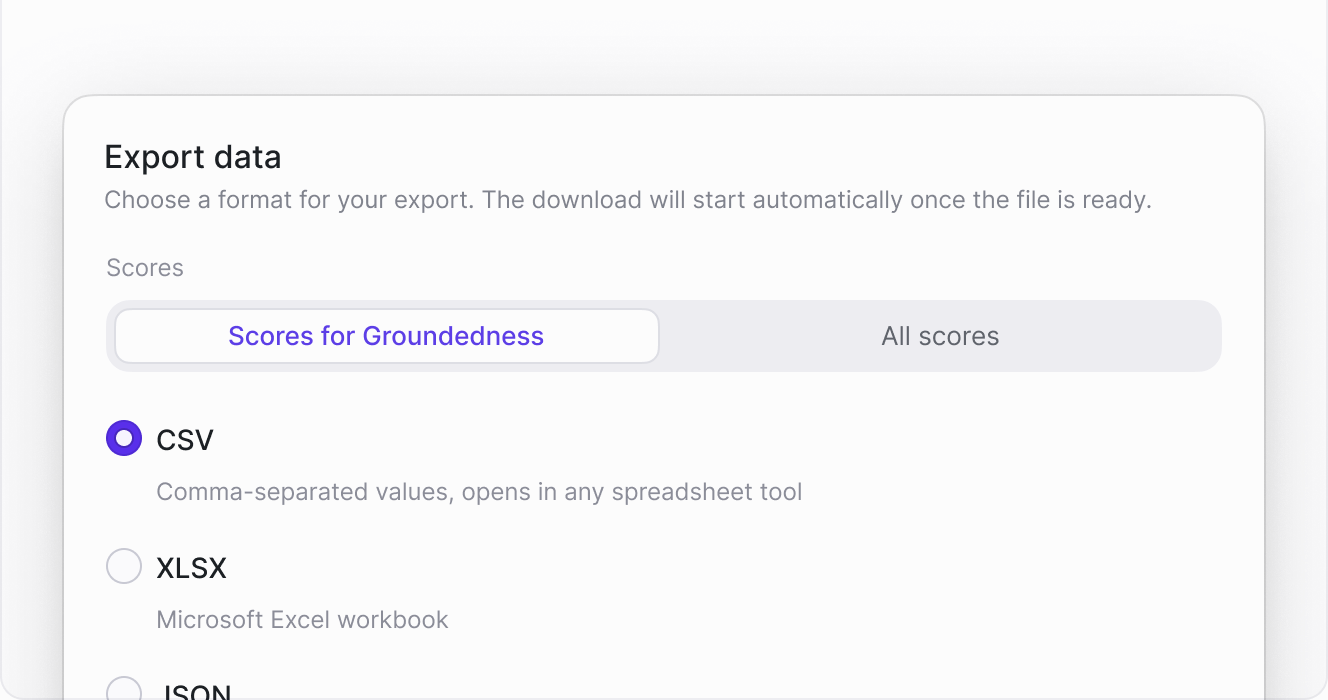
Production-to-dev feedback loop
Bring failed production traces directly into development and convert them into regression tests, so every incident improves the next release.
“Without Openlayer, we’d be blind to how our LLM outputs behave at scale. It’s saved us months of engineering time and given us a repeatable way to keep phishing simulations reliable and realistic.”
Daniel Chyan, CTO, Jericho Security
Trusted by regulated leaders: Sun Life and Gallagher (insurance); Rogers, KPN, and Comcast (telecom and media).
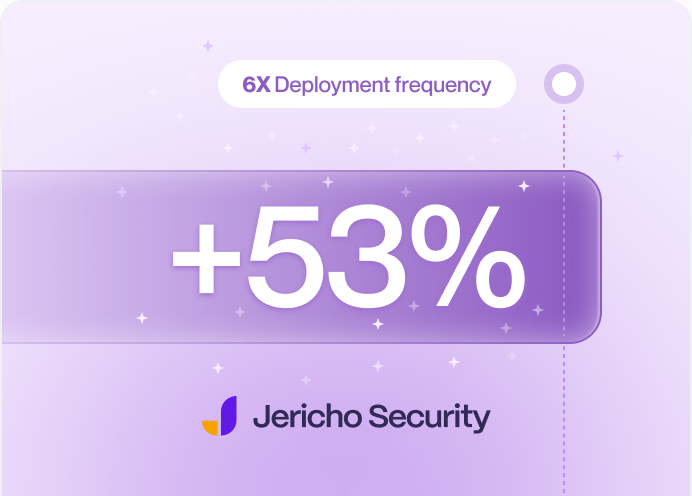
Jericho Security: 6x deployment frequency and +53% throughput after standardizing on Openlayer.
Backed by Y Combinator and Race Capital. SOC 2 Type II.
Founded by ex-Apple/Siri ML engineers.

Named in the 2026 Gartner Market Guide for AI Evaluation and Observability Platforms.
Endorsed by Guillermo Rauch (Vercel CEO) and Max Mullen (Instacart founder).
Development refers to the earliest stage of the AI lifecycle, when engineers are actively building and iterating on a model, prompt, or agent, before it moves into formal CI/CD testing or production.
Engineers connect Openlayer through SDKs, a CLI, or framework integrations and run evaluations locally against real datasets while they iterate, so they can see the impact of a change before committing it.
Openlayer integrates with VS Code and other editors through the Openlayer MCP server, and it works natively with Git.
Version comparison is available from the earliest stage of development, so engineers can compare a proposed change against the current version and see the tradeoffs before deciding what to ship.
Openlayer works across LLM providers, so teams can compare models from different providers on the same evaluation suite while prototyping.
Development is where a change is explored and iterated on locally or in a sandbox. Testing validates that change automatically as part of a CI/CD pipeline before it can merge or deploy.
Datasets, tests, and evaluation criteria defined during development carry directly into CI/CD testing, so teams do not rebuild their test suite when a project moves from prototype to pipeline.
Openlayer works with common agent and RAG frameworks as well as direct API calls, so teams are not required to adopt a specific architecture to get evaluation and tracing during development.
Many teams start by running evaluations directly through the SDK or CLI during development and add CI/CD integration later once a project is ready for a formal testing gate.
Catching a quality or safety issue during development is far cheaper than catching it in production. Starting at the development stage means fewer surprises later in testing or after launch.